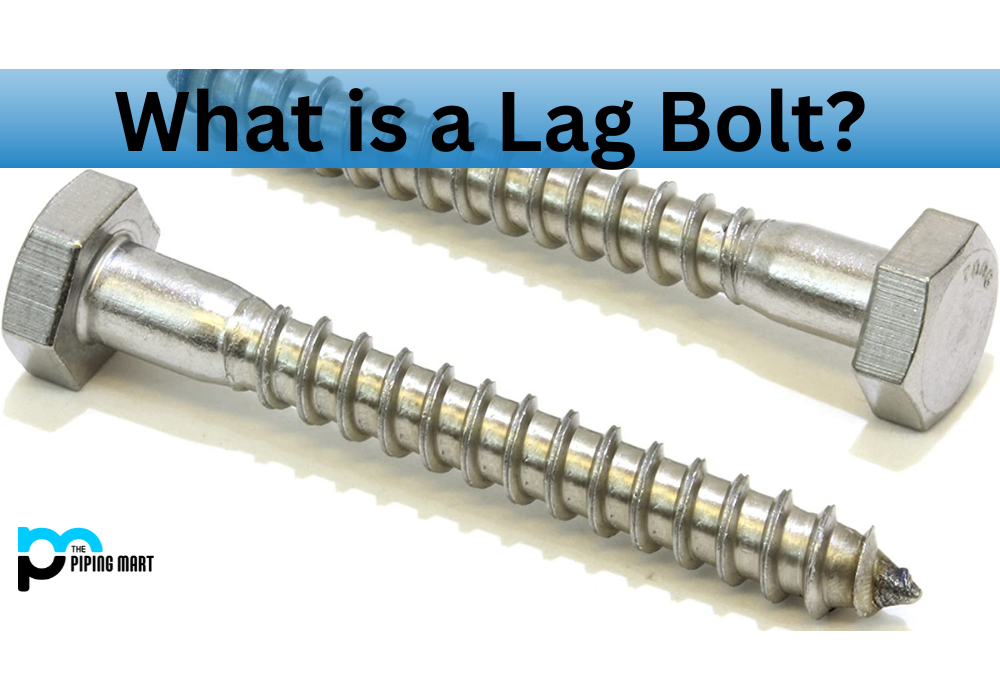
A lag bolt, also known as a lag screw, is one of the strongest fasteners used in wood construction. It joins large timber sections, connects wood to masonry, and handles loads that standard screws cannot manage. The bolt has a coarse thread, a pointed tip, and a hex or square head that you turn with a wrench rather than a screwdriver. Builders use them across timber framing, decking, and outdoor structures because they hold under heavy structural load conditions. They come in a wide range of sizes and materials, which makes them suitable for everything from light carpentry to heavy structural work.
What is a Lag Bolt?
A lag bolt is essentially a very large wood screw. It has a sharp pointed tip, deep coarse threads that bite into wood fibres, and it does not require a nut, unlike a machine bolt. As you drive it in, the thread cuts into the material and holds from within. That is different from a through-bolt, which needs access to both sides of the joint.
It is also much thicker than a regular screw, starting at 1/4 inch in diameter and going well beyond that for structural applications. The tapered point helps it start into a pilot hole cleanly. The hex head means you are applying proper torque, not just hand pressure through a driver.
Lag Bolt Properties
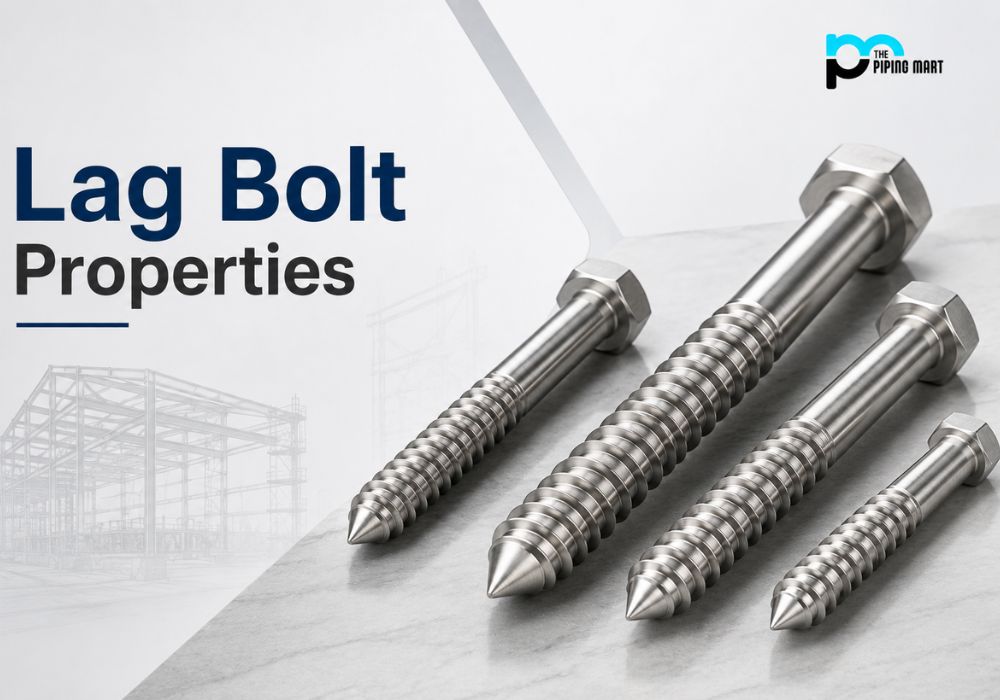
Lag bolts are manufactured to specific material and mechanical standards. Knowing these helps when specifying the right fastener for a job.
Material Strength: Most lag bolts are made from medium-carbon steel. Mechanical properties typically conform to SAE J429 Grade 2 or higher. Stainless steel versions are manufactured to ASTM F593.
Coarse Threading: The thread pitch is wider and deeper than a machine screw. More surface area contacts the wood fibres, which directly improves pull-out resistance per inch of thread engagement.
Load-Bearing Capacity: A 1/2-inch lag bolt in Douglas Fir has a withdrawal load capacity of roughly 270 to 300 pounds per inch of thread penetration. That figure depends on timber density and how well the installation was carried out. Larger diameters increase capacity proportionally.
Corrosion Resistance: Hot-dip galvanised bolts meet ASTM A153. Marine-grade 316 stainless steel meets ASTM F593 and handles high-chloride exposure better than anything else in this category.
Long Service Life: A correctly installed lag bolt, in the right material for the environment, can remain serviceable for 20 to 50 years or more without significant corrosion.
Components of a Lag Bolt
Each component serves a specific mechanical function. This matters when choosing between options or diagnosing a failed connection.
Head: Usually hexagonal. Square heads exist on older and heritage-style fasteners. The hex or square profile takes a socket or spanner, which lets you apply far more torque than any screwdriver format. That torque is what pulls the joint tight.
Shank: The smooth, unthreaded section directly below the head. It passes through the top piece without gripping it. This is intentional; it lets the top piece slide tight against the base material as the threaded section pulls in.
Threaded Portion: The lower section has a coarse thread and a pointed tip. This is where the holding strength comes from. The thread cuts into the base material, and the wider pitch increases grip in wood compared to finer thread forms.
Lag Bolt Dimensions and Sizes
Lag bolt dimensions in the US are standardised under ASME B18.2.1, which covers head dimensions, thread pitch, and tolerances by diameter.
Diameter Range: Standard sizes run from 1/4 inch to 1-1/4 inches. Construction most often uses 5/16, 3/8, 1/2, and 5/8 inch.
Length Range: Standard lengths go from 1 inch up to 12 inches. Longer options exist for heavy timber work.
| Diameter | Socket/Wrench Size | Typical Applications |
| 1/4″ | 7/16″ | Light furniture, small brackets |
| 5/16″ | 1/2″ | General DIY, fence gates |
| 3/8″ | 9/16″ | Deck railings, stair stringers |
| 1/2″ | 3/4″ | Ledger boards, heavy framing |
| 5/8″ | 15/16″ | Docks, retaining walls |
Thread Pitch: Pitch is coarser as the diameter increases. A 3/8-inch lag bolt has 7 threads per inch; a 1/2-inch has 6. These are standardised and considerably coarser than machine screw equivalents.
Pilot Hole Sizing: The clearance hole through the top piece matches the full shank diameter. The pilot hole into the base piece should be roughly 75% of the bolt’s root diameter. Get this wrong in either direction, and you either split the timber or lose thread engagement.
Types of Lag Bolts
Head style and material are the two main variables. Both affect performance and suitability for different environments.
Hex Head Lag Bolts: The standard type. The six-sided head takes a socket or spanner, and installation is consistent across different job sites and tool sets. Used in framing, decking, and most structural timber applications.
Square Head Lag Bolts: This older format is less commonly stocked today. Performance is similar to hex head, but these are used mainly where heritage aesthetics or period accuracy matter, such as in older buildings, restored structures, and so on.
Stainless Steel Lag Bolts: Grade 304 suits most applications. Grade 316 stainless steel is commonly used in marine environments where salt air and constant moisture are present. These cost more but avoid the corrosion failures that galvanised fasteners can develop over time in severe environments.
Galvanised Lag Bolts: Hot-dip galvanised finish applies a zinc layer that protects the steel in typical outdoor conditions. The standard choice for decking, fencing, and garden structures. Cost-effective and durable in most climates.
Common Uses of Lag Bolts
The reason lag bolts are used rather than regular screws comes down to load. Wherever a connection needs to carry structural load or resist high pull-out forces, a lag bolt is usually the right answer.
Decking: Ledger board connections are one of the most common structural uses. The ledger carries the load of the deck back to the house frame, so bolt size and spacing must comply with local building codes. A 1/2-inch diameter, 3 to 4 inches long, is typical.
Timber Framing: Post-and-beam joints use lag bolts to transfer loads between large structural members. Longer bolts, 6 to 8 inches and beyond, are standard in heavy timber framing where beam sections are substantial.
Furniture Assembly: Beds with solid timber frames, large outdoor furniture, and workshop benches use lag bolts at key load-bearing joints. They outlast dowels and regular screws in applications where furniture carries consistent weight or gets disassembled repeatedly.
Wood-to-Wood Connections: Beams to posts, rails to beams, and structural plates to joists; any connection between two heavy timber sections benefits from the pull-out resistance that a lag screw provides.
Metal-to-Wood Connections: Joist hangers, post bases, pergola brackets, and beam saddles all involve a metal plate fastened to timber. A lag bolt passes through the bracket and threads into the wood, giving a secure, load-rated connection.
Concrete Anchoring: A lag shield embedded in concrete accepts a lag bolt and expands as the bolt is driven in. This is how timber sill plates, posts, and structural members get anchored to concrete floors and foundations.
Outdoor Structures: Gates, play equipment, pergolas, and fences are all exposed to moisture and seasonal movement. Galvanised or stainless lag bolts handle this better than any lighter fastener type.
Advantages of Lag Bolts
High Strength. The diameter and thread form give lag bolts considerably more load capacity than standard screws. They resist both shear and pull-out, which matters in anything structural.
Strong Holding Power: Deep thread engagement in wood fibres means the fastener stays put. Softer timbers grip well; hardwoods grip extremely well. The holding power does not diminish quickly with load cycling.
Corrosion Resistance: Galvanised or stainless options resist corrosion for decades in outdoor applications. A corroded fastener in a structural connection is a genuine safety issue; the replacement cost of the material upfront avoids that.
Durability: Vibration, thermal expansion, and regular load cycling wear out regular screws over time. Lag bolts resist this. The larger mass and thread engagement mean they stay tight considerably longer.
Ease of Installation: One person with a drill and a socket wrench can install a lag bolt from one side of a joint. No need to hold a nut on the other side, which matters when working in tight or awkward locations.
How to Install a Lag Bolt
Getting the installation right matters. A poorly drilled pilot hole or an overtightened bolt can split the timber or strip the thread — either of which undermines the connection.
Step 1 — Mark the position. Mark both pieces accurately before drilling. Misalignment is much harder to fix after the pilot hole is drilled.
Step 2 — Drill the clearance hole. Through the top piece, use a bit matching the full shank diameter. This lets the shank pass through freely so the top piece can be pulled tight.
Step 3 — Drill the pilot hole. Into the base piece, use a bit at roughly 75% of the bolt’s root diameter. The hole should be slightly shorter than the threaded section — leave the last portion for the thread to bite into solid wood.
Step 4 — Clear the debris. Remove the drill bit a few times during drilling to clear sawdust. Packed dust can cause the bolt to bind or heat up during installation.
Step 5 — Add a washer and drive the bolt. Place a flat washer under the head before inserting the bolt. Use a socket wrench or impact driver. Tighten until the washer seats firmly against the timber — do not keep going past that point, or you strip the wood thread and lose holding power.
Conclusion
Lag bolts are a heavy-duty fastener built for structural timber connections, outdoor construction, and any application where holding strength matters. The coarse thread, large diameter, and proper material specification all contribute to a fastener that holds well and lasts a long time. Selecting the right size, specifying the correct material for the environment, and installing with a proper pilot hole are the three things that determine whether the connection performs as intended. For structural timber work, there is no better general-purpose fastener.
Frequently Asked Questions
What is the difference between a lag bolt and a lag screw?
No functional difference. Both refer to the same fastener. “Lag bolt” is the older American term. “Lag screw” is the term used in ASME standards. Same product, same use, different name depending on who you ask.
Are lag bolts stronger than regular screws?
Yes, significantly. Larger diameter, deeper thread, and far more torque on installation all add up to substantially higher pull-out and shear resistance. For structural use, regular screws are not a viable alternative.
Do lag bolts require pilot holes?
Always. The clearance hole through the top piece should match the shank diameter. The pilot hole into the base piece should be approximately 75% of the root diameter. Skipping this risks splitting the timber more so in hardwood or near end grain.
Can lag bolts be used outdoors?
Yes, with the right material. Hot-dip galvanised is suitable for most standard outdoor conditions. Grade 316 stainless is the better option for coastal areas or environments with persistent moisture. Plain steel lag bolts will corrode quickly outdoors and should not be used in exposed applications.