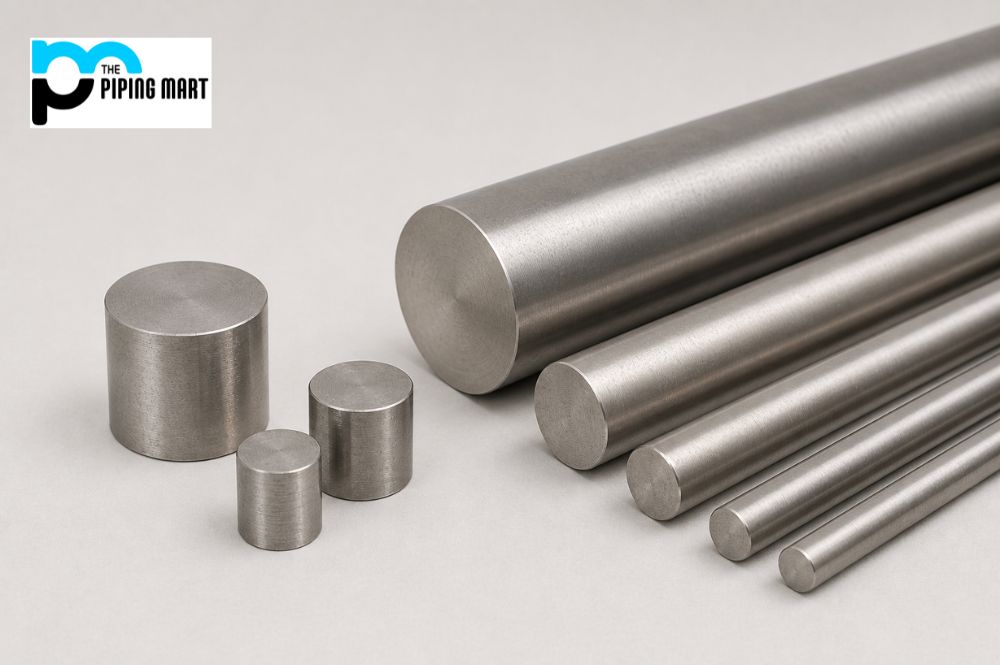
Monel K500 is a high-performance nickel-copper alloy known for its excellent strength and strong resistance to corrosion, especially in marine and chemical environments. It enhances the properties of Monel 400 by adding small amounts of aluminium and titanium, which enable the alloy to be strengthened through an age-hardening process. This process involves heating the alloy to a controlled temperature and then cooling it in a specific way to increase its strength and durability. Monel K500 is typically made by melting and refining raw metals, followed by hot and cold working to achieve the desired shape and properties. Due to its ability to handle high stress, seawater exposure, and harsh conditions, it is widely used in shafts, fasteners, valves, and pump components across demanding industries.
What is Monel K500?
Monel K500 is a solid-solution alloy based on nickel and copper, but it includes added aluminium and titanium to make it age-hardenable. While standard Monel 400 is already good at resisting corrosion, it isn’t always strong enough for heavy mechanical loads. What is Monel K500 designed for? It fills that gap by offering the same chemical resistance but with roughly three times the yield strength. Age-hardening, or precipitation hardening, is a heat-treatment process that creates tiny particles within the metal structure to block internal movement, making the finished part much tougher.
Key Elements in Monel K500
The alloy has a very specific chemical composition to ensure it performs well in sour gas or marine environments.
| Element | Approximate Content | Why It Matters |
| Nickel | 63% min | Base element — provides corrosion resistance |
| Copper | 27–33% | Adds resistance to seawater and acids |
| Aluminium | 2.30–3.15% | Enables age hardening, boosts strength |
| Titanium | 0.35–0.85% | Works with aluminium to form strengthening precipitates |
| Iron | Up to 2% | Minor addition, improves hot workability |
| Manganese | Up to 1.5% | Deoxidising agent during melting |
The Manufacturing Process for Monel K500
Producing Monel K500 involves several controlled steps, from melting the raw metals to the final heat treatment that gives it its strength. Each stage has a direct effect on the quality of the finished product.
Melting and Alloying the Base Metals
The process starts in an electric arc furnace or a vacuum induction melting (VIM) furnace. Raw nickel and copper are melted at temperatures exceeding 1,425°C (2,600°F). Once the base is molten, the aluminium and titanium are added. Quality control is vital here because if the oxygen levels aren’t managed, the titanium will oxidise instead of helping with the hardening later. The molten metal is then cast into ingots or billets for further processing.
Age Hardening for Extra Strength
The K500 metal then undergoes solution annealing at about 980°C (1,800°F) and is quickly quenched. This keeps the hardening elements in a frozen state. Then, it is reheated to about 590°C (1,100°F) and held there for 16 hours before being cooled very slowly. This long process allows the aluminium and titanium to precipitate or come out of the solution as tiny crystals, which creates the massive jump in tensile strength and hardness that distinguishes K500 from Monel 400.
Applications of Monel K500
Monel K500 is used where both corrosion resistance and mechanical strength are needed at the same time. Standard grades may offer one or the other, but K500 covers both. Here are the main sectors it serves.
Marine and Offshore Applications
Alloy K500 in propeller shafts, sleeve bearings, and fasteners on ships or submarines. It works well here, as it resists the pitting that saltwater usually causes. It is also used for subsea equipment where the metal is used for decades underwater without snapping under the weight or pressure of the ocean.
Oil and Gas Industry Uses
In sour wells where hydrogen sulphide is present, standard steels can become brittle and break. Monel K500 is used for drill collars, instruments, and pump components in these wells. It handles the high pressure and the corrosive chemicals found deep underground without losing its shape or strength.
Chemical Processing
In chemical plants, K500 is used for pump impellers, mixer shafts, and valve components that handle hydrofluoric acid, sulphuric acid, and alkalis. These environments would corrode most common engineering alloys quickly. The alloy’s resistance to a broad range of chemicals makes it an effective option for process equipment that needs long service life.
Aerospace
Monel K500 finds use in aerospace applications where a combination of being lightweight relative to strength and corrosion resistance is needed. Fasteners, springs, and structural components in aircraft that operate in coastal or marine environments are areas where K500 performs reliably over long service periods.
Physical and Mechanical Properties Explained
The properties of Monel K500 depend on whether the material is in the annealed or aged condition. The difference is significant and affects which applications it is suitable for.
| Property | Annealed | Age-Hardened |
| Tensile Strength | ~80 ksi (550 MPa) | 140+ ksi (965+ MPa) |
| Yield Strength | ~35 ksi (241 MPa) | ~110 ksi (758 MPa) |
| Elongation | ~35% | ~20% |
| Hardness (Brinell) | ~150 HB | ~300 HB |
| Density | 8.44 g/cm³ | 8.44 g/cm³ |
In the age-hardening condition, the tensile strength exceeds that of many carbon steels and common grades of stainless steel. The elongation drops, which is expected; harder materials are less ductile. For most structural applications, 20% elongation is still more than adequate.
Pros and Cons of Using Monel K500
Monel K500 is not always the right choice. Understanding where it works well and where it has limitations helps in making a practical decision.
| Pros | Cons |
| Excellent corrosion resistance in seawater and chemicals | High cost — typically £25–£45/kg depending on form |
| High tensile strength in aged condition | More difficult to machine than mild steel or stainless |
| Non-magnetic in both annealed and aged states | Limited availability compared to standard alloys |
| Good fabricability before ageing | Requires controlled heat treatment for full strength |
| Wide operating temperature range | Specialised welding procedures needed |
The cost is the most common reason engineers look for alternatives. Where corrosion resistance alone is sufficient, grades like Monel 400 or duplex stainless steel may be more cost-effective. K500 is best known for when both high strength and corrosion resistance are needed together.
Conclusion
Monel K500 is a specialised nickel-copper alloy with high strength due to the addition of aluminium and titanium, as well as a 16-hour age-hardening heat treatment. It provides a unique combination of heavy-duty mechanical strength and the ability to survive in some of the most corrosive environments on earth, such as deep-sea oil wells and marine propulsion systems. While the manufacturing process is complex and the material cost is high, the long-term reliability it offers in saltwater and chemical processing makes it the standard choice for critical components like pump shafts and valve stems. If your project involves high mechanical loads in a corrosive environment, you should consult with a metal supplier to see if K500 meets your specific engineering standards.
FAQ SECTION
Can you weld Monel K500?
Yes, it can be welded using TIG or MIG methods with Monel Filler Metal 60. However, the part should usually be in the annealed state before welding and then stress-relieved to prevent cracking during the later ageing process.
How much does Monel K500 cost?
The cost of Monel K500 depends on several factors such as product form, size, quantity, and required customisation as well as the sheet and pipe solution. It is also influenced by raw material prices, processing methods, and quality standards. Because of these variables, pricing is usually determined based on specific project requirements.
Is Monel K500 magnetic?
No, Monel K500 is non-magnetic, even at very low temperatures. This makes it a great choice for electronic equipment, MRI housing components, or any application where magnetic interference must be avoided.
What’s the difference between annealed and aged K500?
Annealed K500 is the soft version that is easier to shape and machine, with a tensile strength of about 90 ksi. Aged K500 has undergone heat treatment, reaching a much higher tensile strength of 140 ksi or more.
Can Monel K500 handle saltwater?
It is one of the best materials for saltwater service. It resists pitting and stagnant water corrosion better than most alloys, which is why it has been used for decades in submarine and offshore platform components.