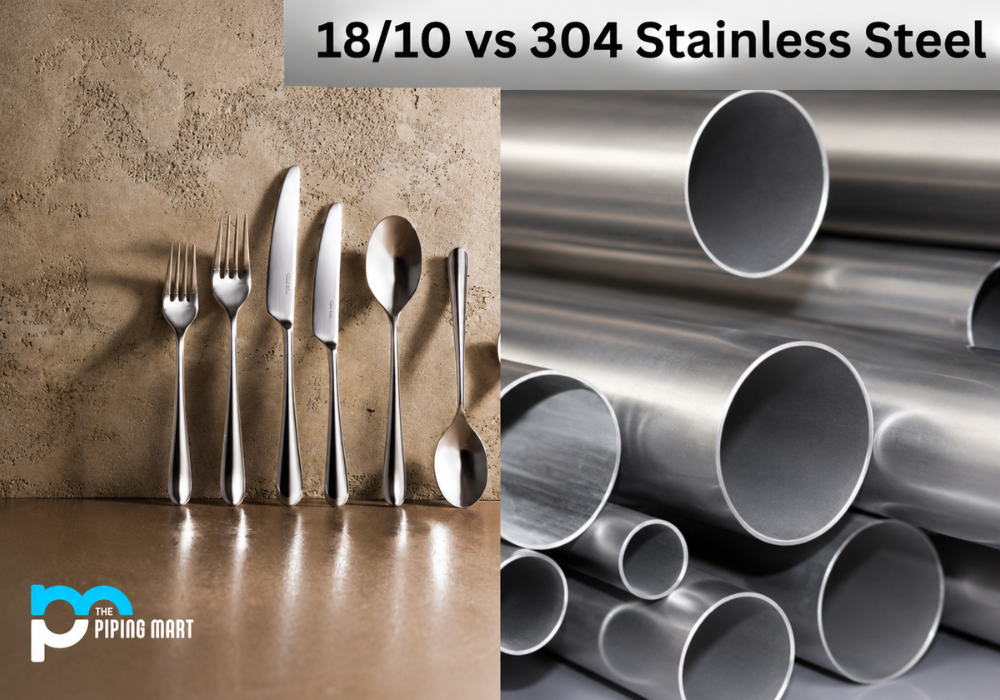
Procurement and sourcing teams often come across both 18/10 and 304 stainless steel in quotes, certificates, and product data. These terms are related but not identical. “18/10” is a commercial label mainly used for kitchen and consumer products, indicating steel with about 18% chromium and 10% nickel. The AISI 304 is an official industrial grade with a defined chemical composition and certification standards. Understanding these differences helps buyers to avoid mistakes in specifications, prevent confusion with suppliers, stay compliant with regulations, and reduce extra costs in food processing, fabrication, and kitchen equipment projects.
What is 18/10 Stainless Steel?
The 18/10 stainless steel is often considered a high-quality material for kitchen and dining products. It contains 18% chromium and 10% nickel, which makes it highly resistant to rust, corrosion, and staining. The nickel content gives 18/10 stainless steel a smooth and durable finish that stays in good condition over time. Due to this, it is commonly used for cookware, cutlery, and kitchen tools used every day. With proper care, these products can last for many years. It also offers good corrosion resistance and durability at a reasonable cost, making it a practical choice for long-term use.
What is 304 Stainless Steel?
As 18/10 is more of a marketing term, 304 stainless steel is the official technical grade that engineers use. It belongs to the 300-series of stainless steels. The AISI 304 stainless steel designation is the most common grade found across the globe. When looking at the 304 stainless composition, it generally contains between 18% and 20% chromium and 8% to 10.5% nickel. It is a durable and versatile stainless steel used in food processing equipment, automotive components, and industrial fabrication. Because it is so reliable and easy to shape into different forms, it has become the widely used choice for both heavy industry and home appliances.
18/10 vs. 304 Stainless Steel Composition
The table below sets out the key compositional and specification differences relevant to sourcing and material qualification decisions.
| Property | 18/10 Stainless Steel | 304 Stainless Steel |
| Chromium Content | 18% | 18-20% |
| Nickel Content | 10% | 8-10.5% |
| Carbon Content | Max 0.08% | Max 0.08% |
| Corrosion Resistance | Excellent | Excellent |
| Durability | High | High |
| Appearance | Bright, polished finish | Varies by finish |
| Magnetism | Generally non-magnetic | Generally non-magnetic |
| Standard Reference | Commercial label only | AISI 304 / EN 1.4301 |
| Mill Certification | Not formally required | Available via MTR / EN 10204 |
| Common Applications | Cutlery, cookware, kitchenware | Industrial equipment, food processing, cookware |
The critical procurement distinction is this: 18/10 is a buyer-facing label with no formal standard behind it, while 304 (AISI 304 / EN 1.4301) is a certified grade with defined tolerances, traceable mill production, and internationally recognised test methods. A product labelled ’18/10′ may well be 304-grade material, as most quality kitchenware is, but without a mill test report (MTR) or EN 10204 3.1 certificate, that cannot be confirmed through documentation alone. Where compliance, audit trails, or regulated-industry approval is required, procurement specifications should reference the formal grade, not the commercial label.
18/10 vs 304 Stainless Steel: Feature Comparison Table
Both 18/10 stainless steel and 304 stainless steel offer very similar performance in kitchen and industrial environments. The table below compares their key features, performance, and key features across different applications.
| Feature | 18/10 Stainless Steel | 304 Stainless Steel |
| Corrosion Resistance | Resists rust, stains, and moisture well in kitchen use | Handles corrosion well in both kitchen and industrial environments |
| Strength & Durability | Strong enough for regular cookware and cutlery use | Good mechanical strength for fabrication and equipment |
| Food Safety & Hygiene | Non-reactive and safe for food contact | Commonly used in food-grade and hygienic applications |
| Heat Resistance & Temperature Performance | Performs well during normal cooking temperatures | Suitable for moderate heat in industrial systems |
| Typical Cookware & Induction-Range Performance | Frequently used in premium pots, pans, and utensils | Also used in cookware and commercial kitchen equipment |
| Long-Term Heat Resistance in Equipment | Handles repeated heating in kitchens effectively | Maintains performance during long-term industrial heat exposure |
| Appearance & Finish | Usually sold with a bright, polished finish | Available in polished, brushed, or matte finishes |
| Mirror, Brushed & Matte Finishes | Common in kitchenware and dining products | Common in fabrication, appliances, and industrial products |
| Visual Similarity Between 18/10 & 304 | Looks almost identical to 304 in most products | Most users cannot visually tell the difference |
Applications & Common Uses
18/10 vs 304 for Cookware
High-end brands prefer the 18/10 label. It is often marketed as a premium material for cookware and cutlery. You will find it in expensive sets of pots, pans, and forks that are meant to stay shiny for decades.
18/10 vs 304 for Industrial Use
In construction or plumbing, no one says 18/10. They use the term 304. It is used for pipes, storage tanks, and screws because it is easy to weld and highly dependable.
Food-processing and dairy equipment
Milk and meat plants need to be very clean. They use 304 steel because it can be cleaned using harsh chemicals without rusting. It meets all the strict health codes for food production.
Pharmaceutical and hygienic-design applications
This steel is used in the medical industry because of its purity. The smooth finish prevents the drug from getting contaminated. It is essential for keeping laboratories clean.
Advantages & Limitations
The two materials are very similar, but each has its own specific advantages and limitations depending on the kitchen or industrial application.
Advantages of 18/10 stainless
- Superior Shine: The high nickel content gives it a shiny, mirror-like surface that stays bright and silvery for many years.
- Maximum Rust Protection: It provides outstanding resistance to pitting and staining from repeated washing.
- Heavy Feel: This metal feels heavier and higher-quality to hold, so it is often used for expensive knives.
Limitations of 18/10 stainless
- Higher Cost: As the nickel content is costly, the raw material cost increases, which makes 18/10 products more expensive to manufacture and buy.
- Induction Issues: It is non-magnetic. Without a bonded base of magnetic steel, it will not trigger an induction hob.
- Overkill for Industry: In many industrial jobs, the additional nickel content may not justify the higher cost in many industrial applications over standard 304.
Advantages of 304 stainless
- Global Availability: The AISI 304 stainless steel is used in almost any form, from massive sheets to tiny screws, all over the world.
- Value for Money: It provides a perfect balance between strength and rust resistance without the need for the premium price tag of 18/10.
- Ease of Work: As it is easy for manufacturers to weld and shape, it is used for complex kitchen sinks and industrial tanks.
Limitations of 304 stainless
- Chemical Sensitivity: While it is tough, it can still rust or “tea stain” if it is regularly cleaned with bleach or exposed to heavy salt air.
- Varying Quality: The 304 stainless composition allows for a range of nickel (8% to 10.5%). If you buy a cheaper “304” item, it might have the minimum nickel, making it slightly less shiny than an 18/10 equivalent.
- Surface Dulling: Over many years of heavy scrubbing, a 304 surface may lose its lustre faster than 18/10, though it will still remain structurally sound.
Which Stainless Steel is Better?
There is no single winner here because they are basically the same thing. For your kitchen, 18/10 is usually considered “better” because the extra nickel makes it shine more and resist stains slightly better over twenty years. For building things or industrial work, 304 is the standard because it is cheaper to buy in bulk and does the job perfectly. If you want the best-looking forks, go for 18/10. If you are buying a sink or a worktable, 304 is all you need. Both offer long service life with proper maintenance.
Cost & Availability Comparison
18/10 products usually cost more at the shop. This is because nickel is an expensive metal. When the price of nickel goes up, the price of 18/10 cookware goes up too. 304 stainless steel is much easier to find in large quantities. You can buy 304 sheets or pipes from almost any metal supplier. In the world of industrial products, 304 is the budget-friendly choice that still offers high quality. Cookware sets marked 18/10 are seen as a luxury investment for the home.
Conclusion
The main thing to remember is that 18/10 is just a specific type of 304 stainless steel. The numbers ’18/10′ are used by kitchen brands to show off the high nickel content. For cookware and cutlery, 18/10 is the top choice because it remains polished. For everything else, like sinks and machinery, 304 is the industry standard. Both materials offer strong corrosion resistance and durability. They are both safe, strong, and rust-resistant. When you buy, look for 18/10 if you want a mirror shine, but trust 304 for everything else.
FAQs
Is 18/10 the same as 304?
Yes, for the most part. 18/10 is a grade of 304 stainless steel that has a specific amount of nickel. Engineers call it 304, while kitchen companies call it 18/10.
Which is better for knives and cutlery?
18/10 is better for forks and spoons because it stays shiny. However, knives are often made from 420 or 440 steel, so they can be sharpened, as 304/18/10 is too soft to hold an edge.
Is 18/10 suitable for induction cooktops?
Not on its own. 18/10 is not magnetic. To work on induction, a pan needs a bottom layer made of a different, magnetic steel like 18/0 or 430.
Is 304 food-safe and non-toxic?
Yes, it is completely food-safe. It does not leak chemicals into your food and is used in almost every professional food factory in the world.
Can 304 replace 18/10 in cookware?
Yes, many high-quality pans are simply labelled as 304. They will perform almost exactly like 18/10 pans, though they might have slightly less nickel.
Is 18/10 more expensive than 304?
Yes, as 18/10 has a guaranteed 10% nickel content, it costs more to produce than 304, which might only have 8% nickel.
Is 18/10 magnetic or not?
It is not magnetic. If a magnet sticks to your “18/10” pan, it is either not 18/10, or it has a different metal layered inside the bottom.
Which rusts faster: 18/10 or 304?
Technically, 304 with lower nickel might rust a tiny bit faster in extreme conditions. In a normal home, you won’t notice any difference between the two.