
Stainless steel 304 tube fittings are used in some of the most demanding fluid and gas handling systems. Whether it is a food processing line, a chemical transfer system, or an instrumentation setup, the fittings need to hold up over time. That does not happen on its own. Regular maintenance matters, and skipping it leads to leaks, corrosion, contamination, or premature failure. This guide covers practical maintenance steps for stainless steel 304 tube fittings, including how to clean, inspect, and protect them so they last as long as they are supposed to. The information here is applicable across most industrial and commercial installations.
Understanding Stainless Steel 304 Tube Fittings
SS 304 is an austenitic stainless steel that contains approximately 18% chromium and 8% nickel. The chromium content forms a thin passive oxide layer on the surface that prevents rust. In most conditions, if this film is scratched, it can rebuild itself as long as oxygen is available. That said, it has limits. Chloride-heavy environments, certain acids, and prolonged exposure to standing moisture can break down the passive layer over time. Stainless steel 304 tube fittings are found in water treatment plants, dairy facilities, pharmaceutical lines, oil and gas systems, and general industrial setups. Understanding what the material can and cannot handle is the starting point for any effective maintenance routine.
SS 304 Tube Fittings Maintenance Best Practices
Maintenance does not need to be complicated. These five practices cover the core of what needs to happen on a regular basis to keep fittings in good condition.
Regular Inspection of Tube Fittings
Set a fixed inspection schedule and stick to it. During each check, look closely at the fitting body, ferrule contact areas, and threads. Discoloration, surface pitting, or any sign of weeping at joints all need immediate attention. In high-vibration installations, check for loosening more often than in static systems. A small problem found during inspection takes minutes to fix. The same problem found after a line failure takes much longer.
Proper Cleaning Methods for SS 304 Tube Fittings
SS 304 tube fittings cleaning should always start with the mildest option that works. Warm water and a pH-neutral detergent handle most routine cleaning jobs. For heavier deposits or accumulation of bacteria, phosphoric acid-based cleaners or passivating solutions formulated for stainless steel are the right choice. After cleaning, rinse thoroughly with clean water and dry the fitting surface completely. Do not leave cleaning agents sitting on the metal longer than the product instructions allow. Residue from even a suitable cleaner can cause problems if it is not rinsed off properly.
Avoiding Surface Damage During Handling
Surface damage during handling is more common than most people expect. Dragging fittings across rough surfaces, using steel brushes to clean them, or striking them with hard tools all leave marks that can eventually turn into corrosion initiation points. Use soft cloths, plastic-tipped tools, or dedicated stainless-steel cleaning accessories. This applies during both installation and disassembly. The fitting surface needs to stay intact for the passive layer to do its job.
Corrosion Prevention Techniques
Passivation is the most reliable way to restore or strengthen the protective oxide layer. After welding, machining, or any process that heats or abrades the surface, the fitting should be passivated using a nitric acid or citric acid solution. This is also a good practice after any deep cleaning. Beyond passivation, keeping fittings away from contact with carbon steel components matters. Carbon steel particles that transfer onto stainless surfaces will rust and create visible staining, and over time, they can cause deeper surface damage.
Tightening and Reassembly Practices
Always follow the torque specifications provided by the fitting manufacturer. Over-tightening deforms the ferrule and stresses the fitting body. Under-tightening leads to leaks, sometimes immediately and sometimes weeks later, as the system cycles through pressure changes. When reassembling fittings after maintenance, inspect the ferrule before reusing it. A ferrule that has already been fully compressed may not seal the second time correctly. Replacing it is the safer option in most cases.
Common Maintenance Mistakes to Avoid
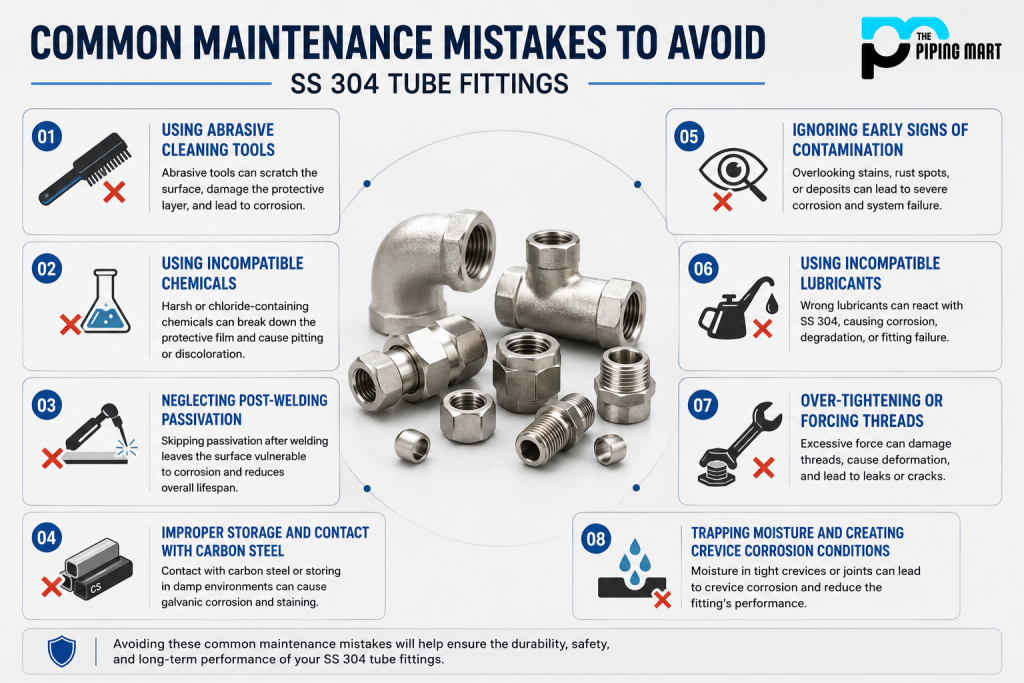
Most fitting problems in the field come down to maintenance errors, not material failures. These are the mistakes that show up most often and cause the most damage.
Using Abrasive Cleaning Tools
Steel wool, metal brushes, and abrasive cleaning pads scratch the surface and strip away the passive oxide layer. Once the layer is gone, the fitting corrodes much faster. Use soft cloths or non-abrasive sponges for SS 304 tube fittings cleaning. The surface needs to stay smooth for corrosion resistance to hold.
Using Incompatible Chemicals
Bleach-based cleaners, high-chloride solutions, and hydrochloric acid will damage SS 304 surfaces. Even diluted versions used repeatedly can cause pitting. Before using any cleaning or sterilizing product on stainless fittings, confirm it is rated safe for SS 304. This step is easy to overlook and frequently causes problems.
Neglecting Post-Welding Passivation
Welding creates a heat-affected zone where chromium is depleted from the surface. That zone loses much of its corrosion resistance until it is passivated. Skipping this step after any welding work leaves the fitting vulnerable, particularly near the joint. Post-weld passivation is not optional in demanding environments.
Improper Storage and Contact with Carbon Steel
Stainless fittings stored on bare metal shelving or mixed in with carbon steel parts pick up iron particles. Those particles embed in the surface and rust, which looks like the fitting itself is corroding. Store SS 304 fittings separately, on clean plastic or coated surfaces, in dry conditions.
Ignoring Early Signs of Contamination
Brown staining or small rust spots on stainless fittings are usually surface contamination, not base metal corrosion. But left alone, that contamination creates conditions for deeper pitting. Clean affected areas promptly and re-passivate the surface. Early action prevents what would otherwise become a replacement job.
Using Incompatible Lubricants
Some thread lubricants and sealants contain compounds that attack stainless steel or cause stress corrosion cracking under load. Always use lubricants that are explicitly rated for austenitic stainless grades. Check the product data sheet if there is any doubt.
Over-Tightening or Forcing Threads
Stainless steel galls more easily than most other metals, especially under high torque. When threads are forced or over-tightened, galling can permanently seize the fitting and make disassembly extremely difficult. Use correct torque, and apply a compatible anti-seize compound to threads in assemblies that will need to be disassembled later.
Trapping Moisture and Creating Crevice Corrosion Conditions
Crevice corrosion develops in tight gaps where oxygen cannot circulate to maintain the passive layer. Dead legs, improperly drained sections, and fittings left with standing water inside are all common causes. During shutdowns, drain lines fully and dry out sections where moisture tends to collect. Good system design helps, but maintenance practice matters just as much.
Conclusion
Maintaining stainless steel 304 tube fittings is straightforward when the right habits are in place. SS 304 tube fittings are strong, but they only resist corrosion if the thin oxide layer on the surface stays intact. To protect it, make sure to keep the fittings clean, handle them carefully, and follow a regular maintenance routine. These simple steps help prevent unexpected downtime and make the fittings last much longer. Most of the failures caused are because of skipping these steps and small oversights rather than product defects. Keeping SS 304 tube fittings in good shape is largely about doing the simple things correctly and doing them consistently over the long term.
FAQs
How often should SS 304 tube fittings be cleaned?
Cleaning frequency depends on what the system handles. In food, pharmaceutical, or chemical processing, fittings often need cleaning after every production run. In general industrial applications with less aggressive conditions, monthly or quarterly cleaning is usually adequate. Any system with chloride exposure or biological media should be cleaned more frequently and inspected between cleanings.
What is the best way to clean SS 304 tube fittings?
Start with warm water and a mild, pH-neutral detergent for routine cleaning. If there is heavy scaling or chemical residue, use a phosphoric acid-based cleaner or a passivating solution rated for stainless steel. Rinse thoroughly after any cleaning agent and dry the surface completely. Never use abrasive tools or chloride-based cleaners on SS 304 surfaces.
Can SS 304 tube fittings rust over time?
The SS 304 tube fittings do not rust the way carbon steel does, but surface staining and pitting can occur under certain conditions. Chloride exposure, iron contamination from carbon steel contact, or mechanical damage to the passive oxide layer are the most common causes. Regular SS 304 tube fittings maintenance, including periodic passivation, prevents most of these issues.
What causes leakage in tube fittings?
Leaks usually come from improper installation, incorrect torque during assembly, a reused ferrule that no longer seals correctly, or surface damage at the contact points. Vibration can loosen fittings gradually in dynamic systems. When a fitting leaks after reassembly, the ferrule and seating surface are the first things to check.
How can I increase the lifespan of SS 304 tube fittings?
Follow manufacturer torque specs during installation, clean with compatible products on a regular schedule, passivate after welding or surface damage, keep fittings stored away from carbon steel, and inspect at planned intervals. These SS 304 tube fittings care tips address the most common causes of early failure and, taken together, will add years to the service life of the fittings.