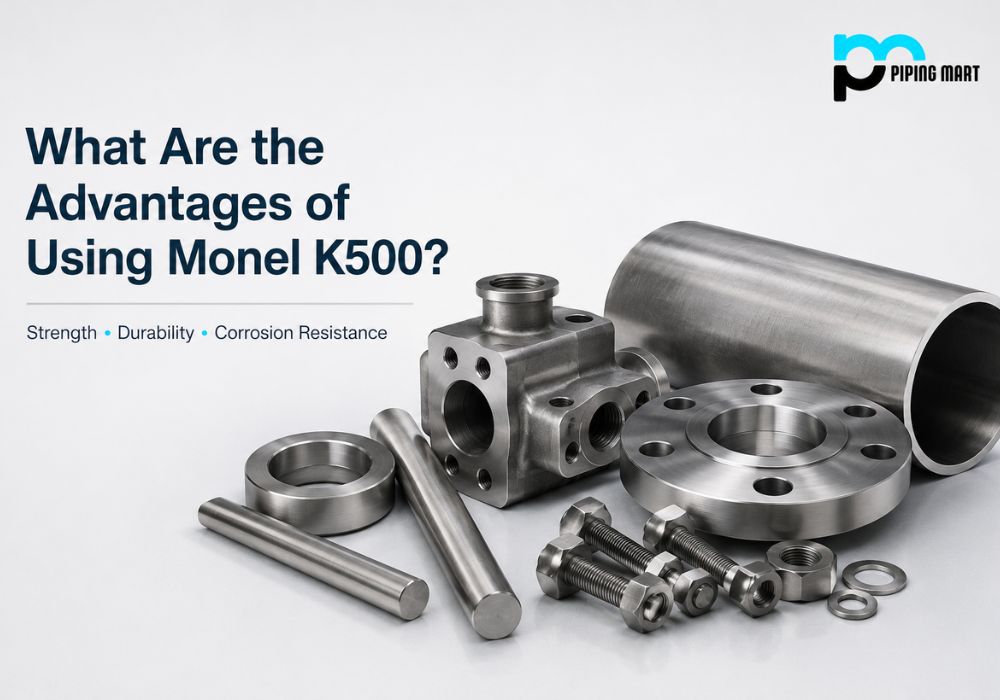
Monel K500 is a popular choice for many industries because it is based on standard nickel-copper alloys and offers much higher hardness and tensile strength. The selection of the right alloy for demanding applications can be made by balancing mechanical strength and chemical stability. This blog covers what Monel K500 is, its specific performance, benefits in high-stress settings, and why it remains a standard choice in marine and chemical processing industries. Its unique composition handles everything from sub-zero temperatures to highly corrosive saltwater environments.
What is Monel K500?
Monel K500 is a nickel-copper alloy with additions of aluminium and titanium. It shares the same base corrosion resistance as Monel 40. The additional elements allow the material to go through a process called age hardening or precipitation strengthening. By heating the metal under controlled conditions, tiny particles form within the metal’s structure, which makes it much stronger and harder than the standard version. It is non-magnetic at very low temperatures and remains tough as the temperature increases significantly. The Monel K500 material is used for pump shafts, oil-well drilling tools, and marine fasteners where standard metals would either snap or corrode too quickly.
Key Benefits of Monel K500
The reason engineers specify Monel K500 usually comes down to its ability to survive where other stainless steels fail. Here are the primary advantages of using this specific alloy in your projects.
- High Strength and Hardness
The biggest advantage is the sheer mechanical power of the metal. Because of the age-hardening process mentioned earlier, it has about three times the yield strength of Monel 400. It can endure high pressure and torque without deforming. This makes it the preferred choice for applications like heavy-duty bolts and valve components that need to stay tight under extreme loads.
- Excellent Corrosion Resistance
This material handles multiple corrosive agents in harsh environments. It is especially good at resisting mineral acids, salts, and alkalis. In flowing seawater, it performs exceptionally well as it resists the pitting and crevice corrosion that corrodes other metals. This makes it a preferred choice for marine hardware and submarine parts that stay submerged for longer durations.
- Safety in Harsh Environments
Safety is important in volatile environments like sour gas wells containing hydrogen sulfide. Monel K500 material is highly resistant to sour-gas environments and stress-corrosion cracking. It doesn’t get brittle easily. This reduces the risk of sudden, catastrophic equipment failure. This reliability keeps workers safe and prevents environmental leaks in high-stakes oil and gas operations.
- High Temperature Range
Many metals lose their integrity when in extreme temperatures, but Monel K500 alloy is very stable. It maintains its properties from cryogenic temperatures up to about 480°C. Even at those high temperatures, it maintains its dimensions and doesn’t soften too much. However, at sub-zero temperatures, it actually gains strength without becoming brittle, which is rare for high-strength metals.
- Low Maintenance
Because it doesn’t rust or degrade quickly in salty or acidic conditions, you don’t have to replace parts nearly as often. This provides much lower downtime for repairs. In industries like offshore drilling, pulling a pump out of the water for maintenance is incredibly expensive. Using a material that lasts longer on its own saves a lot of money and logistical headaches over the life of the machine.
- Custom Fabrication
Even though it is very hard, you can still machine and weld Monel K500 effectively by using the proper cutting speed, sharp tools, sufficient coolants, and recommended welding methods. It can be formed into complex shapes like pump impellers or intricate electronic parts. Engineers don’t have to compromise on the design if they have a high-strength material that is also easy to shape for custom manufacturing.
Conclusion
Choosing Monel K500 is usually a decision based on long-term durability and safety. While the initial cost of the material might be higher than standard steel, its combination of high tensile strength with superior corrosion resistance makes it more efficient in the long run. Whether it’s being used in a deep-sea sensor or a chemical processing valve, the alloy provides a level of reliability that is hard to match. If your application involves high pressure, corrosive fluids, or extreme temperature swings, this material is likely the most practical solution available.
FAQs
What is Monel K500 primarily composed of?
Monel K500 is mostly made of nickel (about 63%) and copper (around 30%), with small but important additions of aluminium and titanium for hardening.
What industries commonly use Monel K500?
Monel K500 is commonly found in the marine, chemical processing, and oil and gas industries, particularly for underwater or downhole equipment.
What performance advantage does Monel K500 offer in the oil and gas sector?
Monel K500 resists sour gas and stays strong under the high pressure in deep wells, which prevents drill string failures.
How does the mechanical strength of Monel K500 compare to other materials?
The mechanical strength of Monel K500 is significantly stronger than standard Monel 400 and many 300-series stainless steels, offering roughly triple the yield strength after heat treatment.
How does Monel K500 contribute to cost-effectiveness in projects?
Monel K500 lowers costs by reducing the frequency of part replacements and preventing expensive equipment failures in hard-to-reach locations.