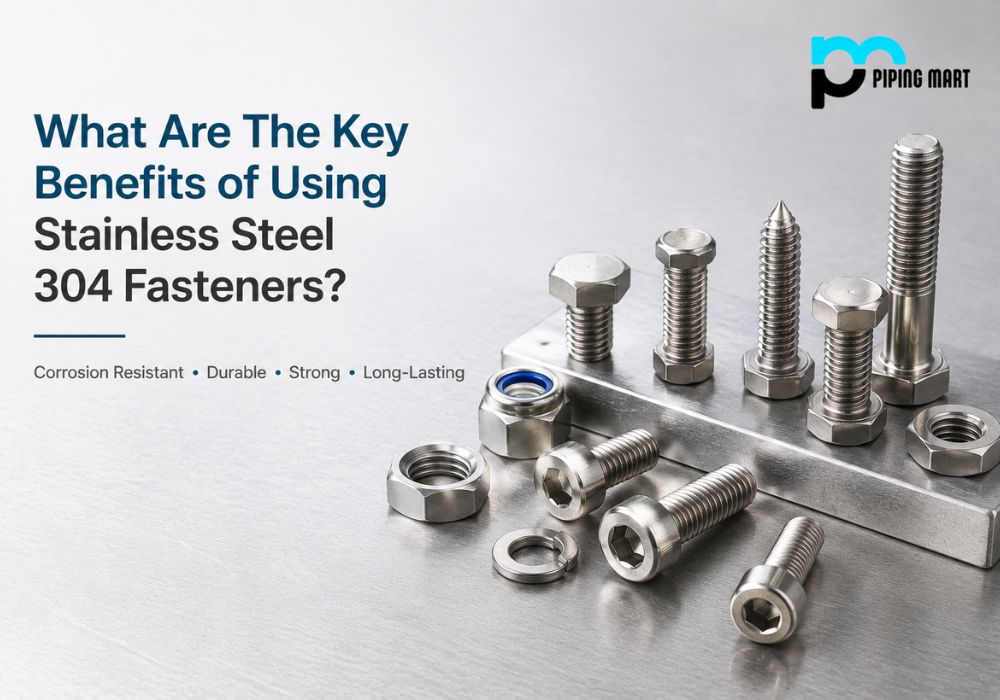
Fasteners are one of those components that rarely get much attention until something fails. In industrial and construction applications, the material of the fastener matters a great deal. Stainless steel 304 fasteners are among the most frequently specified fasteners in the market, and for practical reasons. The grade has been in use for decades across manufacturing, food processing, marine, and architectural projects. If you are sourcing fasteners for a project that involves moisture, chemicals, or outdoor exposure, understanding what SS 304 fasteners actually deliver in practice helps in making a better procurement decision. This blog covers the key benefits of SS 304 fasteners in straightforward terms.
What are Stainless Steel 304 Fasteners?
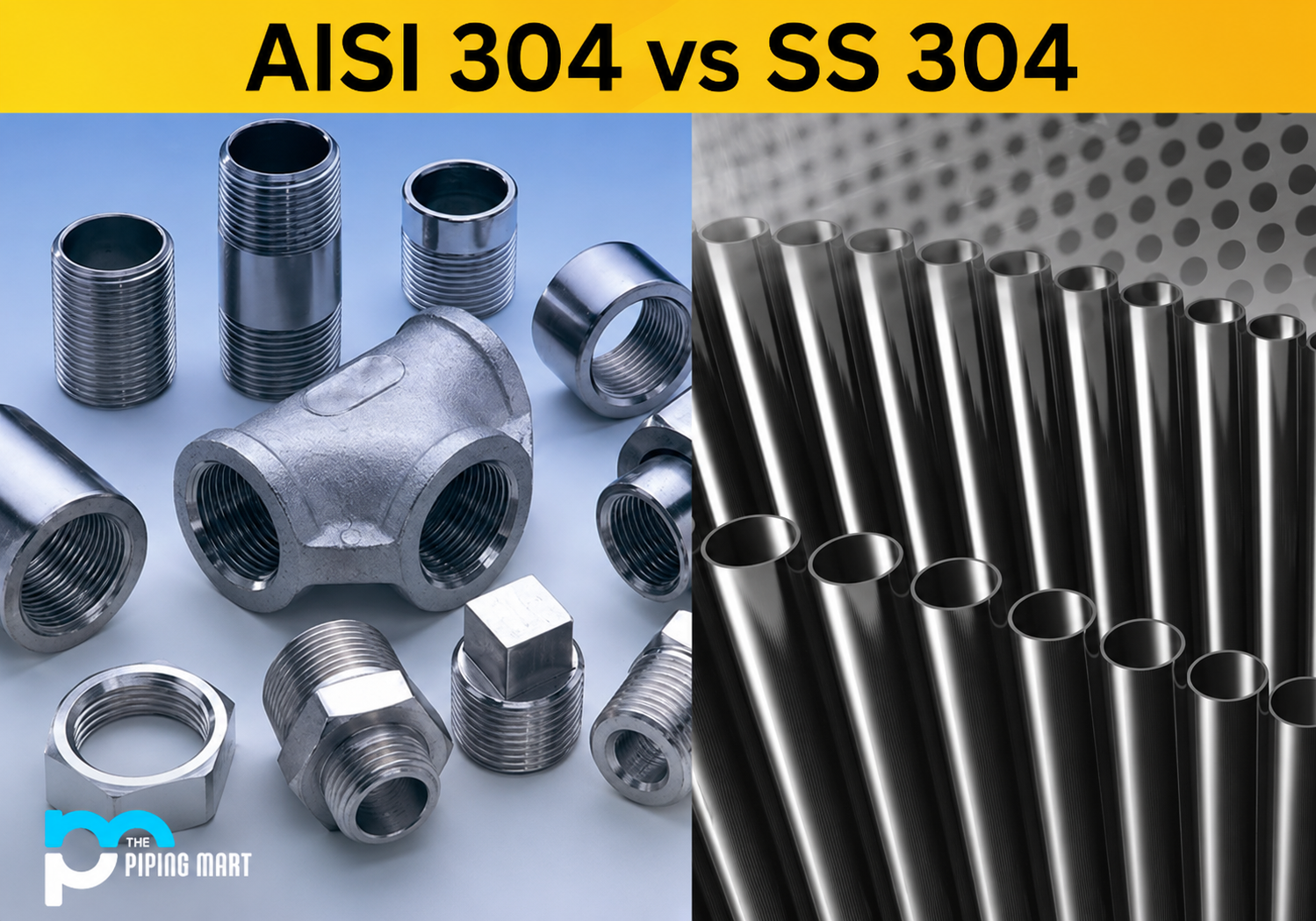
Stainless Steel 304 fasteners, which include bolts, nuts, screws, washers, studs, and other threaded components, are manufactured out of Grade 304 austenitic stainless steel. These fasteners include approximately 18% chromium and 8% nickel and are extensively used 300-series stainless steel offers an ideal blend of strength, endurance, and corrosion resistance. The chromium forms a protective passive layer on the surface, helping to resist rust and oxidation in various environments. SS 304 fasteners are available in multiple sizes, shapes, and finishes and are commonly used in light- to medium-duty industrial, commercial, and architectural applications.
Key Benefits of Stainless Steel 304 Fasteners
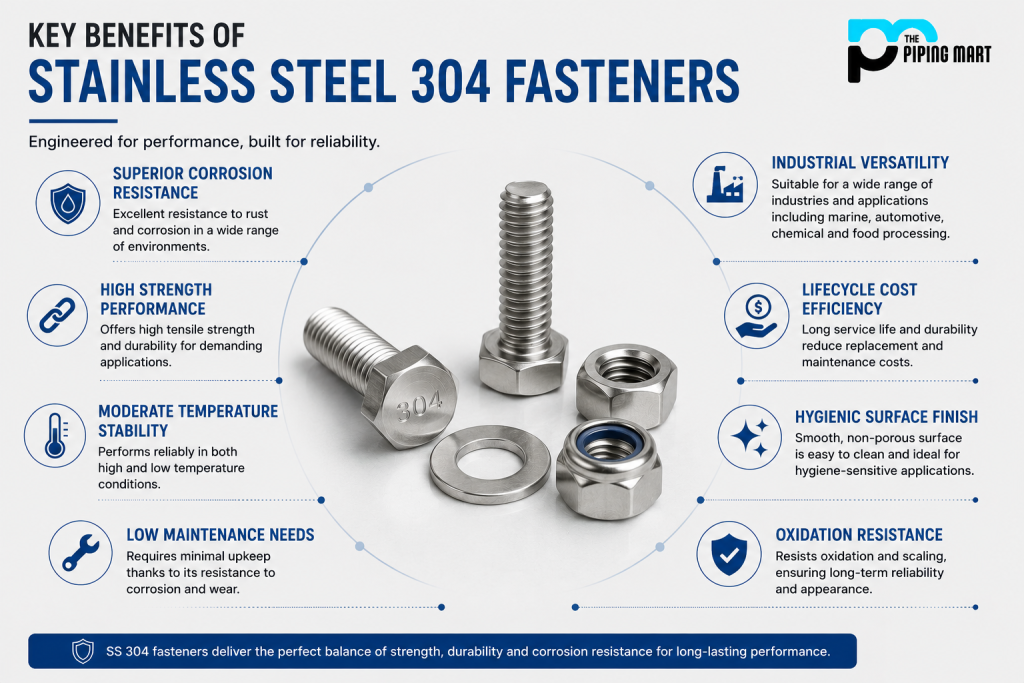
The SS 304 fasteners are widely used due to their strength, corrosion resistance, and durable surface finish. The following are the benefits that highlight their performance in various applications.
Superior Corrosion Resistance
The thin layer of oxide forms on the surface of the chromium content of SS 304 when it reacts with oxygen. This layer is a barrier and prevents moisture or chemicals from contacting the base metal. These fasteners remain effective for long periods of time without any apparent rusting in humid, water-exposed, or mildly chemically exposed environments. Engineers prefer this grade as one of the main benefits of SS 304 fasteners in their specifications of hardware for outdoor or wet applications. SS 304 usually resists corrosion well, but it can still develop pits in environments with a lot of chloride (like seawater).
High Strength Performance
The SS 304 fasteners have good strength. For medium-strength uses, the SS 304 bolt has a tensile strength of about 515 MPa. It’s not the strongest option, but it works well for most general industrial jobs. Where extreme loads or high-pressure joints are involved, a higher-grade fastener would be more appropriate. For most construction, equipment assembly, and light structural work, the strength is sufficient.
Moderate Temperature Stability
The material performs reasonably well at elevated temperatures. SS 304 fasteners can generally be used in continuous service at temperatures up to approximately 870°C in air, though the practical working range for most fastener applications is considerably lower. At normal industrial operating temperatures, the material does not scale or lose significant mechanical properties. SS 304 fasteners perform well for moderate heat. For high temperatures, SS 310 or similar grades are better.
Low Maintenance Needs
The key benefit of SS 304 fasteners is that they need minimal maintenance. Unlike carbon steel fasteners, they resist rust and usually don’t need frequent checks, new coatings, or replacements. The passive layer on the surface is self-repairing to a degree. If it gets scratched in normal conditions, it reforms on its own. This reduces the labour and cost associated with routine maintenance cycles on equipment or structures where SS 304 fasteners are installed.
Industrial Versatility
SS 304 fasteners are available in a large number of forms. Hex bolts, socket head cap screws, machine screws, carriage bolts, eye bolts, anchor bolts, hex nuts, lock nuts, flat washers, and many other types are produced in this grade. They can be fabricated with fine or coarse threads, in metric or imperial sizes. The material can also be welded, though care must be taken with sensitisation at certain temperature ranges. This availability in multiple configurations makes it easy to source SS 304 fasteners for almost any assembly requirement without needing to switch to a different material for each part of the joint.
Lifecycle Cost Efficiency
The upfront cost of SS 304 fasteners is higher than that of carbon steel or mild steel fasteners. That part is straightforward. But over the lifecycle of an installation, the cost picture changes. Fewer replacements, lower maintenance labour, and no need for protective coatings mean that the total cost over time often works in favour of SS 304. In applications where accessing a fastened joint for replacement is difficult or costly, using a more durable material from the start makes financial sense. This is one of the reasons why using SS 304 fasteners is a common question in procurement discussions, and the lifecycle argument tends to answer it well.
Hygienic Surface Finish
SS 304 fasteners with smooth and polished surfaces are easy to clean and will prevent the accumulation of bacteria, dirt, and other contaminants. They are not porous and offer high levels of hygiene for food processing, pharmaceutical industrial production, and other clean environment uses. In contrast to a corroded or coated surface, stainless steel surfaces are less likely to accumulate organic matter and will not suffer significant surface degradation when cleaned and sterilized frequently. The SS 304 fasteners’ combination of cleanliness, durability, and corrosion resistance is ideal for the hygiene-critical industries.
Oxidation Resistance
In addition to general corrosion, SS 304 fasteners also withstand surface oxidation at high temperatures. The material does not form a heavy scale up to about 870°C. When the temperature is below that, the surface remains rather stable. This is important in applications that experience heat cycling and/or industrial processes with high ambient temperature. The chromium oxide layer plays the same protective role here as it does in wet corrosion resistance. It is not a high-temperature specialist grade, but for moderate heat applications, the oxidation resistance is a useful property.
Conclusion
Stainless steel 304 fasteners cover a broad range of practical requirements and are a reliable material choice for applications, such as construction, food processing, chemical, and marine applications, due to their corrosion resistance, reasonable mechanical properties, low maintenance, and hygienic surface properties. These fasteners are not suitable in all conditions, especially when used in extreme temperatures, chloride environments, and high structural loads. However, for most general uses of the industry and commerce, the benefits of SS 304 fasteners are well established. For projects where moisture, mild chemical, or food-grade specifications are required, SS 304 is worth specifying.
Frequently Asked Questions
How do you identify genuine SS 304 fasteners?
SS 304 fasteners are usually marked with the grade designation on the head or body of the fastener. A rough indication can be obtained from a magnet test, but SS 304 is only slightly magnetic when it is in the annealed condition and may exhibit slight magnetism when cold worked. The most reliable method is to request material test certificates from the supplier showing the chemical composition of the batch.
What are the common types of SS 304 fasteners?
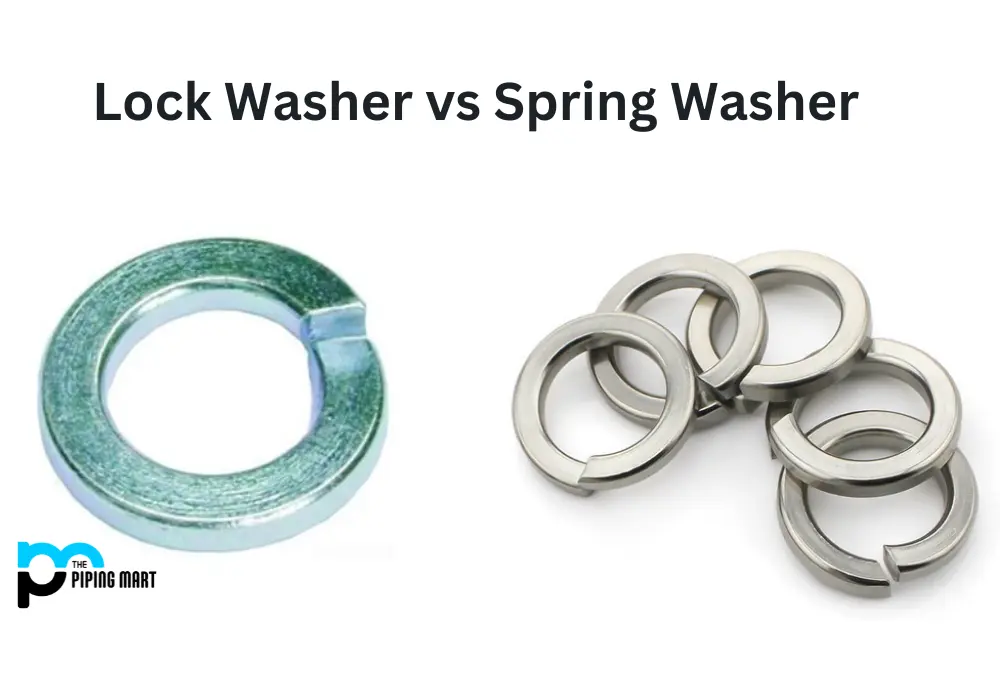
The common SS 304 fasteners include hex bolts, hex nuts, socket head cap screws, machine screws, self-tapping screws, flat washers, spring washers, carriage bolts, and stud bolts. They are available in many sizes and lengths, in both metric and imperial units, to suit different assembly needs.
Are SS 304 fasteners rust-proof?
SS 304 fasteners resist corrosion but are not completely rust-proof. In normal air, humid conditions, or when exposed to water, they generally do not rust. However, in environments with a lot of chloride, like seawater or areas treated with de-icing salts, they can develop small pits or crevice corrosion on the surface. In such harsh conditions, SS 316 fasteners are a better choice.
What industries commonly use SS 304 fasteners?
The SS 304 fasteners are used in industries such as food processing, pharmaceutical manufacturing, dairy equipment, architectural construction, marine fittings, water treatment plants, chemical processing (moderate concentration), and general fabrication. They combine corrosion resistance and surface finish quality to be appropriate wherever contamination control or moisture exposure is a factor.
How long do SS 304 fasteners last?
SS 304 fasteners can last for decades in indoor and mildly exposed outdoor environments. The service life of the fasteners depends on factors such as environmental conditions, load requirements, and exposure to chemicals or extreme temperatures.