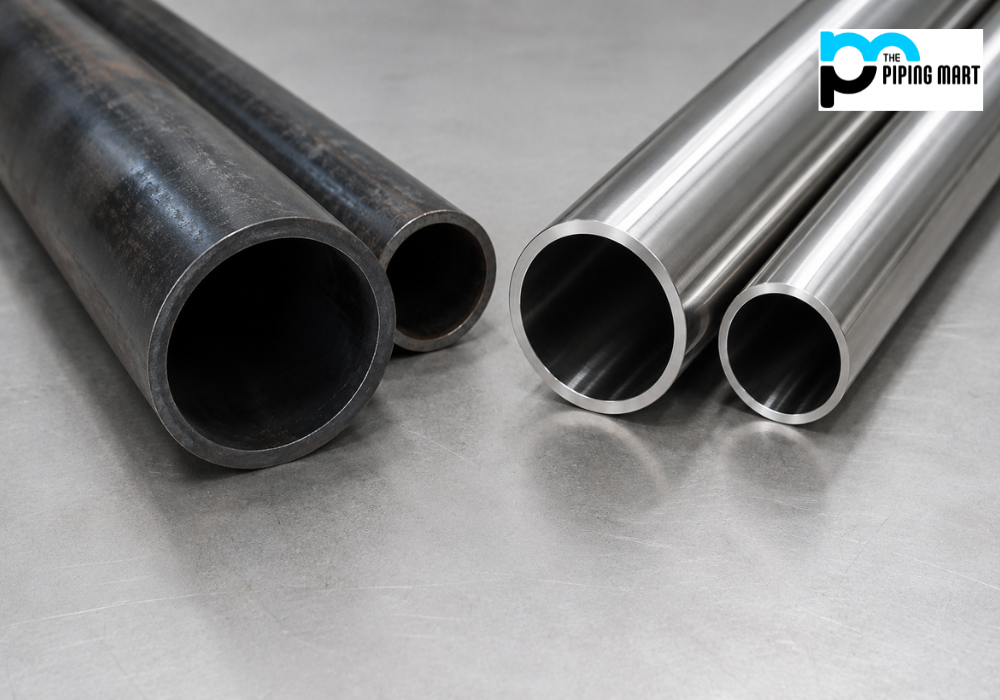
Alloy steel and stainless steel are both used in industrial and commercial environments, but they are selected for different reasons. Both grades are made mainly of iron, but their added elements change how they perform. Alloy steel is often used to increase strength, hardness, and wear resistance. Stainless steel is mainly used for its corrosion resistance, as it is stable and easy to clean its surface. The decision between grades is based on operating conditions, financial constraints, and the material’s estimated life. Understanding these differences helps buyers and engineers choose the right material for pipelines, equipment, or structural use. This guide explains their definitions, properties, composition, and applications.
What is Alloy Steel?
Alloy steel is a type of steel made by adding one or more alloying elements to iron and carbon. These elements- chromium, nickel, molybdenum, manganese, vanadium, and silicon- are added in specific amounts to improve particular properties like strength, hardness, or wear resistance. The exact mix depends on what the steel needs to do. High-strength bolts, drill bits, and structural components in heavy machinery are common uses. Not all alloy steels are the same; the composition is adjusted based on the application.
What is Stainless Steel?
Stainless steel is also an alloy, but what sets it apart is the minimum 10.5% chromium content. That chromium reacts with oxygen to form a thin protective layer on the surface, which stops rust from forming. It also contains iron, carbon, and often nickel and molybdenum. There are different grades of austenitic, ferritic, and martensitic, each suited to different uses. The food industry, medical devices, and architecture rely on it heavily, mostly because it resists corrosion and is easy to clean.
Difference Between Alloy Steel and Stainless Steel
Both materials are made of iron and carbon, but their compositions, performance, and applications differ significantly. The table below summarises the major points of comparison.
| Aspect | Alloy Steel | Stainless Steel |
| Composition | Iron + carbon + elements like Cr, Ni, Mo, Mn, V, Si | Iron + min. 10.5% chromium + Ni, Mo, C |
| Corrosion Resistance | Moderate; depends on alloying elements | A high chromium oxide layer provides protection |
| Strength | Very high; can be enhanced via heat treatment | Good; varies by grade |
| Hardness | Can be hardened significantly | Generally lower than alloy steel |
| Wear Resistance | High | Moderate |
| Temperature Performance | Good for high-heat environments | Good; some grades handle high temps well |
| Cost | Generally lower | Higher due to chromium and nickel content |
| Weldability | Possible; requires care and preheating in some cases | Generally easier to weld |
| Typical Applications | Automotive, aerospace, construction, defence | Food, medical, marine, and architecture |
| Hygiene/Cleanability | Not ideal | Excellent; easy to sterilise |
Alloy Steel vs Stainless Steel Properties
Both materials offer useful properties, but the focus is different. The alloy steel increases strength and durability, and on the other hand, stainless steel is more stable and reliable.
Properties of Alloy Steel
- Hardenability: Alloy steel performs well in heat treatment, which increases hardness. Elements like chromium and molybdenum allow deeper hardening through the material’s cross-section, not just on the surface.
- Strength and Toughness: It offers a good balance of both. Depending on the alloying elements, it can handle impact and heavy loads without fracturing easily.
- Corrosion Resistance: It has some resistance, but it is not comparable to stainless steel. Surface coatings or treatments are usually needed in corrosive environments.
- Wear Resistance: High wear resistance makes it suitable for cutting tools, gears, and parts exposed to friction.
- Hot Hardness: Certain alloy steels retain hardness at elevated temperatures, which is useful in tooling and engine components.
Properties of Stainless Steel
- Corrosion Resistance: The chromium oxide layer possesses self-repairing properties when scraped, as it forms again due to exposure to oxygen. It makes stainless steel a reliable option in moist or chemically reactive environments.
- Mechanical Strength: Strength varies by grade. Martensitic grades are generally stronger and harder, while austenitic grades are known for being tougher and more flexible.
- Thermal Properties: Different grades of stainless steel perform differently in both high and low temperatures. But austenitic grades perform better in extreme temperatures as compared to ferritic grades.
- Biological Cleanability: As stainless steel prevents bacterial growth on the surface, it can be cleaned and sterilised quickly. It is commonly used in the medical and food industries.
- Fabrication Versatility: Stainless steel is easier to work with and can be cut, bent, welded, and finished in multiple ways. The selection of the grades depends on the manufacturing process requirements.
Applications of Alloy Steel vs Stainless Steel
Both steels are used in various industries, but the choice varies depending on the operating circumstances and load.
Applications of Alloy Steel
- Automotive: Used in gears, axles, crankshafts, and suspension parts where strength and wear resistance are needed.
- Aerospace: Structural elements, landing gear, and engine components require a superior strength-to-weight ratio.
- Construction and Infrastructure: Alloy steel is used to enhance load-bearing capacity in reinforcement bars, structural beams, and bridge components.
- Energy Sector: Pressure vessels, pipelines, and drilling apparatus in oil, gas, and power generation.
- Machinery and Tools: Cutting implements, dies, moulds, and industrial applications requiring hardness and wear resistance.
- Defence: Armour plating, weapons systems, and military vehicle components.
- Medical Equipment: Surgical equipment and orthopaedic implants require particular mechanical properties; stainless steel is more widely utilised.
Applications of Stainless Steel
- Culinary & Home: Kitchen sinks, cookware, cutlery, and appliances all benefit from the non-reactive and easy-to-clean surface.
- Architecture & Construction: Cladding, handrails, facades, and structural elements in buildings where appearance and corrosion resistance both matter.
- Medical & Pharmaceutical: Surgical tools, implants, sterilisation equipment, and pharmaceutical processing where hygiene is non-negotiable.
- Automotive & Aerospace: Exhaust systems, catalytic converters, and aircraft components where heat and corrosion resistance are needed together.
- Industrial & Chemical Processing: Tanks, reactors, piping systems, and valves in industries that deal with acids, solvents, or high temperatures.
- Energy & Marine: Offshore platforms, desalination plants, and nuclear reactor parts are used in very harsh environments where corrosion is a major, constant problem.
Chemical Composition Comparison
The difference in performance comes mainly from the elements added to the base metal.
Compositions of Alloy Steel
Chromium (Cr): Added in small amounts (0.3–5%) to improve hardness and corrosion resistance. At higher levels, it forms the basis of stainless steel.
- Nickel (Ni): Improves toughness and impact strength, especially at low temperatures.
- Molybdenum (Mo): Increases high-temperature strength and resistance to creep (deformation under sustained load).
- Manganese (Mn): Improves hardenability and tensile strength. It also acts as a deoxidiser during steelmaking.
- Vanadium (V): Refines grain structure, which improves strength and toughness without adding brittleness.
- Silicon (Si): Used mainly as a deoxidiser but also increases strength and improves magnetic properties in some grades.
Compositions of Stainless Steel
- Iron (Fe): Iron is the key metal, generally constituting 60–70% of the composition.
- Chromium (Cr): A minimum of 10.5% is necessary for the classification of stainless steel. High chromium levels enhance corrosion resistance further.
- Nickel (Ni): Often included in austenitic grades (8–10%) to enhance ductility, toughness, and resistance to acidic conditions.
- Carbon (C): Maintained at a low level (often below 0.08%) to prevent carbide precipitation, which may diminish corrosion resistance post-welding.
- Molybdenum (Mo): Used in grades such as 316 to improve resistance to chloride-induced corrosion, making it appropriate for marine and chemical applications.
How to Choose Between Alloy Steel and Stainless Steel
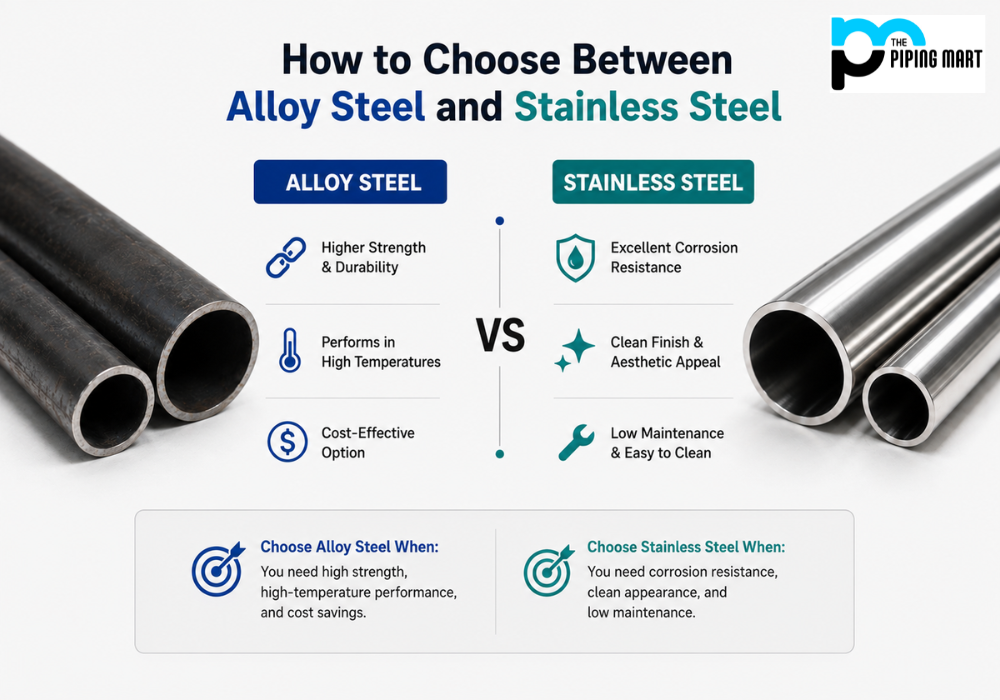
The most effective option depends on the needs of the product; the environment, load, temperature, and budget are all important factors. Here are the main factors to consider:
- Corrosion Environment: When subjected to moisture or chemicals, stainless steel is a more reliable choice. Alloy steel is susceptible to corrosion if not protected.
- Mechanical Load Specifications: In applications that require high tensile strength or hardness, such as load-bearing machinery components or cutting implements, alloy steel, particularly after heat treatment, outperforms standard stainless steel grades.
- Temperature Conditions: High-speed tooling and components near heat sources often require alloy steel with hot hardness. For elevated temperatures combined with corrosion, certain stainless grades (like 310 or 316) can withstand both.
- Hygiene and Cleanability: Medical instruments, food equipment, and pharmaceutical materials require a clean surface. Stainless steel is the preferred option due to its non-porous, easily cleanable surface.
- Cost and Budget: Generally, alloy steel is more economical than stainless steel. When corrosion resistance is not required, and surface coating is permitted, alloy steel reduces material costs.
- Fabrication Process: Stainless steel is usually easier to weld and shape. Some alloy steels require preheating before welding to prevent cracking. Consider the production process when making your decision.
- Aesthetics: For visible architectural or consumer-facing parts, stainless steel’s appearance and surface finish options are preferred.
Conclusion
The alloy steel and stainless steel each have clear strengths, and neither is universally better than the other. Alloy steel works well in structural, mechanical, and high-stress applications where strength, hardness, and wear resistance are the priority. Stainless steel is the better option when corrosion resistance, hygiene, or appearance is the main requirement. The ideal strategy is to consider the actual conditions that the material will encounter: load, temperature, environment, and maintenance and then match the steel type to those requirements. To prevent material failure and unnecessary costs in the future, it is crucial to ensure that the initial steps are taken correctly.
FAQ
Which is better for high-temperature applications?
Both materials can withstand high temperatures. Alloy steel is widely used when the metal is exposed to extreme heat. Stainless steel can also handle high temperatures, but selecting the right quality is crucial.
Which is stronger, alloy steel or stainless steel?
Alloy steel is typically stronger and tougher. Stainless steel has high strength, although it is mostly used for corrosion resistance.
Can alloy steel be welded like stainless steel?
Yes. Alloy steel can be welded; however, it may require preheating or post-treatment. On the other hand, stainless steel is easier to weld, depending on the grade.
Which steel is more suitable for construction projects?
Alloy steel is mainly used when high structural strength is needed. Stainless steel is chosen when corrosion resistance or a better appearance is important.
How do the mechanical properties of alloy steel and stainless steel differ?
Alloy steel improves strength, hardness, and wear resistance. Stainless steel, on the other hand, has better corrosion resistance and ductility while maintaining a balanced strength.