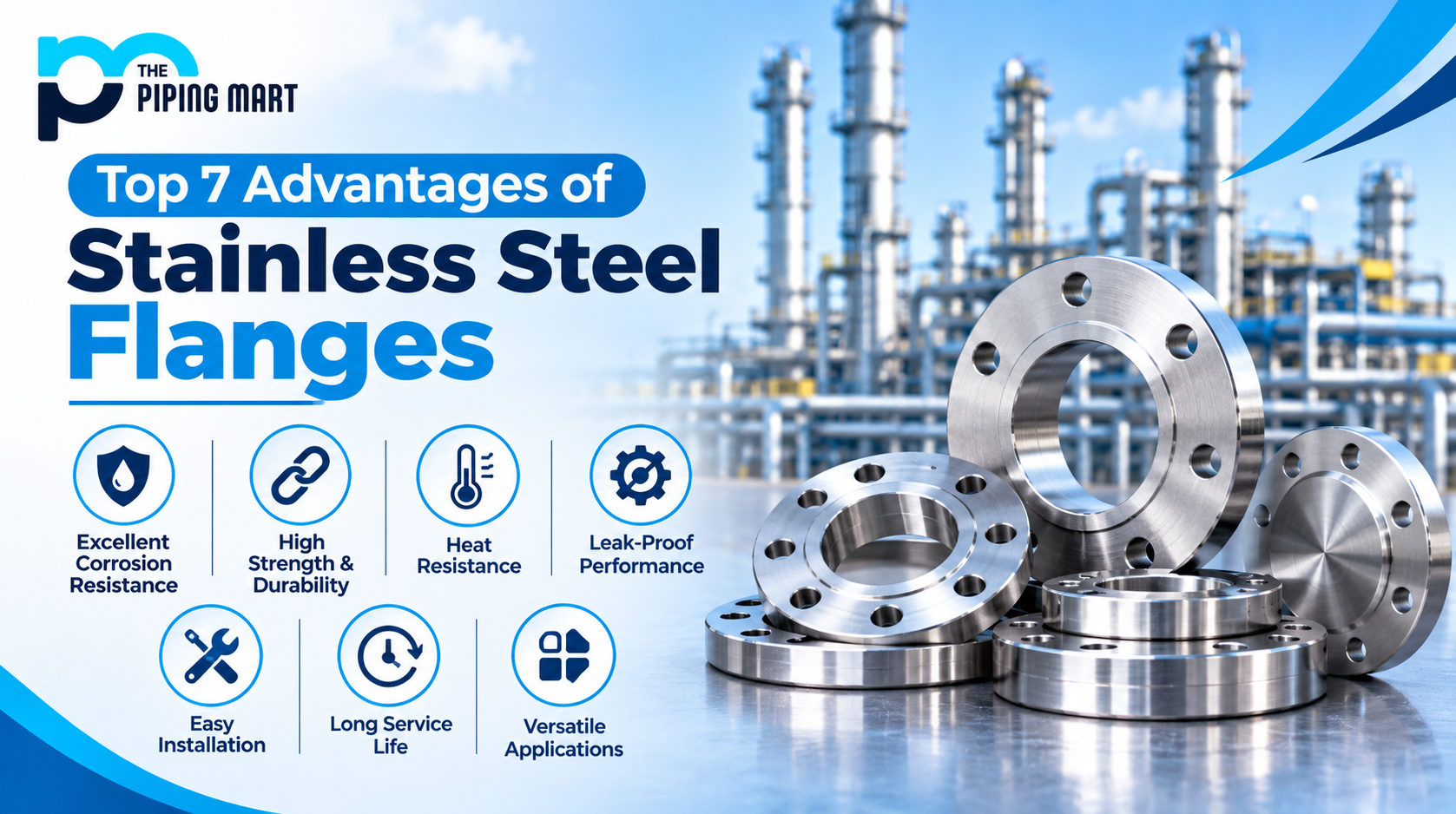
Stainless steel flanges join pipes, valves, pumps, and other equipment through a bolted face connection that seals with a gasket. Engineers choose them because the joint stays accessible, so crews can open a line for inspection, repair, or replacement without cutting pipe. Material choice then decides how long that joint performs. The advantages of stainless steel flanges include corrosion resistance, mechanical strength, temperature tolerance, service life, simple maintenance, broad application range, and hygienic, chemically resistant surfaces. The sections below explain each one for buyers, specifying flanges for a new or existing system.
1. Excellent Corrosion Resistance
Chromium drives corrosion resistance. Stainless steel contains at least 10.5% chromium, which forms a self-repairing passive layer and protects flanges in moisture, chemical, and demanding industrial service. Results still depend on grade and environment: 316 stainless steel flanges add molybdenum for chloride exposure, while 304 suits milder media.
2. High Strength and Durability
Bolt load, line pressure, and vibration test every joint. Forged stainless steel weld neck flanges spread stress through a tapered hub, and ASME B16.5 pressure classes from 150 to 2500 let designers match strength to duty. Correct material selection keeps that performance steady through years of cycling.
3. Excellent Temperature Resistance
Heat changes metal behaviour. Strength drops and oxidation speeds up as temperature climbs, so grade selection matters. Austenitic grades such as ASTM A182 F304 flanges resist scaling up to 870°C in intermittent service, which covers process plants, heat exchangers, and industrial piping. Stainless also keeps toughness at cryogenic temperatures.
4. Long Service Life
Corrosion resistance, strength, and durability combine into extended service life, yet installation and upkeep decide the outcome. Even bolt tightening, correct gasket seating, and routine checks protect the joint. Grade and specification matter equally: stainless steel slip-on flanges in a grade mismatched to the medium corrode early.
5. Easy Maintenance and Inspection
Maintenance crews unbolt a flange pair to inspect internals, service a pump, or swap a valve without cutting or re-welding pipe. That access suits systems needing periodic servicing. Each opening also allows gasket replacement, and scheduled checks of faces, bolts, and gaskets catch wear before it becomes a leak.
6. Wide Range of Applications
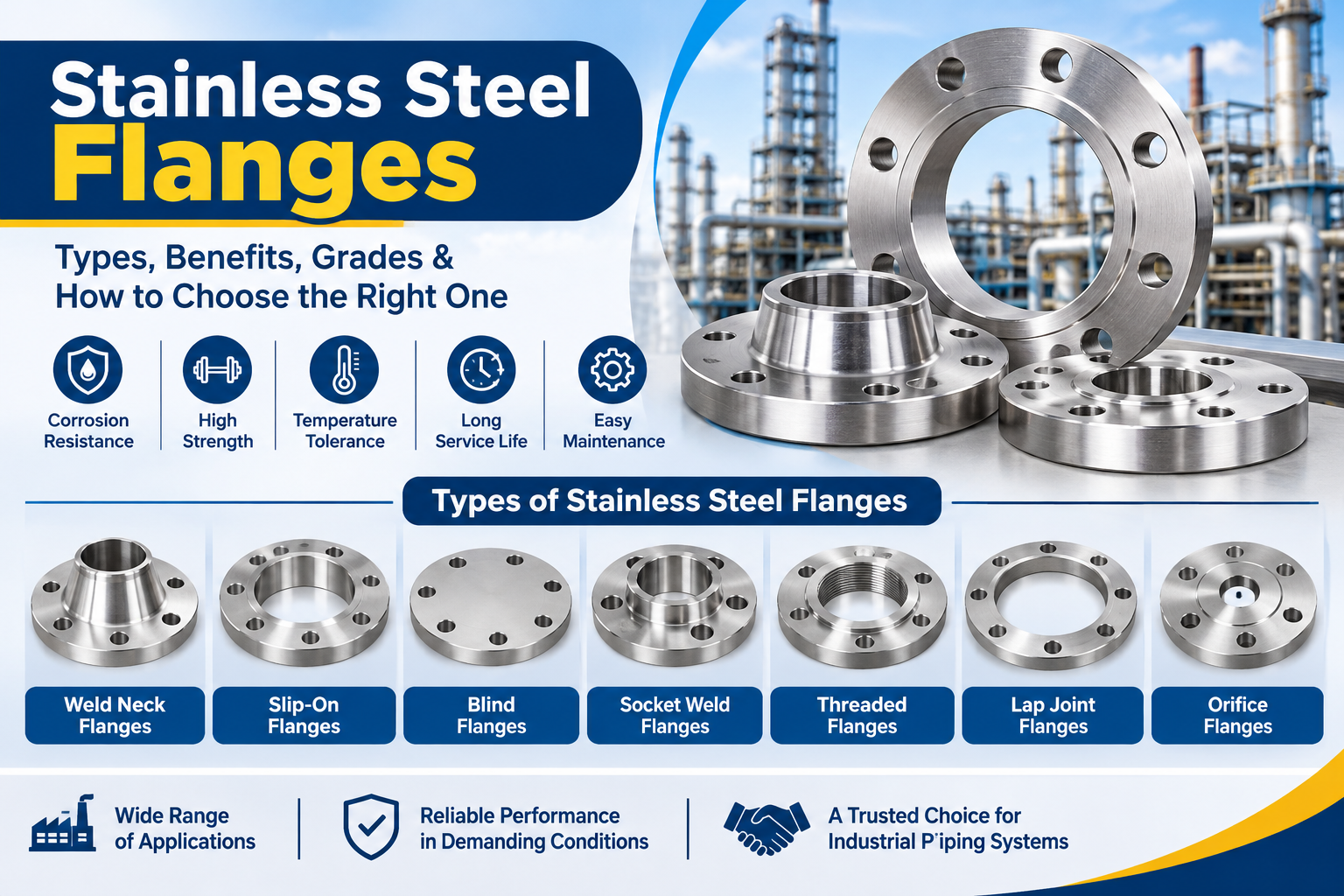
Stainless steel flanges serve nine sectors, and six standard designs let engineers fit each joint to its pressure and space.
- Oil & gas: pipelines, refineries, offshore lines.
- Chemical processing: acid and reagent transfer.
- Petrochemical: cracking units, hydrocarbon piping.
- Food processing: cleanable ingredients and wash-down lines.
- Pharmaceutical: purified water and product lines.
- Water treatment: desalination and chlorinated systems.
- Power generation: steam and cooling circuits.
- Marine: seawater and shipboard piping.
- General engineering: machinery and fabrication piping.
Common flange types:
- Weld Neck Flanges: high-pressure butt-welded joints.
- Slip-On Flanges: simple alignment and fitting.
- Blind Flanges: seal pipe ends.
- Socket Weld Flanges: small-bore lines.
- Threaded Flanges: weld-free assembly.
- Lap Joint Flanges: easy alignment with stub ends.
7. Good Hygiene and Chemical Resistance
Smooth, non-porous surfaces resist residue buildup and clean easily, which is why food, beverage, pharmaceutical, and chemical plants specify stainless steel. Among the benefits of stainless steel flanges, one is protecting product purity. Chemical compatibility still varies by grade, so confirm the medium, concentration, and temperature before selecting one.
Conclusion
Corrosion resistance, strength and durability, temperature resistance, long service life, easy maintenance, a wide application range, and hygiene with chemical resistance define the stainless steel flange advantages buyers weigh. Securing these benefits depends on specifications: select the flange type, grade, dimensions, pressure rating and applicable standard according to the piping application.
FAQs
What are the main advantages of stainless steel flanges?
Seven advantages stand out: corrosion resistance, strength, temperature tolerance, long service life, easy maintenance, broad application range, and hygienic, chemically resistant surfaces. Grade and specification determine how well each applies.
Why are stainless steel flanges preferred for corrosive environments?
Chromium content of at least 10.5% forms a self-healing passive layer on the surface. Adding molybdenum, as in 316, extends protection against chlorides and certain acids.
Are stainless steel flanges suitable for high-temperature applications?
Yes, in the right grade. Grade 304 resists scaling up to 870°C in intermittent service, and stabilised grades 321 and 347 handle prolonged exposure to heat in process piping.
Where are stainless steel flanges commonly used?
Oil and gas, chemical, petrochemical, food, pharmaceutical, water treatment, power generation, and marine systems all rely on them, along with general engineering piping that needs bolted, serviceable joints.
How do stainless steel flanges improve piping system maintenance?
Bolted faces let crews open a line for inspection, gasket replacement, or equipment swaps without cutting pipe, which shortens planned shutdowns and keeps repair work contained.