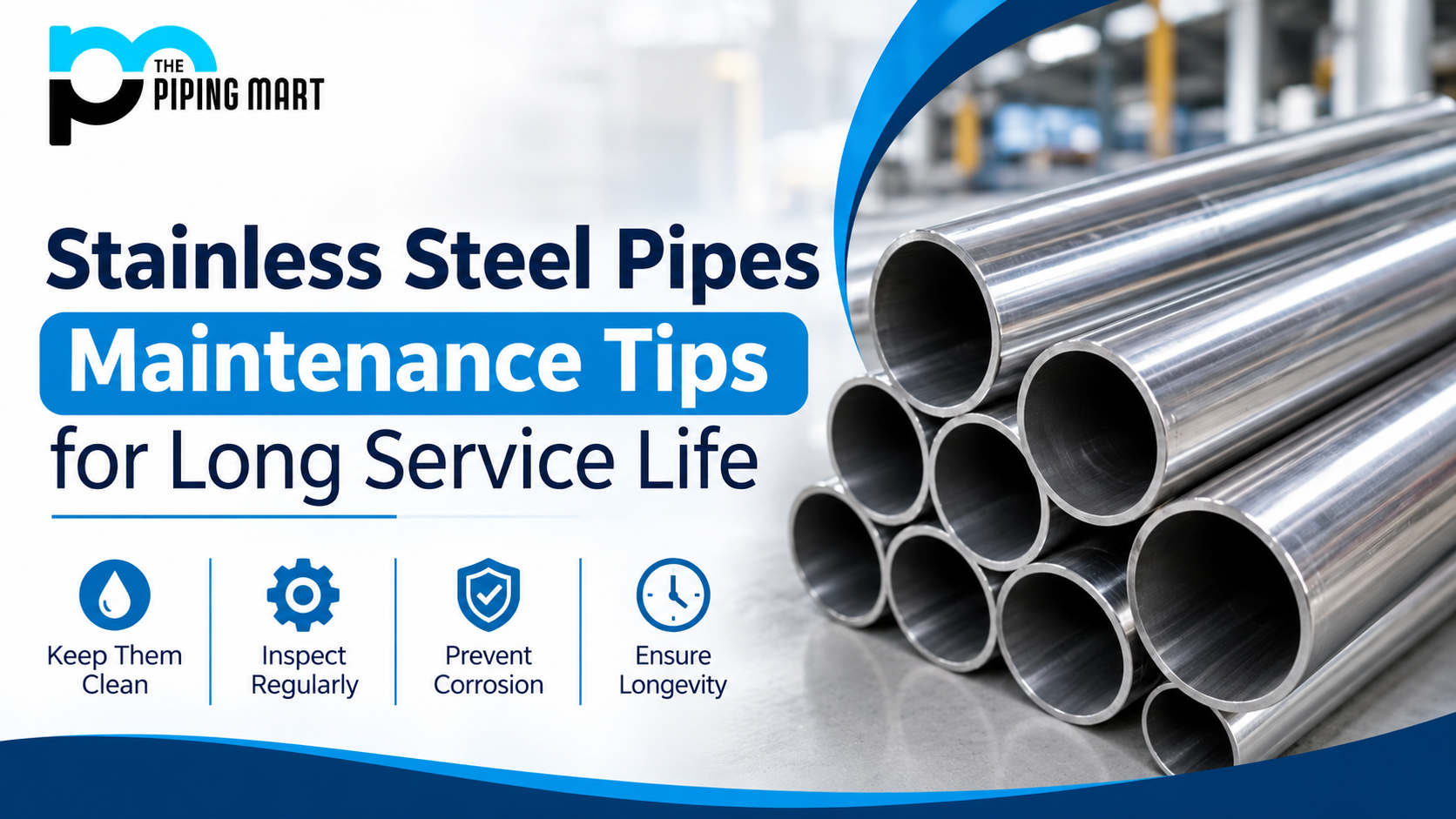
Stainless steel pipes reach their full service life when operators maintain them on a set schedule, inspect welds and joints for early corrosion, and keep chlorides and free iron off the surface. Chromium gives the alloy a self-repairing passive layer, but that coating erodes under contamination, abrasion, and standing deposits. Chemical plants, food units, water networks, and residential systems rely on the same care routine.
What is Stainless Steel Pipe Maintenance?
Stainless steel pipe maintenance covers the scheduled cleaning, inspection, handling, and operating checks that preserve the chromium oxide film on the pipe surface. Teams track surface condition, joint integrity, and process conditions against the design limits for the grade, then act before pitting initiates a leak path.
7 Essential Stainless Steel Pipe Maintenance Tips
Seven practices answer most of how to maintain stainless steel pipes in service: cleaning, chemical choice, inspection, contamination control, operating limits, storage, and drainage.
Clean Pipes Regularly
Routine cleaning removes dust, grease, and process deposits before they trap moisture against the steel. Mild detergent and clean water suit most schedules. Rinse fully: residual agents concentrate as they dry and damage the film.
Avoid Harsh Chemicals
Chloride-based cleaners cause the most damage. Bleach, hydrochloric acid, and most commercial descalers can compete austenitic grades. Match the product to the grade: 316 withstands chloride better than 304, though neither resists them indefinitely.
Conduct Routine Inspections
Inspection intervals should follow service severity. Look for discolouration, pitting, cracks, dents, and weepage at flanges. Welds and heat-affected zones fail first, so verify them closely.
Prevent Surface Scratches and Contamination
Carbon steel brushes, grinding dust, and shared tooling embed free iron into the surface. That iron rusts, and the corrosion spreads beneath the passive film. Keep dedicated stainless steel tools, stored apart from carbon steel equipment.
Monitor Operating Conditions
Operating conditions determine how quickly the surface degrades. Check pressure and temperature against the design rating each shift. Chloride stress corrosion cracking threatens austenitic grades above roughly 60°C, especially where the medium stagnates.
Ensure Proper Storage and Handling
Store stainless steel welded pipes and seamless sections indoors on racks, clear of the floor and of carbon steel stock. End caps and wrapping protect bores in transit. Dragging pipes across concrete leaves embedded grit.
Maintain Proper Drainage and Ventilation
Standing water causes more avoidable pitting than any other site condition. Build in a fall so lines drain fully after flushing, and blow down dead legs. Ventilate pits and trenches that hold humid or corrosive air.
Common Stainless Steel Pipe Maintenance Mistakes to Avoid
Most premature failures trace back to six habits:
- Scouring with abrasive pads or wire wool
- Treating light surface rust as cosmetic rather than tracing its source
- Reaching for whichever cleaner sits on the shelf
- Stacking stainless steel seamless pipes on damp ground or beside carbon steel
- Postponing inspection until a leak appears
- Setting aside the grade-specific guidance supplied with the material
Why Is Regular Stainless Steel Pipe Maintenance Important?
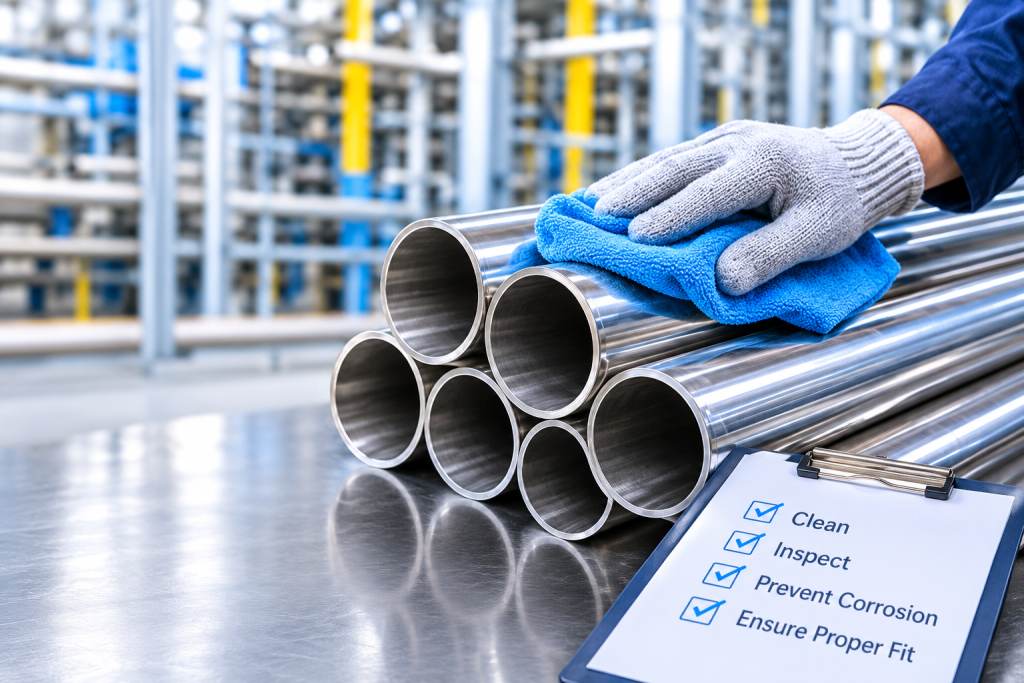
Regular maintenance protects the passive film that gives the alloy its corrosion resistance, and that protection carries commercial value. Stainless steel pipe corrosion prevention keeps product streams free of metal pickup, which matters in food processing, pharmaceutical, and chemical plants where contamination triggers batch rejection. Joints and stainless steel pipe fittings trap deposits in their crevices, so they warrant equal attention. Replacing a pitted line during a planned outage costs far less than an emergency shutdown.
We supply stainless steel pipes and tubes with mill test certification to the applicable ASTM and ASME standards.
Conclusion
Cleaning on schedule, inspecting welds and joints, storing material correctly, and holding the line within its design limits: these four habits separate a pipe that lasts a decade from one that fails early. Applying stainless steel pipe maintenance tips consistently reduces corrosion risk and keeps unplanned replacement off the budget.
Frequently Asked Questions
1. How often should stainless steel pipes be cleaned?
Cleaning frequency follows the environment, not a fixed calendar. Food and pharmaceutical lines need cleaning after each production run. Coastal installations warrant quarterly washing; dry indoor services run safely on an annual cycle.
2. Can stainless steel pipes rust?
Yes. Rust appears where chlorides, embedded iron, or acidic residues break down the chromium oxide layer. Light staining lifts with passivation, though deep pitting means the section needs replacement.
3. Which cleaning materials are suitable for stainless steel pipes?
Mild detergent, warm water, and soft nylon pads cover routine work. For heavier scale, ASTM A380 sets out accepted stainless steel pipe cleaning methods, including pickling paste followed by passivation.
4. How can I extend the service life of stainless steel pipes?
Four controls matter most: scheduled cleaning, documented inspection of welds and joints, correct storage away from carbon steel, and operation inside the rated pressure and temperature band.