
Gauge is one of the oldest ways to describe stainless steel thickness and one of the easiest to misread. A gauge number stands in for a thickness, but the number and the actual measurement are not interchangeable across different materials or standards. A 16-gauge stainless plate and a 16-gauge aluminum plate are not the same thickness. Checking the thickness in millimeters or inches before buying is what prevents a costly ordering error.
What Is Stainless Steel Plate Gauge?
Stainless steel gauge is a numbering system that describes the thickness of a plate or sheet. The number maps to a set thickness defined by a gauge standard, not to a direct measurement in millimetres. The relationship runs inversely: a lower gauge number means a thicker plate, and a higher number means a thinner one. So 10 gauge is thicker than 18 gauge, which catches out buyers who expect the reverse. The gauge value also shifts between materials, which is why stainless carries its own figures separate from galvanised or mild steel. That difference is small per step but adds up across several gauges.
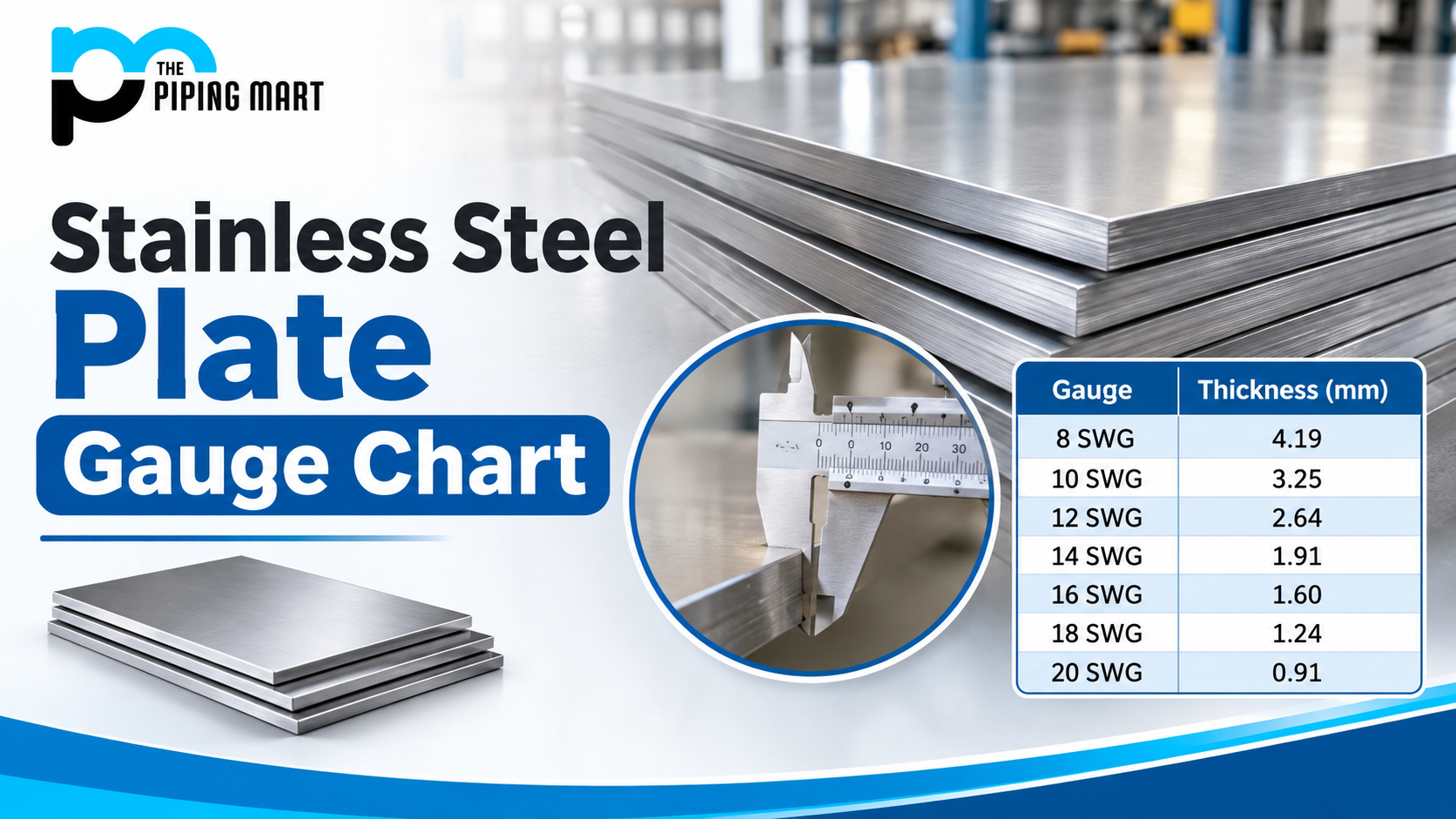
Stainless Steel Plate Gauge Chart
The chart below lists commonly referenced stainless steel gauges with their thickness in millimetres and inches. Gauge conventions can vary between standards, so treat these as reference values.
| Gauge | Thickness (mm) | Thickness (inch) | Approximate application |
| 7 | 4.76 | 0.1875 | Heavy structural plate |
| 8 | 4.37 | 0.1719 | Structural and base plates |
| 10 | 3.57 | 0.1406 | Load-bearing fabrication |
| 11 | 3.18 | 0.1250 | General heavy fabrication |
| 12 | 2.78 | 0.1094 | Equipment and enclosures |
| 14 | 1.98 | 0.0781 | General sheet metal work |
| 16 | 1.59 | 0.0625 | Panels and light fabrication |
| 18 | 1.27 | 0.0500 | Trim and light panels |
| 20 | 0.95 | 0.0375 | Thin decorative work |
Confirm the exact thickness with the supplier, since gauge tables differ by standard.
Stainless Steel Gauge to mm Conversion
Converting gauge to millimetres means reading the gauge number against the stainless steel gauge standard, not a general steel table. Each number has a defined thickness that a chart or a supplier confirms. Using a mild-steel table for a stainless order introduces a small but real error. Common conversions help frame the range:
- Stainless steel 10 gauge converts to roughly 3.57 mm.
- Stainless steel 14 gauge converts to roughly 1.98 mm.
- Stainless steel 16 gauge converts to roughly 1.59 mm.
- Stainless steel 18 gauge converts to roughly 1.27 mm.
Verify the exact specification with the supplier before ordering, because a small difference in thickness affects both weight and fit.
Stainless Steel Plate Gauge vs Thickness
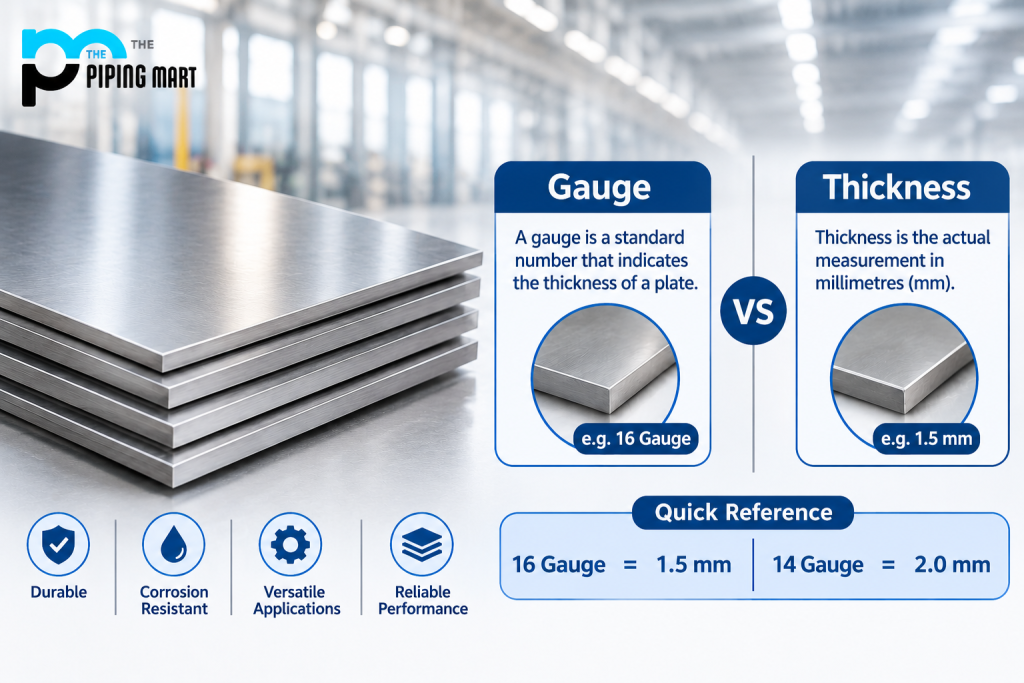
Gauge should never be the only figure on a stainless steel order. The number alone leaves room for error, since gauge tables vary and a buyer may read the wrong standard. Comparing the gauge against the actual thickness in millimeters removes that ambiguity. A 10-gauge plate at 3.57 mm and a 12-gauge plate at 2.78 mm differ by nearly a millimeter, which matters for load and fit. On a welded or machined part, that gap changes both the strength and the finished dimension. Dimensional tolerances add another layer, since the delivered plate can sit slightly above or below the nominal figure. A tight-tolerance job should state the acceptable range, not just the target. Stating the thickness in mm or inches, along with the gauge, keeps an order unambiguous.
Guide to Grades, Types, Applications On a welded or machined part, that gap changes both the strength and the finished dimension. Dimensional tolerances add another layer, since the delivered plate can sit slightly above or below the nominal figure. A tight-tolerance job should state the acceptable range, not just the target. Stating the thickness in mm or inches, along with the gauge, keeps an order unambiguous.
Conclusion
Gauge is a useful reference, but the actual thickness in millimetres or inches defines the material specification. Reading both measurements together and accounting for dimensional tolerances helps prevent ordering errors. Buyers should confirm the required thickness, grade, applicable standard, and tolerance before placing an order. B2B platforms such as The Piping Mart connect industrial buyers with relevant manufacturers, suppliers and exporters to explore sourcing options based on their requirements.
FAQs – Stainless Steel Plate Gauge Chart
1. What is a stainless steel plate gauge chart?
A gauge chart maps each stainless steel gauge number to its thickness in millimetres and inches. It lets a buyer translate a gauge number into a measurable thickness before ordering, which prevents a size mismatch.
2. How does stainless steel gauge relate to thickness?
Gauge relates inversely to thickness, so a lower number means a thicker plate. Each number has a set thickness under the gauge standard, which is why 10 gauge is thicker than 18 gauge.
3. Is stainless steel gauge the same as thickness in millimeters?
No. Since a gauge is a number that represents the thickness, it is not a measurement. You should always try to check the thickness in mm or inches, as the gauge values may vary as per different standards and from material to material.
4. How do I choose the right stainless steel plate gauge?
Specify the load, the fabrication, and the application method, and verify the gauge in mm. If applicable, discuss the grade and standards, tolerance, etc. with the supplier before purchase to ensure the plate is appropriate for the purpose.