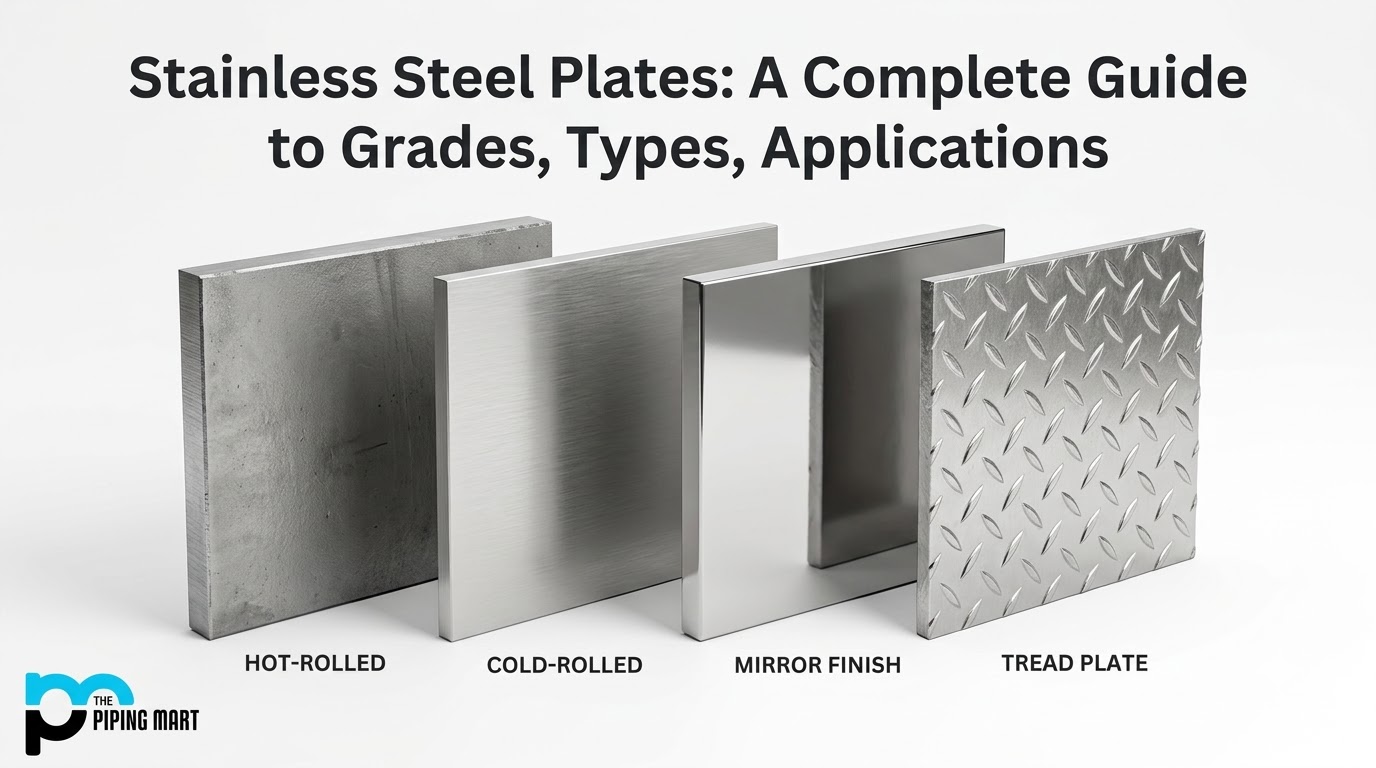
Choosing a stainless steel plate starts with the service environment, because each grade performs differently once chlorides, heat, or load enter the picture. A 316 plate resists chloride pitting better than 304 thanks to 2 to 3% molybdenum, while duplex 2205 handles harsher exposure. Four families cover the grades buyers specify most: austenitic, ferritic, martensitic, and duplex. This guide explains each family, the plate types and applications, and the checks that match a grade to ASTM A240 requirements.
What Are Stainless Steel Plates?
Stainless steel plates are flat rolled products that mills supply in specified thicknesses, widths, and lengths. Fabricators choose them for corrosion resistance, strength, durability, and weldability, with temperature performance varying by grade. Composition and processing shape the properties of each plate, so two plates with the same dimensions can behave very differently in service. Chemical processing, petrochemical vessels, food and pharmaceutical equipment, marine structures, power generation, and construction all rely on flat rolled products. This guide explains grades, types, and applications, then shows how to match a plate to its service and fabrication conditions.
Stainless Steel Plate Types and Grades
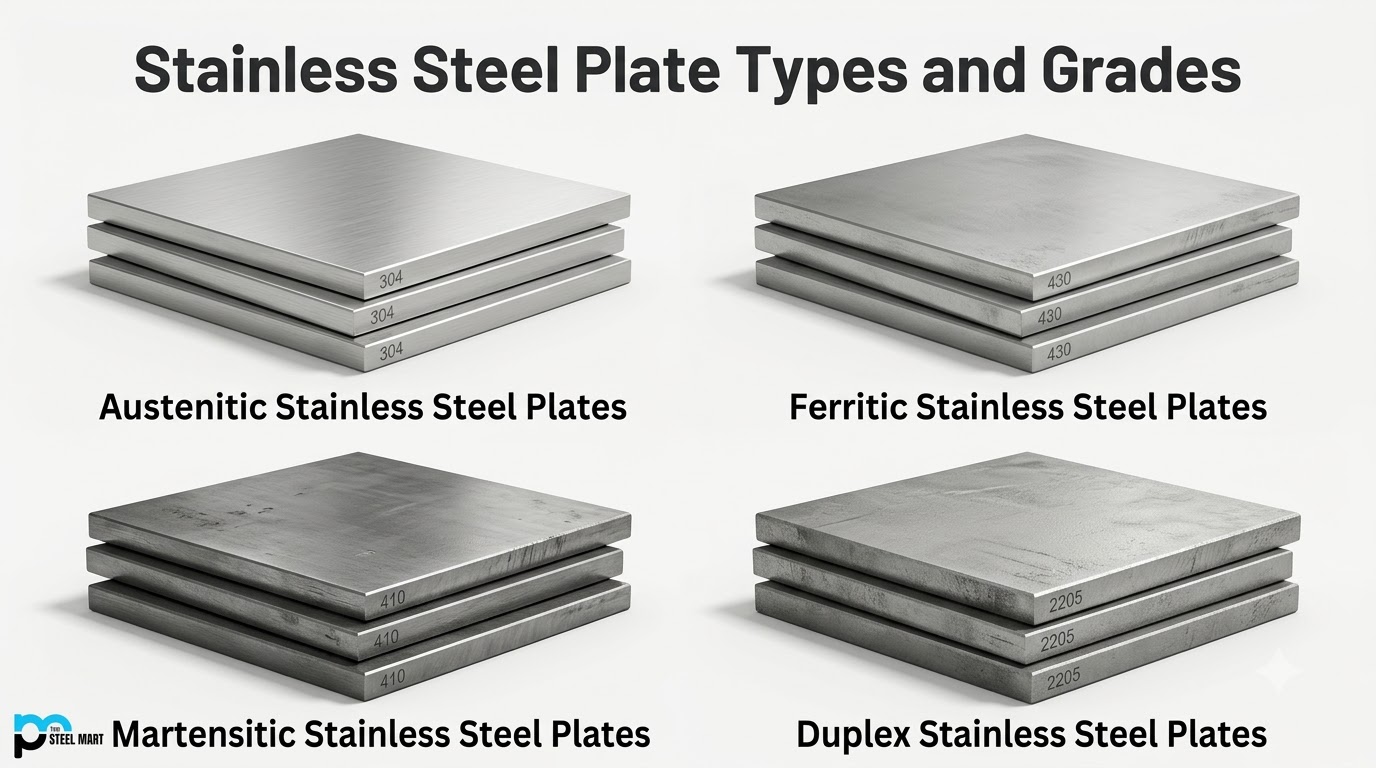
Four metallurgical families account for the stainless steel plate grades buyers specify most, and each sets a balance of corrosion resistance, strength, and fabrication behavior.
Austenitic Stainless Steel Plates
Austenitic grades combine good corrosion resistance with easy forming and welding, which explains their wide use in fabricated equipment. Grades 304 and 304L suit general service, while 316 and 316L add 2 to 3 % molybdenum for better resistance to pitting where chlorides or harsher media are present.
Ferritic Stainless Steel Plates
Little or no nickel separates ferritic grades from austenitic ones, which lowers cost and adds magnetic behavior plus resistance to chloride stress corrosion cracking. Grade 430, with 16 to 18 % chromium, fits applications where moderate corrosion resistance is enough, such as appliance panels and interior architectural trim.
Martensitic Stainless Steel Plates
Martensitic selection is governed by strength and hardness; heat treatment increases the hardness even further, but decreases the ductility. Grade 410 suits wear and moderate corrosion duty, and grade 420 has a higher amount of carbon for higher hardness. Buyers choose these plates for abrasion and load duty, which differs from the formability priorities behind austenitic plates.
Duplex Stainless Steel Plates
A duplex stainless steel plate pairs austenitic and ferritic structures, giving about double the yield strength of 304 plus strong chloride stress corrosion resistance. Grade 2205 contains about 22 % chromium and 3 % molybdenum, so engineers specify it for demanding corrosive environments where strength also matters.
How to Select Stainless Steel Plate Grades for Different Conditions
Effective stainless steel plate selection starts with the service environment, then works through corrosion exposure, temperature, and load until a single grade satisfies every requirement.
General Corrosion Environments
Atmospheric exposure, fresh water, and mild chemical streams suit austenitic grades such as 304L, but the actual medium decides the outcome. Concentration, temperature, and contaminants can turn an acceptable fluid into an aggressive one, so engineers verify the environment before accepting a grade.
Chloride and Marine Exposure
A 316 stainless steel plate resists chloride pitting better than 304 because of its molybdenum content, yet it does not suit every chloride service. Chloride concentration, temperature, crevice geometry, and stagnant conditions all shift the limit, and harsher cases may call for duplex grades.
Elevated-Temperature Service
Operating temperature, oxidation resistance, and mechanical load interact, so engineers evaluate the grade against all three together. Prolonged exposure between 450 and 850°C can sensitize standard austenitic grades, which makes low-carbon variants like 304L worth considering. Creep data confirms the margin.
Strength and Hardness Requirements
Martensitic grades such as 410 and 420 fit parts that need hardness and wear resistance after heat treatment. Duplex 2205 suits structures that need high yield strength with corrosion resistance, allowing thinner sections. Austenitic plate remains the choice when ductility and weldability outweigh strength.
Stainless Steel Plate Types by Manufacturing and Surface Condition
Beyond metallurgy, buyers specify stainless steel plate types through the physical traits that affect fabrication and service, namely rolling route, surface condition, and delivery condition.
Hot-Rolled Stainless Steel Plates
Mills roll heated slabs to final thickness, leaving a scaled or pickled surface. Hot-rolled plates suit structural, pressure, and heavy fabrication work where thickness matters more than surface finish.
Surface Finish and Appearance
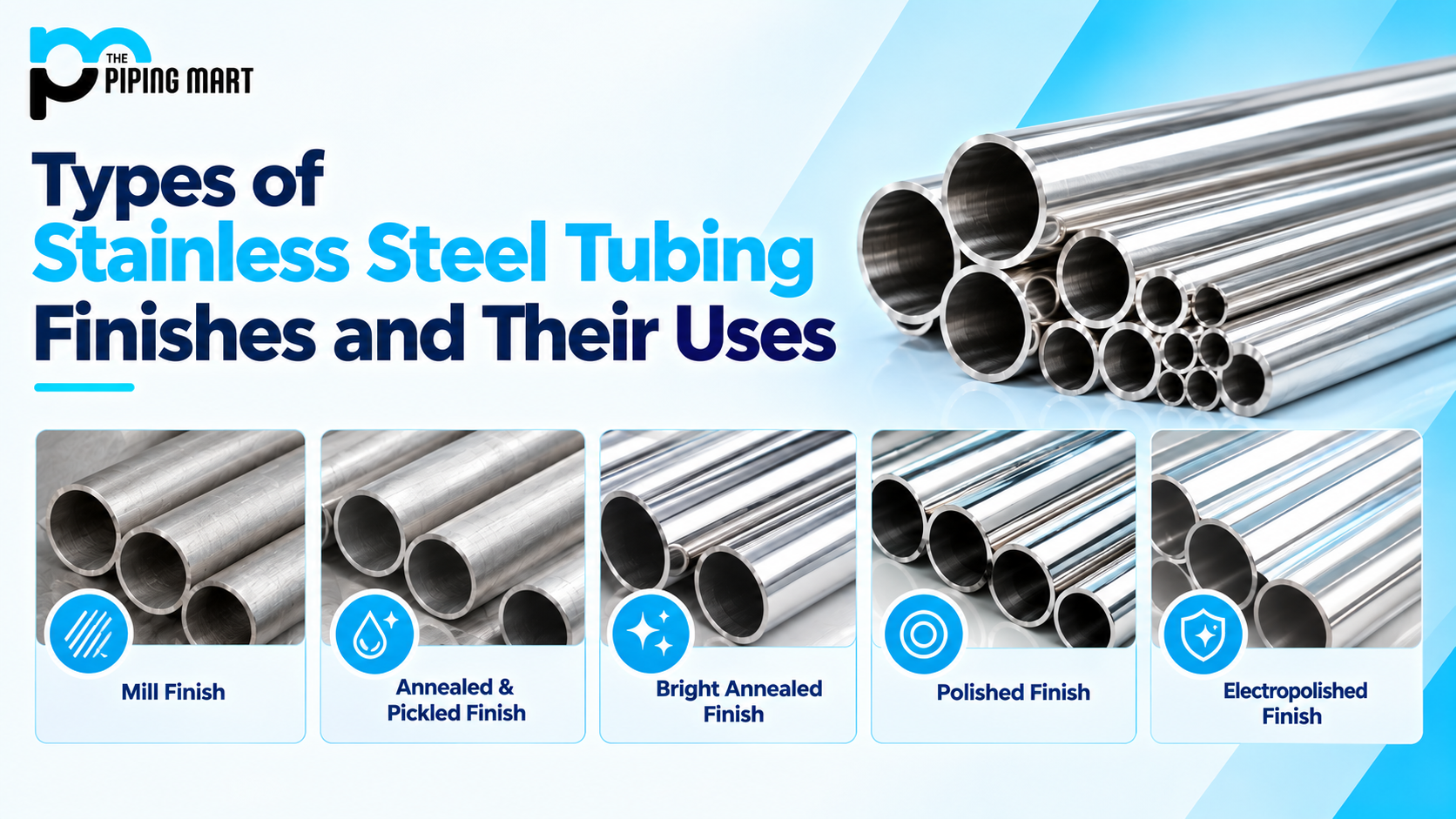
Finish affects cleaning, weld preparation, and corrosion performance, not just looks. Specify functional finishes, such as pickled or polished surfaces for hygiene, separately from aesthetic requirements like brushed architectural looks.
Heat-Treated and Supplied Conditions
Delivery conditions change mechanical properties and fabrication behavior, since an annealed plate forms differently from a hardened or stress-relieved plate. Confirm the required condition against the grade and specification before ordering.
Stainless Steel Plate Applications
Each of the stainless steel plate applications below pairs a service demand with a material property, which explains why engineers specify plate instead of alternatives.
Chemical and Petrochemical Equipment
Reactors, tanks, and columns face acids, solvents, and process streams that corrode carbon steel. Engineers check material compatibility against the medium, concentration, and temperature before assigning an austenitic or duplex plate.
Food and Pharmaceutical Equipment
Processing tanks and vessels need smooth, cleanable surfaces that resist corrosion from cleaning agents and product contact. Plates are welded into sanitary fabrications, and the specified finish determines how surfaces are cleaned.
Marine and Offshore Equipment
Seawater and salt spray expose structures to chloride attack. Platforms, tanks and process modules need molybdenum-alloyed or duplex grades with higher pitting resistance, and engineers match them to exposure.
Power and Industrial Equipment
Boilers, heat exchangers, and pressure equipment demand strength at temperature, corrosion resistance, and weld integrity. Engineers weigh these factors by component because flue ducts and pressure shells face different loads.
Construction and Fabrication
Structural members, cladding, and fabricated components gain long service life from corrosion resistance, while formability and weldability let fabricators cut, bend, and join plate into architectural and load-bearing parts.
What to Check Before Specifying Stainless Steel Plates
A procurement checklist prevents rework, delays, and rejected material because each item below ties a purchasing decision to a measurable property of the delivered plate.
- Confirm the required grade and its applicable designation, such as 304L or 2205, so the order matches the design drawing.
- State the required dimensions, thickness, tolerances, and cutting requirements, because these control yield, fit-up, and cost.
- Define strength, ductility, hardness, operating temperature, and corrosion environment so that the grade meets every service requirement.
- Agree on the surface finish, heat treatment condition, and fabrication needs, such as welding or forming, before placing the order.
- Verify the governing specification, such as ASTM A240, and request the inspection reports and test certificates the project requires.
Common Stainless Steel Plate Selection Mistakes
Six errors cause avoidable corrosion failures, fabrication problems, and cost overruns, and each starts with an assumption that skips a check against actual service data.
- Selecting 304 simply because fabricators use it widely ignores the actual medium, temperature, and corrosion demands of the application.
- Assuming 316/316L suits every chloride environment overlooks concentration, temperature, and crevice conditions that can cause pitting even in molybdenum grades.
- Choosing a grade without reviewing operating conditions leaves gaps in strength, temperature limits, and corrosion resistance.
- Ignoring fabrication and welding requirements can lead to sensitization, distortion, or cracking that the base grade alone does not predict.
- Treating surface finish as purely cosmetic overlooks how finish affects cleanability, contamination risk, and long-term corrosion behavior.
- Failing to confirm the required specification and documentation leaves buyers with a plate that cannot pass inspection or meet project requirements.
Conclusion
Selection follows a fixed sequence of service environment, required properties, grade, plate type and condition, dimensions, and specification. Each step narrows the options for the next. Skipping a step shifts risk to the fabrication floor or the operating plant. The correct stainless steel plate comes from actual service and fabrication requirements, never from picking the most common grade.
Frequently Asked Questions About Stainless Steel Plates
What are the common grades of stainless steel plates?
SS plate grades span four families, namely austenitic 304 and 316, ferritic 430, martensitic 410 and 420, and duplex 2205. Each family targets a different balance of strength and corrosion resistance.
What is the difference between 304 and 316 stainless steel plates?
A 304 stainless steel plate contains about 18 % chromium and 8 % nickel, while 316 adds 2 to 3 % molybdenum. That addition improves pitting resistance in chloride and more aggressive environments.
How do I select the right stainless steel plate grade?
Start with the service environment and corrosion exposure, then check temperature, mechanical needs, fabrication method and the governing specification. The grade that satisfies all of these at once is the correct choice.
Are stainless steel plates available in different surface finishes?
Finish varies with manufacturing route, grade, specification and application, ranging from mill finishes such as hot-rolled and pickled to polished or brushed surfaces. Buyers state the finish each use requires.
What should I check before ordering stainless steel plates?
Confirm grade, dimensions, thickness, tolerances, surface condition, delivery condition, applicable specification and inspection and test documentation.