Stainless tube fittings join, redirect, branch, and close tubing in systems that carry liquids and gases. Each joint has to seal against the pressure inside it, the vibration around it, and the fluid passing through it.
Three properties explain why engineers choose stainless steel for these joints. The alloy contains at least 10.5 percent chromium, which forms a passive oxide film that resists corrosion. It maintains strength across wide temperature ranges. It also allows for repeated assembly without losing its sealing surfaces.
What Are Stainless Steel Tube Fittings?
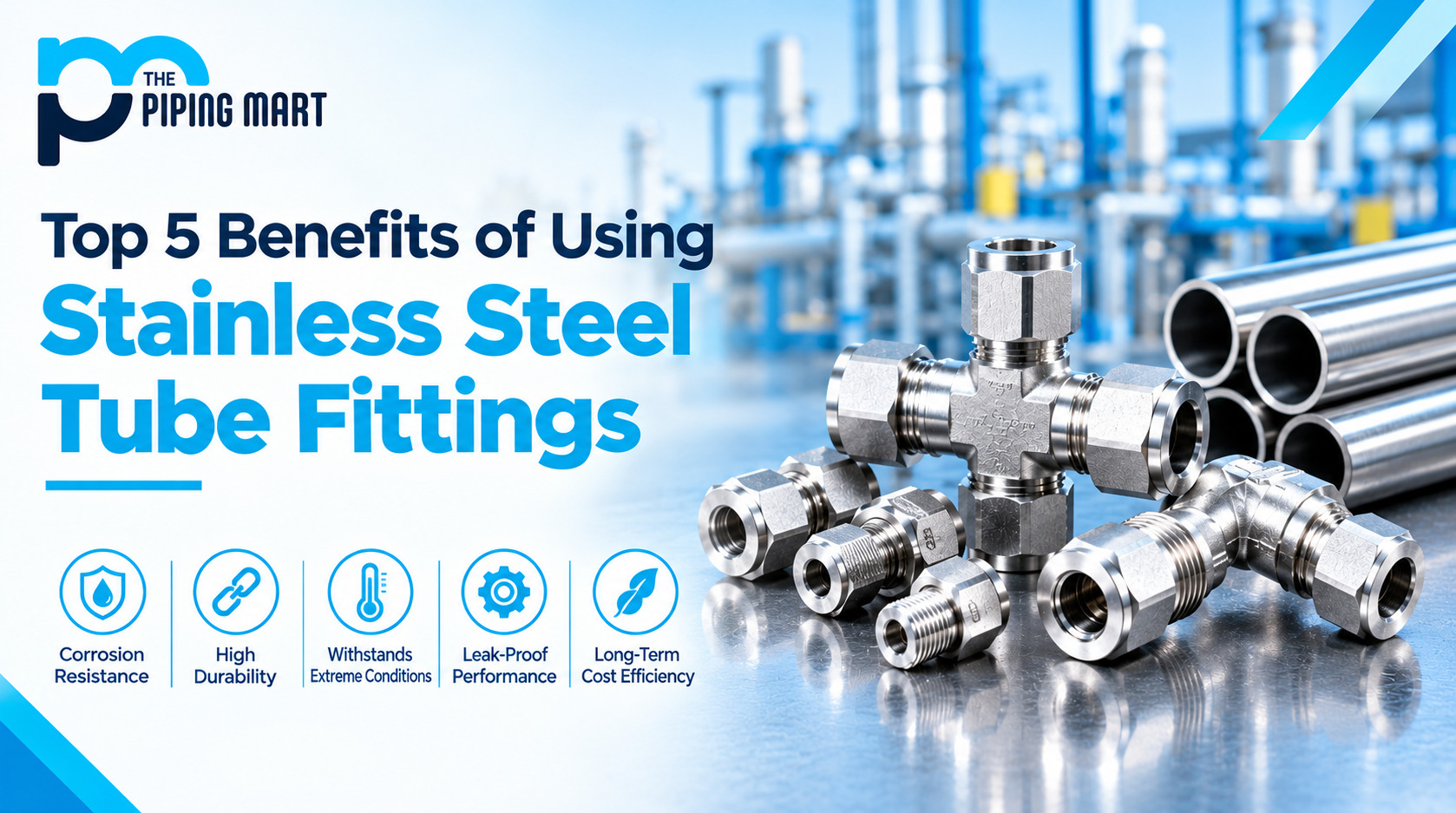
Stainless steel tube fittings are precision components that join tubes to each other, to valves, and to equipment ports. Elbows change direction, tees and crosses branch the flow, couplings and unions join tubes to one another, reducers step between sizes, and adapters and connectors link tubes to pipe threads or other connection styles.
Specification extends beyond just the shape. Fittings come in grades such as 304, 316, and 316L, in tube outside diameters from 1/16 inch to 2 inches, and in compression, flared, welded, and threaded connection methods. SS Tube Fittings must match the tube material, the fluid, working pressure, and operating temperature, or the joint becomes the weakest point in the line.
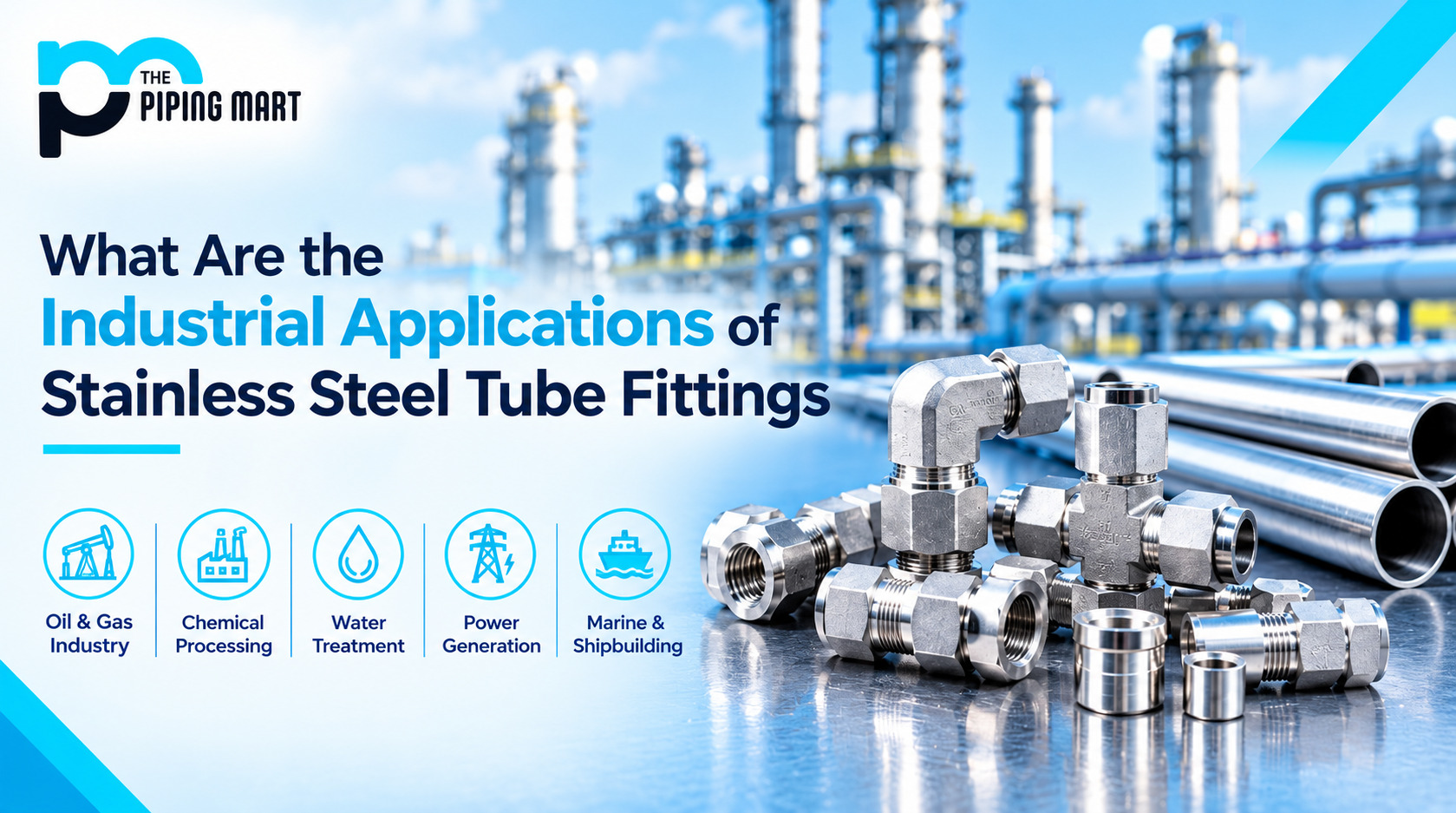
Industrial Applications of Stainless Tube Fittings
The Stainless Steel Tube Fittings Benefits that matter most, namely corrosion resistance, pressure capacity, and cleanability, carry different weight in each sector below, so engineers rank them differently for every installation.
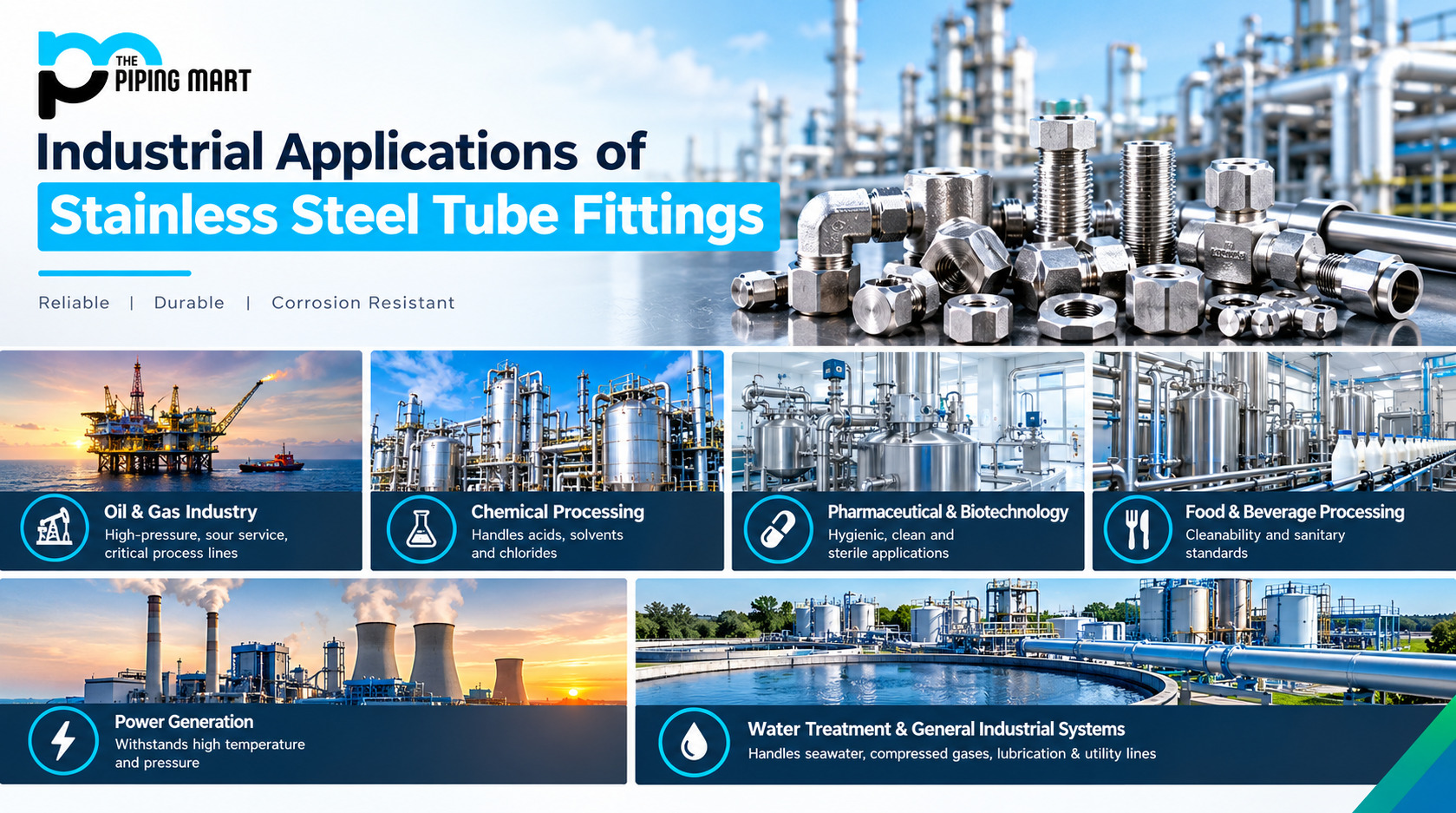
Oil and Gas Industry
Offshore platforms and refineries connect tubing to instrument lines, process equipment, and fluid handling skids. High-pressure stainless steel fittings serve chemical injection and hydraulic lines that operate at 10,000 psi or more, so engineers verify each rating against the tube wall. Sour service also restricts material choice under NACE MR0175/ISO 15156.
Chemical Processing
When a plant handles acids, solvents, or chlorides, the grade decides service life. Stainless Tube Fittings link process lines, sample loops, and instrument connections to reactors and heat exchangers. Grade 316L resists chloride attack better than 304 because of its 2 to 3 percent molybdenum, yet hydrochloric acid still demands a nickel alloy.
Pharmaceutical and Biotechnology
Bioreactors, purified water loops, and filling lines use tubing for fluid transfer and instrumentation. Hygienic duty narrows the options to 316L, electropolished interiors, and crevice-free connection designs that drain fully and clean without disassembly. Standards such as ASME BPE define finish and documentation requirements.
Food and Beverage Processing
Cleanability drives selection in dairy, brewing, and juice plants. SS Tube Fittings are used in transfer lines, dosing systems, and clean-in-place circuits, where smooth bores shed residue and 304 or 316 withstand caustic and acid washes. Buyers verify the applicable sanitary standard, such as 3A or EHEDG, and its surface finish limit.
Power Generation
Instrument and control tubing in boilers, turbines, and utility systems detects steam at 540°C and above. Stainless Steel Tube Fittings in those lines must hold their pressure rating at temperature, because working pressure decreases as heat rises. Fluid conditions then determine the grade and wall thickness.
Water Treatment and General Industrial Systems
Seawater reverse osmosis plants run feed pressure of 800 to 1,000 psi, so Industrial Stainless Steel Tube Fittings in duplex grades handle the chloride and the load on instrument and sampling lines. The same fittings serve compressed gas systems, machinery lubrication lines, and utility lines wherever stainless steel suits the fluid.
Why Are Stainless Steel Tube Fittings Highly Preferred?
Industrial Stainless Steel Tube Fittings tolerate installation damage because a scratched surface renews its oxide film in the presence of oxygen. ASTM A269 316 tubing carries a minimum tensile strength of 515 MPa, and the alloy keeps its toughness at cryogenic temperatures. The smooth bore also cleans easily in hygienic lines.
Pressure capacity separates one design from another. High-pressure stainless steel fittings use double ferrule or cone-and-thread designs that seal metal to metal, which avoids the aging that affects elastomer seals. Stainless steel also recycles fully at the end of its life.
Conclusion
Stainless Tube Fittings serve oil and gas, chemical, pharmaceutical, food, power, and water sectors because designers can match a grade to each duty. Selection starts with material compatibility, dimensions, connection method, pressure, and temperature. Matching those factors to the application keeps tubing systems leak-tight and efficient, and it keeps maintenance schedules predictable.
FAQs
What are stainless steel tube fittings used for?
They connect, redirect, branch, reduce, and terminate tubing that carries liquids and gases in instrumentation, process, hydraulic, and utility systems, holding pressure and resisting corrosion at every joint.
Which industries use Stainless Steel Tube Fittings?
Oil and gas, chemical processing, pharmaceuticals, food and beverage, power generation, and water treatment define them, alongside machinery builders and compressed gas users that need pressure-rated connections.
What are the benefits of Stainless Steel Tube Fittings?
Three benefits stand out: corrosion resistance in water, humid air, and mild chemicals; a minimum yield strength of 205 MPa in 316 tubing; and smooth surfaces that clean easily.
Are SS Tube Fittings suitable for high pressure applications?
Yes, when the rating matches the tube wall and temperature. Cone and thread designs exceed 10,000 psi, and ratings fall as temperature rises, so confirm values on the manufacturer’s pressure chart.
How do I choose the right stainless steel tube fittings?
Match the grade to the fluid, the tube outside diameter to the fitting size, and the connection style to the system. Then confirm the pressure rating and review the material certificates.