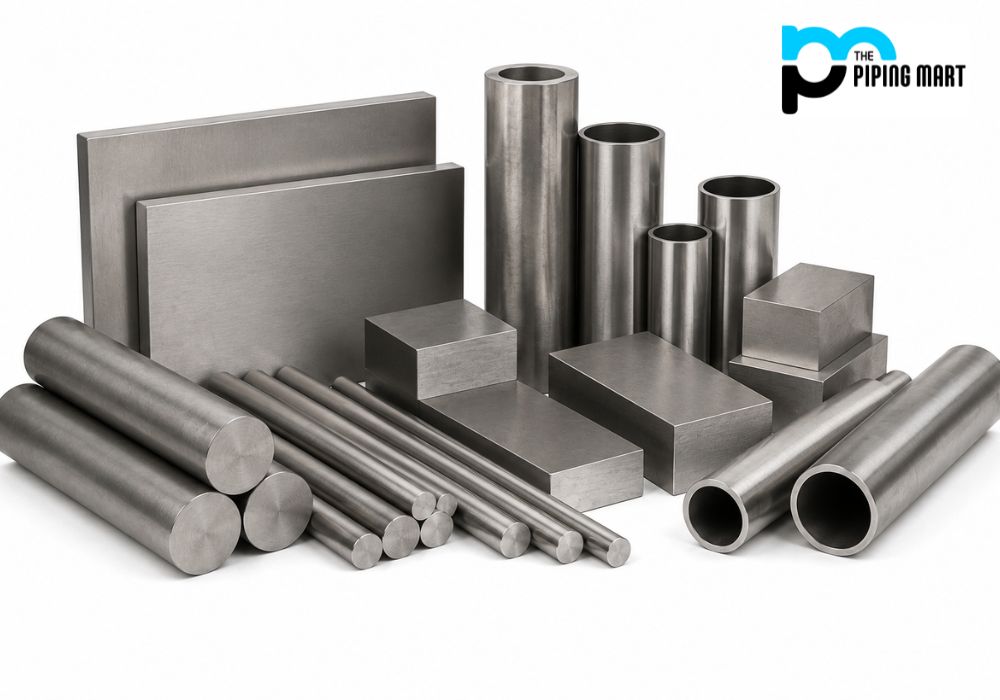
Understanding alloy steel is important for engineers and professionals who need the right material for demanding industrial jobs. Alloy steel is made by adding elements like chromium, nickel, or molybdenum to iron and carbon. These extra elements improve properties such as heat resistance and corrosion resistance, especially under pressure. While regular carbon steel is fine for basic structures, alloy steel is chosen when higher performance is needed. It is commonly used in high-pressure pipes, automotive parts, and heavy machinery as it can handle tougher conditions and last longer than standard carbon steel. This guide describes the key mechanical, physical, and chemical characteristics that differentiate alloy steel from basic grades. It demonstrates how elements such as chromium, nickel, and molybdenum affect performance, allowing you to select the appropriate material for your project.
What is Alloy Steel?
Alloy steel is a type of steel which consists of iron, carbon, and other elements, such as chromium, nickel, molybdenum, manganese, or vanadium. These elements are added in controlled quantities to maintain the steel’s properties for specific applications. The addition changes how the steel responds to heat treatment, how much load it can bear, and how it behaves in different environments. Low-alloy steels contain less than 8% alloying elements, while high-alloy steels go beyond that. The combination and ratio of elements determine the final characteristics of the steel. It is used across sectors like construction, automotive, aerospace, and oil and gas, wherever plain carbon steel falls short in performance.
Key Properties of Alloy Steel
Alloy steel properties are defined by 3 types of properties, i.e., mechanical, physical, and chemical categories. Each group defines how the material behaves under different conditions.
Mechanical Properties of Alloy Steel
The mechanical properties of alloy steel determine how it responds to applied forces. These are the properties that most engineers and fabricators look at first.
- Strength: The tensile and yield strengths of alloy steel are higher than those of carbon steel. This is due to the alloying elements, which change the internal structure of the steel. Because of this, alloy steel can support higher loads without bending or suffering permanent harm. It can be strengthened even further by heat treatment.
- Hardness: Hardness in alloy steel depends on heat treatment. The elements such as chromium, vanadium, and tungsten form hard carbides that increase hardness. Processes like quenching and tempering help adjust hardness as per application needs.
- Toughness: Alloy steel can be tough, which is something plain carbon steel struggles with. The nickel component provides toughness and helps the steel absorb impact without cracking. This is useful in components that face sudden or repeated loading.
Physical Properties of Alloy Steel
The physical properties of alloy steel affect how it behaves in different environmental and thermal conditions.
- Density: The alloy steel often has a density of 7.7–8.0 g/cm³. It does not change significantly with the addition of alloying elements because the majority of them have densities similar to iron. The density of an alloy is determined by its composition.
- Thermal Conductivity: The Alloy steel generally has lower thermal conductivity than pure iron or carbon steel. The alloying elements disturb the regular structure of the metal, which slows down heat flow. As a result, its thermal conductivity is usually between 26 and 48 W/m·K, depending on the specific grade.
- Electrical Conductivity: The electrical conductivity of alloy steel is generally lower than that of pure metals. Alloying elements diminish the mobility of electrons. This is why alloy steel is not often used for electrical conductors. It works well in structural parts that operate in electrical environments.
Chemical Properties of Alloy Steel
The chemical properties of alloy steel influence how the material performs when exposed to moisture, heat, or reactive environments.
- Corrosion Resistance: The alloy steel offers better corrosion resistance depending on its composition. Chromium is the key element here. It forms a protective oxide layer on the surface. This reduces rusting in humid or corrosive environments. Not all alloy steels are corrosion-resistant, so grade selection matters.
- Oxidation Behaviour: At high temperatures, alloy steels oxidise more than plain carbon steel. Chromium and silicon help to form stable oxide layers on the surface, reducing further oxidation. High-alloy grades are typically used in high-temperature applications like furnaces and exhaust systems.
- Composition Stability: Alloy steel maintains its structure and properties better than plain carbon steel when it is heated to high temperatures. Elements like molybdenum and vanadium prevent the grains in the metal from growing too large and help it stay strong when hot. Due to this, alloy steel behaves more reliably over a wider range of working conditions.
Key Effects of Alloying Elements in Steel
Each alloying element in steel provides a distinct benefit to the final product, as shown in the table below.
| Element | Primary Effect on Steel | Typical Application |
| Chromium | Increases hardness and provides significant resistance to corrosion and scaling. | Stainless steel, automotive parts |
| Nickel | Improves toughness and impact resistance, especially at very low temperatures. | Cryogenic vessels, structural beams |
| Molybdenum | Increases high-temperature strength and improves resistance to pitting corrosion. | Oil and gas pipelines, boiler tubes |
| Manganese | Acts as a deoxidiser and increases the strength and hardenability of the metal. | Railway tracks, rock crushers |
| Silicon | Improves strength and magnetic permeability while acting as a deoxidising agent. | Electrical transformers, springs |
| Vanadium | Refines the grain structure, which increases strength and shock resistance. | Wrenches, high-speed tools |
| Tungsten | Provides extreme hardness and maintains a sharp edge at red-hot temperatures. | Cutting bits, drill heads |
| Boron | Greatly improves the hardenability of the steel with only a very small amount. | Fasteners, safety bars in cars |
| Titanium | Prevents carbide precipitation during welding, maintaining the metal’s strength. | Aerospace components, heat exchangers |
Conclusion:
Alloy steel has many properties that can be adjusted for different needs. Its mechanical strength, hardness, and toughness make it good for structural applications. Physical properties such as thermal and electrical behaviour are helpful in specialised applications. Chemical properties like corrosion and oxidation resistance help it last longer in harsh environments. The role of alloying elements is direct and measurable, allowing for precise performance. For industrial buyers and engineers, choosing the right alloy steel grade is dependent on understanding these properties and matching them to actual working conditions.
FAQs:
Why is alloy steel stronger than carbon steel?
Alloy steel consists of elements like chromium, nickel and molybdenum that change its internal structure. This improves its ability to handle stress, resist deformation and work more effectively on alloy steel during heat treatment.
How does alloy steel improve hardenability?
Alloy steel increases hardenability by slowing the transformation of austenite while cooling. Elements such as chromium, manganese, molybdenum, and boron allow steel to form hard structures deep within the material. It produces more uniform hardness and increased strength across the cross-section.
How does alloy steel resist corrosion?
Elements like chromium produce a thin oxide layer on the surface. This layer shields the steel from both moisture and air. It also reduces the risk of rusting over time and improves corrosion resistance, particularly in moist or chemical environments.
How do alloying elements affect steel properties?
Each alloying element has specific properties. Nickel improves toughness, vanadium refines the grain structure, molybdenum helps at high temperatures, and silicon improves oxidation resistance. The key properties of the steel are determined by the combination and concentration of all elements in the alloy.