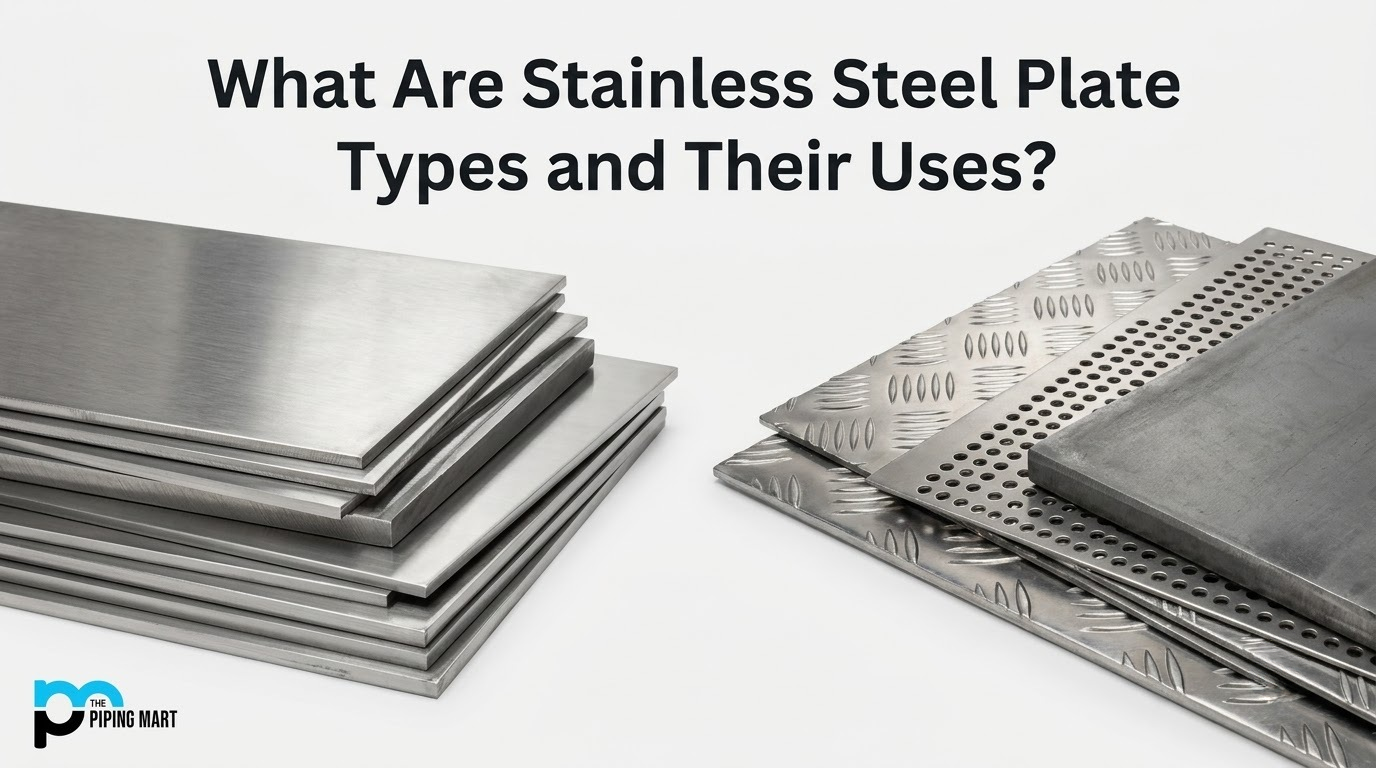
Stainless steel plates carry heavy loads and are used to build durable tanks, pressure vessels, and structural parts. You can sort plates by grade, family, manufacturing method, surface finish, or application. Corrosion resistance, strength, fabrication needs, surface condition, and service environment decide which type fits.
What Are the Main Types of Stainless Steel Plates?
Stainless steel plates are available across five major metallurgical families: austenitic, ferritic, martensitic, duplex, and precipitation-hardening stainless steels.
Austenitic Plates
Austenitic plates, including 304 and 316, offer excellent corrosion resistance, formability, and weldability for many fabrication applications. Grade 316 adds 2–3% molybdenum for better chloride tolerance. Fully annealed conventional austenitic grades are generally non-magnetic, although cold working can increase magnetic response.
Ferritic Plates
Ferritic plates such as 430 are magnetic and have little or no nickel but do have chromium. They are utilized for applications needing moderate corrosion resistance, such as appliance components, exhaust parts, and architectural or decorative applications.
Martensitic Plates
A common example is 410 (martensitic plates), which are heat-treated to harden. Hardness and strength increase, but corrosion resistance and weldability decrease. They are used in pump shafts, valve parts, and wear plates.
Duplex Plates
Duplex plates, like 2205, combine austenitic and ferritic structures in roughly equal parts. Yield strength runs about double that of 304 or 316, and resistance to chloride stress corrosion cracking improves. Offshore platforms, desalination plants, and chemical process lines specify duplex for that reason.
Stainless Steel Plate Types by Manufacturing and Finish
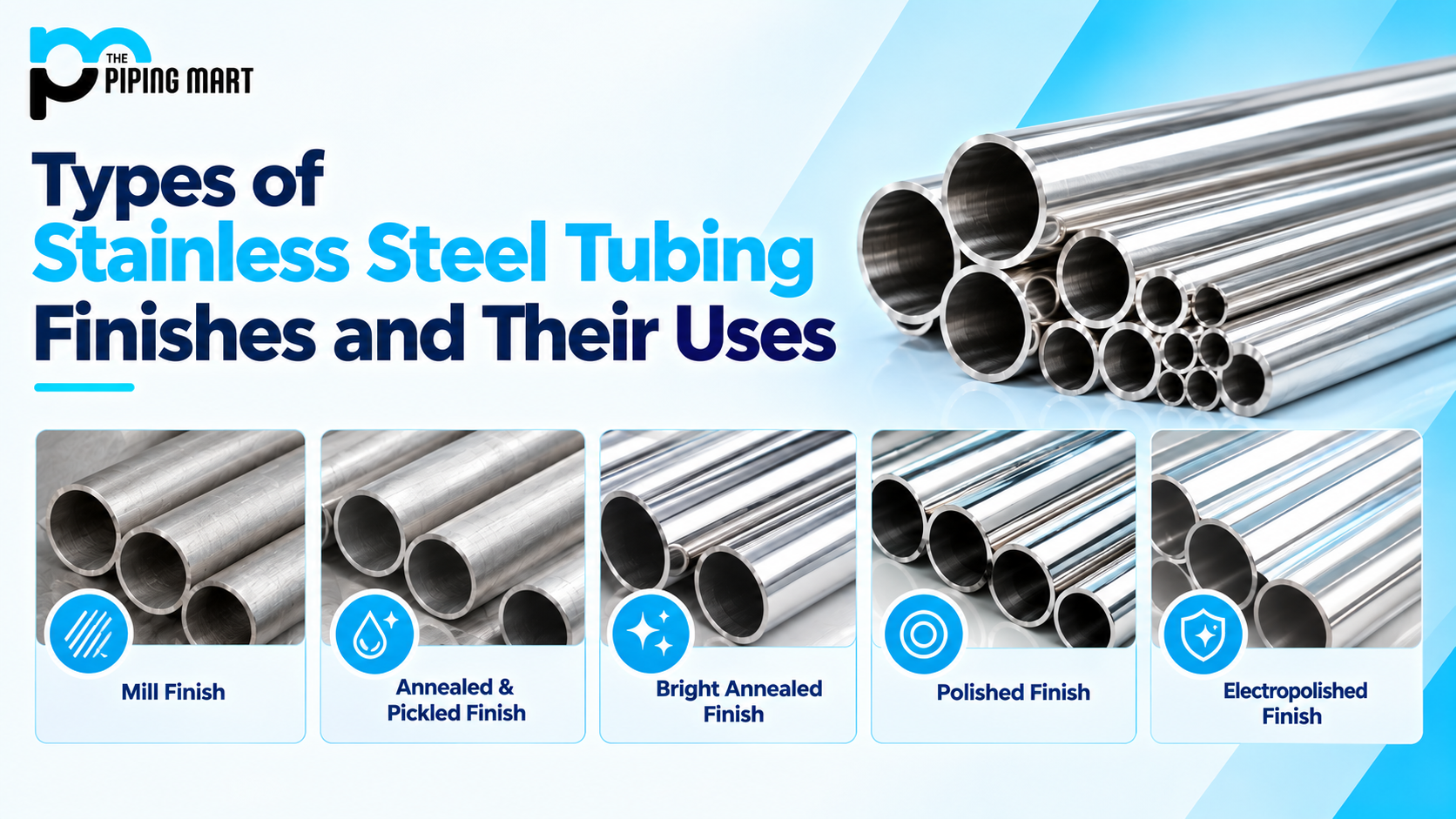
Hot rolling produces most plates. The mill rolls slabs at high temperature, then anneals and descales the product. That route gives the No. 1 (1D) finish, a dull, matte grey surface. It suits tanks, vessels, and structural parts, where thickness and strength matter more than looks.
Cold-rolled flat products run thinner, mostly sheet and coil. Cold rolling followed by annealing and pickling gives 2B, a smooth, moderately reflective surface and the standard choice for general fabrication. Bright annealing in a controlled atmosphere gives BA (2R), a mirror-like finish for architectural panels and food-contact surfaces.
Common Uses of Stainless Steel Plates
Each application leans on one property more than the rest.
- Chemical and process equipment: 316 and duplex plate resist acids and chlorides inside reactors and vessels.
- Food and beverage equipment: Austenitic plate cleans easily and does not taint product.
- Storage tanks and containers: Thick hot-rolled plate holds liquid load and resists the stored medium.
- Heat exchangers: Corrosion resistance and strength at temperature keep tube sheets and shells intact.
- Construction and architecture: Ferritic and austenitic plate in 2B or BA finish clad facades and fit structural details.
- Marine and corrosion-service equipment: 316L, duplex, and 904L withstand seawater and chloride exposure.
- General industrial fabrication: Easy cutting, forming, and welding make austenitic plate a workshop staple.
How to Choose the Right Stainless Steel Plate Type
Start with the service environment, because it narrows the field fastest. Chloride exposure pushes you from 304 toward 316, duplex, or 904L. Operating temperature comes next, since some grades scale or lose strength where others hold.
Then check mechanical load against yield strength, and weigh welding and forming demands. Duplex and martensitic plates need tighter fabrication control than austenitic. Confirm the surface finish your application requires, and finish by matching the grade to the project specification.
Conclusion
Choosing stainless steel plate takes more than picking a grade number. Family, production route, finish, and end use must all align with the conditions the plate will face. An unsuitable selection can lead to premature corrosion, fabrication issues, or unnecessary material costs. As a B2B platform, we at The Piping Mart connect buyers with suppliers, manufacturers, and exporters who can discuss stainless steel plate options based on grade, thickness, finish, and application requirements.
Frequently Asked Questions About Stainless Steel Plate Types and Uses
What Are the Different Types of Stainless Steel Plates?
Plates are divided by grade family (austenitic, ferritic, martensitic, and duplex), production route (hot-rolled or cold-rolled), and finish (such as No. 1, 2B, and BA).
What Are Stainless Steel Plates Used For?
Chemical processing, construction, food processing, marine equipment, power generation, and general manufacturing use stainless plates for tanks, vessels, heat exchangers, structural members, and machine parts.
What Is the Difference Between Stainless Steel Sheet and Plate?
The main difference between stainless steel sheet and plate is the thickness. But the line is dependent upon the applicable standard and product specification. The plate is often provided in heavier sections for tanks, pressure vessels, structural construction, and other heavy-duty applications, while a thinner sheet is utilized for enclosures, cladding, formed components, and equipment panels.
Which Stainless Steel Plate Is Commonly Used for Corrosive Environments?
Grades 316, 316L, and 904L lead for corrosive service. The corrosive medium, its concentration, and the operating temperature decide the final choice.
Which Stainless Steel Plates Are Suitable for High-Temperature Applications?
Grades 309 and 310 resist scaling at furnace temperatures. Stabilized 321 and 347 resist carbide precipitation during long heat exposure in boilers and exhaust systems.
How Do You Choose the Right Stainless Steel Plate for an Application?
Match corrosion exposure, temperature, mechanical load, welding route, and plate thickness to the grade, then confirm the plate meets the project’s ASTM or EN specification.