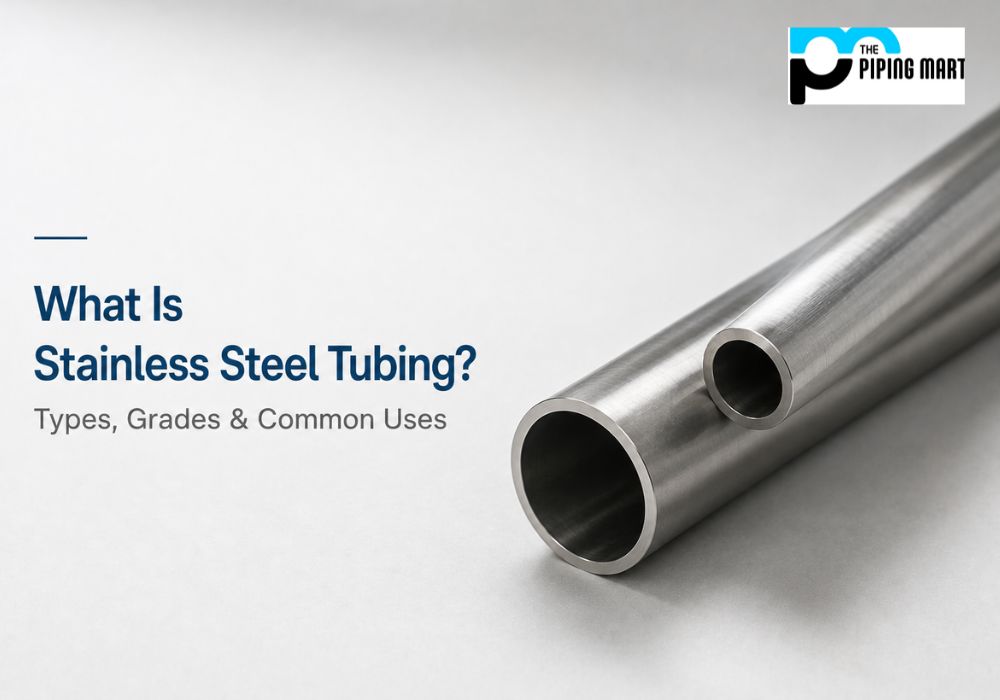
Stainless steel tubing is one of the most consistently specified materials across industrial, process, and structural applications. It covers a broad range of product forms, from small-bore instrumentation lines to large-diameter structural sections, and comes in multiple grades suited to different service conditions. Choosing the wrong grade or type can cause premature failure, which is why understanding the basics before procurement matters. This article covers what stainless steel tubing is, the main types available, key grades, size ranges, applicable standards, and where the material is commonly used. The information here is practical, not exhaustive, but should be enough to guide most standard purchasing decisions.
What Is Stainless Steel Tubing?
Stainless steel tubing is a hollow product made from stainless steel with outside diameter (OD) and wall thickness as the principal specifications. Tubing is sized using actual measured dimensions as opposed to the nominal bore and schedule used with pipe. SS tubing is preferred when precise flow control and tight-fitting connections are needed. It contains at least 10.5% chromium, which creates a thin, protective oxide layer on the surface that helps prevent corrosion. These tubes (or pipes) are made in different shapes, such as round, square, and rectangular, and can be either seamless or welded. They are available in many different grades so they can handle a wide range of temperatures, pressures, and chemical environments.
Types of Stainless Steel Tubing
The stainless steel tubing is available in several forms. The right choice depends on the application, the pressure rating needed, and the environment in which the tubing will be used.
Seamless Stainless Steel Tubing
Seamless stainless steel tubing is produced without a weld seam. It is extruded or drawn from a solid billet, which gives it a uniform wall thickness and better mechanical strength compared to welded alternatives. It is the preferred choice for high-pressure applications, hydraulic lines, and anywhere the absence of a weld is needed for safety or hygiene reasons. It costs more than welded tubing, but for critical service conditions, the difference is generally justified.
Welded Stainless Steel Tubing
Welded stainless steel tubing is formed by rolling a flat strip into a tube and welding the seam longitudinally. Modern welding and post-weld processing, including cold drawing and annealing, bring the weld quality close to the base material in most cases. It is more cost-effective than seamless tubing and is widely used in food processing, dairy, sanitary applications, and structural work where extreme pressure is not the primary concern. ASTM A249 and A554 cover welded stainless tubing for heat exchangers and mechanical applications, respectively.
Round, Square & Rectangular Tubing
Round stainless steel tubing is the most common form and is used across process, instrumentation, and structural applications. Stainless steel square tubing and stainless steel rectangular tubing are primarily used in structural and architectural work. These include handrails, frameworks, cladding supports, and general fabrication. They are listed separately from round tubing in most supplier catalogs and are typically covered under ASTM A554 for welded mechanical tubing. Stainless steel instrumentation tubing is a subcategory of round tubing, produced to tighter dimensional tolerances and used in measurement and control systems.
Common Stainless Steel Tubing Grades
Grade 304 is the most widely used and handles mild corrosive environments well. Grade 304L is the low-carbon version, used where welding is involved to prevent sensitisation. 316 stainless steel tubing contains molybdenum, which improves resistance to chloride attack and pitting. It is the standard choice for marine, pharmaceutical, and chemical environments. Grade 316L is the low-carbon equivalent of 316. For high-temperature service, grades like 310S or duplex grades such as 2205 may be specified. Ferritic grades like 430 are sometimes used in less demanding conditions where cost matters more than maximum corrosion resistance.
Key Properties of Stainless Steel Tubing
The properties of stainless steel tubing vary by grade, but some general characteristics apply across most austenitic grades, which make up the majority of what is used in industry.
Chemical Composition
Austenitic stainless steels, the most common group, are primarily iron with 18% chromium and 8% nickel as the base composition (the 18/8 reference often seen in specifications). Grade 316 adds 2–3% molybdenum. Low-carbon versions (304L, 316L) keep carbon below 0.03% to reduce the risk of carbide precipitation at weld zones. The chromium content is what maintains the passive layer that gives the material its corrosion resistance. Nitrogen is sometimes added to improve strength, particularly in duplex grades.
Mechanical Properties of Stainless Steel Tubing
Typical tensile strength for 304 stainless steel tubing is around 515 MPa minimum, with yield strength around 205 MPa. Grade 316 is similar. These values can increase with cold working. Wall thickness directly affects pressure rating, and thinner wall tubing, referred to as “thin-wall stainless steel tubing,” is used where weight saving or compact routing matters. Duplex grades offer roughly twice the yield strength of standard austenitic grades, which allows for thinner walls in high-pressure service.
Physical Properties of Stainless Steel Tubing
Stainless steel tubing has a density, i.e., approximately 7.9 g/cm³ for most austenitic grades. Thermal conductivity is lower than that of carbon steel, which matters in heat exchanger design. The material has good ductility and can be bent, formed, and cold worked without losing corrosion resistance, provided the passive surface layer reforms after processing. Surface finish varies by application, from mill finish through to electropolished surfaces required in pharmaceutical and food processing lines.
Standard Sizes and Specifications of SS Tubing
The stainless steel tubing is available in different sizes, followed by ASTM standards depending on the product type and application. Stainless steel tubing specifications generally define OD, wall thickness, material grade, and applicable testing requirements.
Tubing Size Chart Overview
The table below gives an overview of common stainless steel tubing sizes across different product series. Actual availability depends on the grade and supplier stock.
| Size Series | Typical OD Range | Typical Wall Thickness Range | Notes / Typical Use |
| Fractional (inch OD) | 1/8″ to 2″ OD (≈ 3.18 mm to 50.8 mm) | 0.020″ to 0.120″ (≈ 0.5 mm to 3.0 mm) | Standard instrumentation / general tubing; charts list OD, wall (and sometimes BWG), and derived ID. |
| Small OD fractional | 0.188″, 0.250″, 0.313″, 0.375″, etc. | 0.028″, 0.035″, 0.049″, 0.065″ | Used in control lines and small heat-exchanger coils, each OD is offered with several wall choices. |
| Larger fractional | 1/2″, 5/8″, 3/4″, 1″, 1¼”, 1½”, 2″ | 0.035″–0.120″ | Used for process and structural tubing, the wall is chosen for strength/pressure. |
| Metric tubing (round) | About 2 mm to 60 mm OD | About 0.5 mm to 4–5 mm wall | Used where systems are designed in mm; charts show OD, wall, ID, and sometimes weight per meter. |
| Thin-wall metric | 2–25 mm OD | 0.1–1.2 mm wall | Common for 304/304L seamless small tubes; used in heat exchangers, condensers, and small-bore lines. |
| Square/rectangular | Typical ½”×½” up to 4″×4″ (or 12 mm×12 mm to 100 mm×100 mm) | 16 GA to 11 GA (≈ 1.5–3.0 mm), heavier on request | Listed separately as mechanical/structural tubing; charts give size, wall (gauge), and sometimes weight. |
| Pipe (NPS) vs tube | Pipe: NPS ¼” to 24″ with schedule (5S, 10S, 40S, 80S, etc.) | Wall defined by schedule, not directly by OD/wall pair | Pipe charts (ASTM A312) are separate and give OD, schedule, wall, and weight per meter/foot. |
ASTM Standards for Stainless Steel Tubes
The following ASTM standards are the most commonly referenced for stainless steel tubing procurement. Each standard covers specific product types and service conditions.
| ASTM Standard | Main Product Type | Typical Application / Scope |
| ASTM A269 | Seamless and welded austenitic stainless steel tubing | General service tubing (fluids, gases, instrumentation lines, process lines) with controlled OD and wall. |
| ASTM A213 | Seamless ferritic and austenitic alloy steel boiler, superheater, and heat-exchanger tubes | High-temperature boiler and heat-exchanger tubes in power and process plants. |
| ASTM A249 | Welded austenitic steel boiler, superheater, heat-exchanger, and condenser tubes | Welded heat-exchanger and condenser tubing, usually with post-weld cold work and final anneal. |
| ASTM A270 | Sanitary/hygienic | |
| ASTM A632 | Seamless and welded small-diameter austenitic stainless steel tubing | Small-diameter general-service tubing (instrumentation and control lines) with stricter dimensional control. |
| ASTM A688 | Seamless and welded austenitic stainless steel feedwater heater tubes | Tubes for feedwater heaters in power plants (high temperature/pressure). |
| ASTM A268 | Seamless and welded ferritic stainless steel tubing | Ferritic stainless general-service tubing (non-austenitic grades). |
| ASTM A789 | Seamless and welded ferritic/austenitic (duplex) stainless steel tubing | Duplex stainless tubing for general service, often in aggressive media. |
| ASTM A511 | Seamless stainless steel mechanical tubing | Mechanical/structural tubing (shafts, sleeves, machined components), not primarily for pressure service. |
| ASTM A554 | Welded stainless steel mechanical tubing | Mechanical and architectural tubing (handrails and frames) includes round, square, rectangular, and special shapes. |
| ASTM A1016 | General requirements for ferritic and austenitic alloy steel and stainless steel tubes | General requirements standard used together with product specs (A213, A249, A268, A789, etc.). |
Common Applications of Stainless Steel Tubing
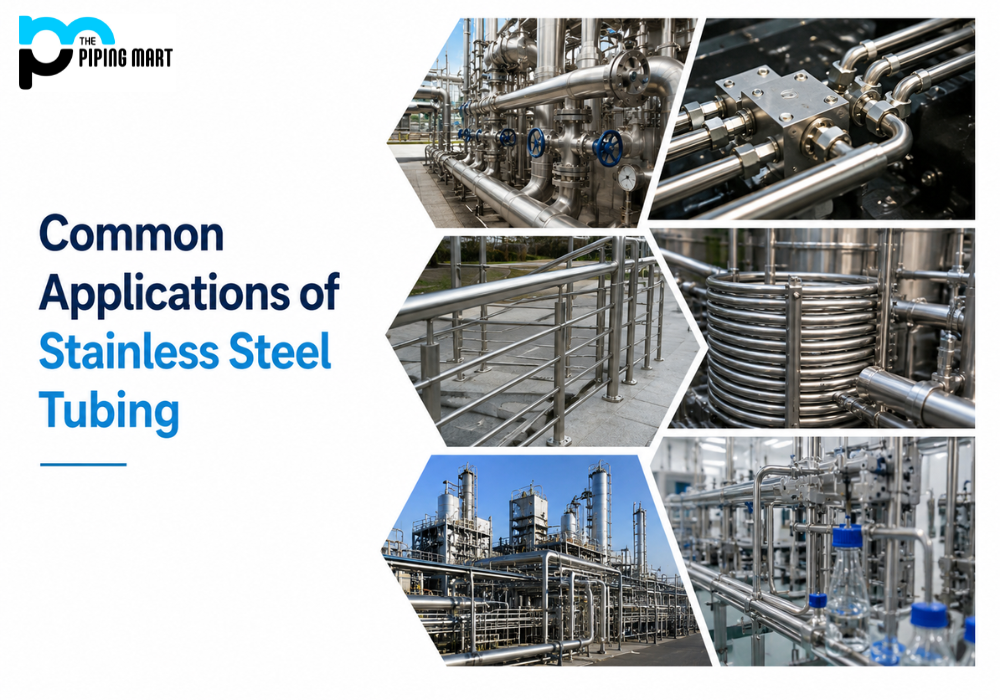
Stainless steel tubing is used in many industries. The grade and type depend on the service environment.
Oil & Gas Industry
In oil and gas, stainless steel tubing is used for instrumentation lines, chemical injection systems, hydraulic control lines, and subsea tubing. 316L is common in offshore environments because of chloride exposure. Seamless tubing is generally specified for high-pressure downhole and surface applications, and stainless steel tubing specifications for this sector often reference ASTM A269 or ASTM A632 for small-diameter instrument lines.
Food Processing & Dairy
Tubing for food and dairy installations must meet sanitary standards, such as ASTM A270. For welded tubing, 304 or 316L is used with the specific internal surface finishes. Generally, the weld bead is not left behind and is blended on the inside of the product, and the product does not accumulate. Cleaning in place (CIP) systems require smooth surfaces that will not be affected by repeated chemical cleaning.
Chemical Processing
Chemical plants use stainless steel tubing for process lines, heat exchangers, and analytical instrument connections. Grade selection depends on the specific chemicals involved. For mild acids or chloride, 316 stainless steel tubing is often used. Other, more aggressive media may be used for higher alloys such as 904L or duplex grades. In this sector, seamless tubing for heat exchangers and boiler applications follows the ASTM A213 standard.
Construction & Architecture
Stainless steel square tubing and stainless steel rectangular tubing are used in architectural applications, including handrails, balustrades, structural framing, and cladding supports. Grade 304 is standard for interior applications. 316 is used in coastal or external environments where chloride levels are higher. ASTM A554 is the typical specification for welded mechanical and architectural tubing in these applications.
Automotive & Heat Exchangers
In automotive applications, round stainless steel tubing is used in exhaust systems and sensor lines. Heat exchangers in industrial processes use thin-wall stainless steel tubing in small OD sizes, often to ASTM A213 or A249. The material handles repeated thermal cycling without significant degradation, which matters in applications where service temperatures fluctuate regularly.
How Is Stainless Steel Tubing Manufactured?
Stainless steel tubing can be made in two main ways. For seamless tubing, a solid metal bar (billet) is pierced and pulled through dies until it reaches the required diameter and wall thickness, often in several steps with heating in between. For welded tubing, a flat metal strip is formed into a tube, welded (usually by TIG or laser), and then drawn and heat-treated to its final size. After forming, the tubes are heat-treated, cleaned (pickled), and passivated to rebuild the protective, corrosion-resistant surface. Finally, they are checked for dimensions, leaks (using hydrostatic or eddy current tests), and mechanical properties according to the relevant ASTM standards before being shipped.
How to Choose the Right Stainless Steel Tubing
Choose the stainless steel grade based on the service environment. For marine, chloride-rich, or chemical applications, 316 or 316L is often the preferred choice. For general industrial and food-processing applications, 304 or 304L is usually sufficient. Then, select seamless or welded tubing based on the required pressure rating and hygiene standards. Check the relevant ASTM standard for the product type, and confirm the stainless steel tubing sizes available from your supplier match what the design requires. For instrumentation and control lines, stainless steel instrumentation tubing to ASTM A269 or A632 is the standard starting point. When in doubt, go one grade higher and use seamless rather than welded for critical service lines.
Conclusion
Stainless steel tubing covers a broad product range and is used across most heavy industries for good reason. The material handles corrosion, pressure, and temperature conditions that would cause other metals to fail early. The key is selecting the right grade, type, and size for the application. Getting the specification wrong, even slightly, can lead to maintenance issues or premature replacement. The information here should give a working understanding of the main product types, grades, and standards involved. For specific applications, always confirm with a supplier or materials engineer before finalising the specification.
FAQs
What is the difference between stainless steel pipe and tubing?
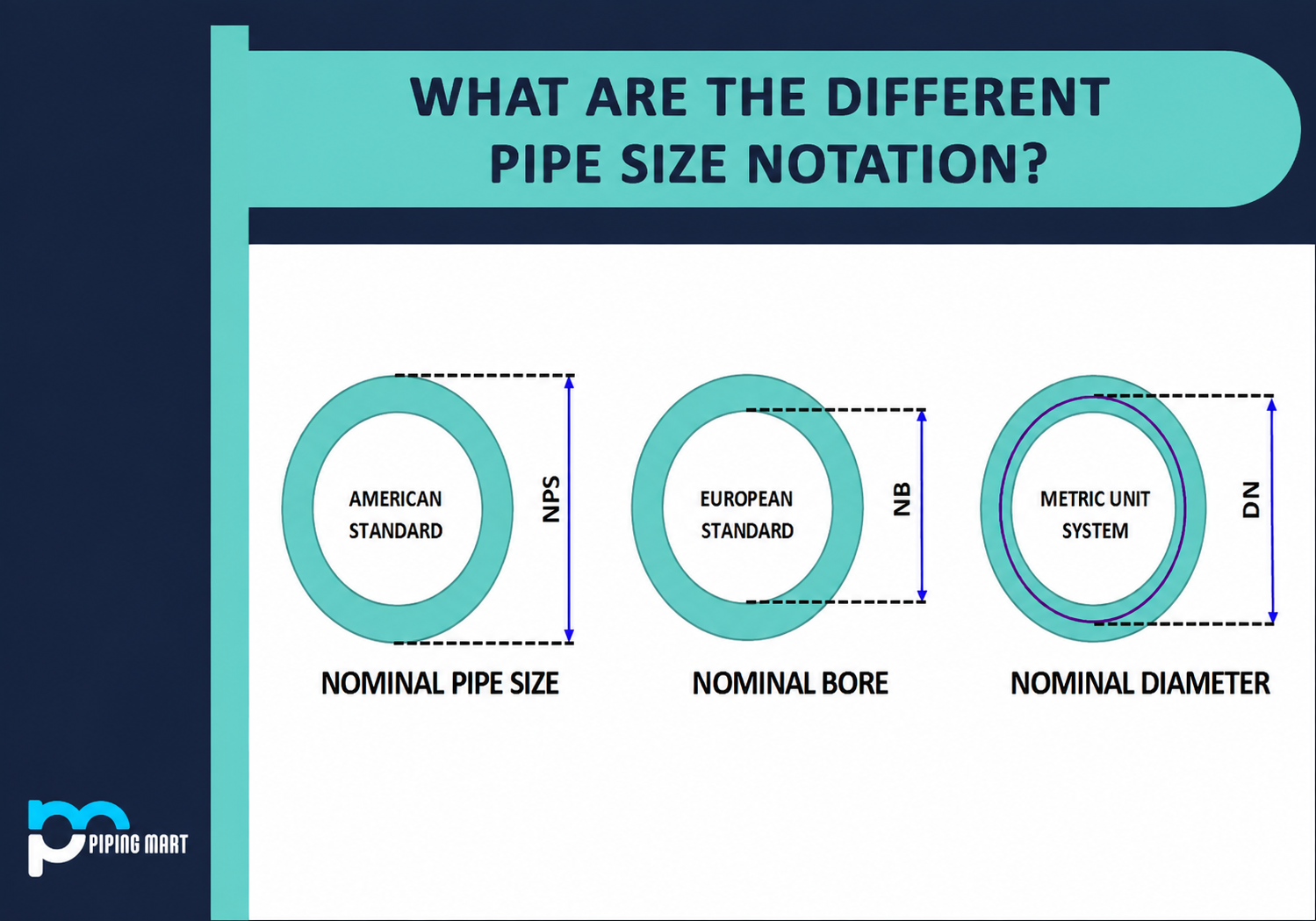
The main difference is how they are sized. Pipe is specified by nominal pipe size (NPS) and schedule, where the OD is fixed per size and the wall thickness changes by schedule. Tubing is specified by actual OD and wall thickness, which gives more precise control over dimensions. Tubing is generally used where dimensional accuracy matters, such as instrumentation and process connections, while pipe is more common in larger-bore fluid transport systems.
Which grade of stainless steel tubing is best for corrosion resistance?
For most industrial uses, 316 or 316L stainless steel tubing resists corrosion better than 304, especially in environments with chlorides. In very harsh chemical conditions, stronger options like duplex 2205 or high-alloy grades such as 904L may be required. The best choice always depends on the exact chemicals, temperatures, and exposure conditions the tubing will face.
What are the common sizes of stainless steel tubing?
Common stainless steel tubing sizes in the fractional inch range from 1/8″ to 2″ OD with wall thicknesses from 0.020″ to 0.120″. Metric sizes typically run from 2 mm to 60 mm OD. Square and rectangular tubing starts from around 1/2″ x 1/2″ up to 4″ x 4″ in standard catalogs. Sizes outside these ranges are available but usually on an indent.
Where is stainless steel tubing commonly used?
It is used across oil and gas, food processing, chemical processing, pharmaceuticals, construction, automotive, and power generation. The specific type and grade used depends on the application. Sanitary tubing for food and dairy differs significantly from high-pressure seamless tubing used in subsea hydraulic systems, even though both are described as stainless steel tubing.
Is stainless steel tubing corrosion-resistant?
Yes. The chromium content in stainless steel forms a passive oxide layer that resists corrosion in most environments. That said, the level of resistance varies by grade. Grade 304 handles mild environments well. Grade 316 handles chloride-containing environments better due to its molybdenum content. In highly acidic or strongly oxidising environments, higher alloy grades may be needed. Stainless steel tubing is not immune to all forms of corrosion, particularly pitting and crevice corrosion in the wrong grade for the environment.