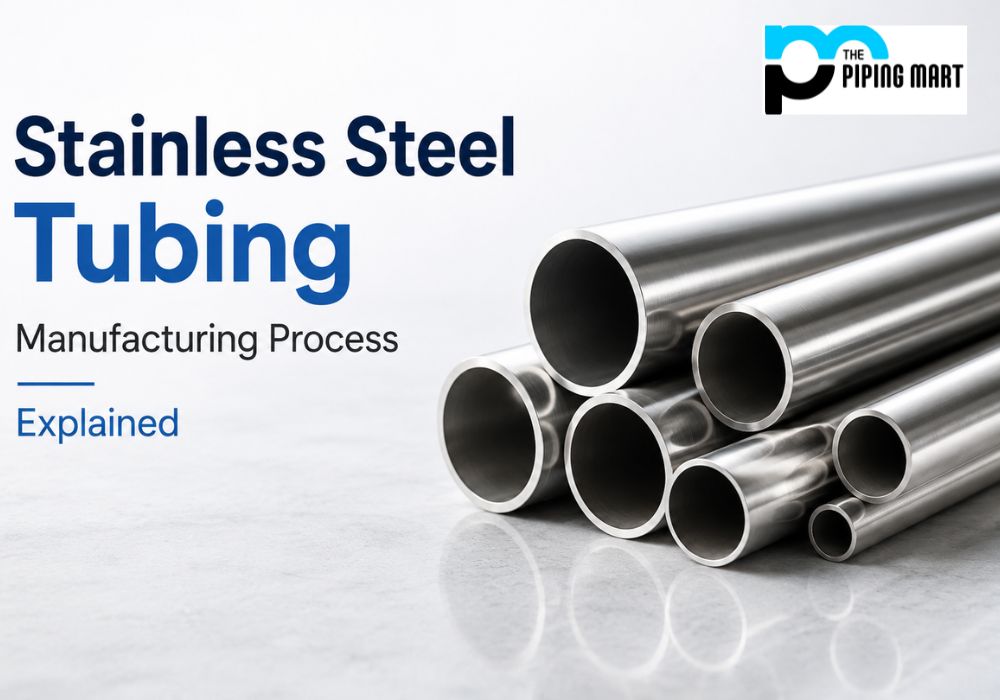
Stainless steel tubing is used across industries where corrosion resistance, strength, and dimensional accuracy all matter at the same time. The manufacturing process behind it is not easy. There are multiple routes, different alloy grades, and strict stainless steel tubing standards that regulate everything from wall thickness to surface finish. Whether you are sourcing tubes for pharmaceutical equipment, heat exchangers, or structural applications, having a clear understanding of how these tubes are made helps in selecting the right product. This guide covers the full stainless steel tube manufacturing process, from raw material selection through to final testing and dispatch.
What Is Stainless Steel Tubing?
Stainless steel tubing is a type of hollow section product constructed of stainless steel alloys, predominantly iron containing 10.5% or more chromium. The corrosion-resistant properties of the material are due to the formation of a passive layer of chromium on the surface. Tubes are available in round, square, and rectangular shapes; the most common tube is the round one. These tubes are available in various grades, such as 304, 316, 321, 310, and duplex. The sizes range from small-bore instrumentation tubes (with diameters < 6 mm) up to large industrial pipes. Tube fabrication with stainless steel tubing can be either seamless or welded, and this process can impact the mechanical properties and applications of the tube.
Stainless Steel Tubing Manufacturing Process – A Step-by-step Guide
There are two different ways to make the stainless steel tube: seamless and welded. Both techniques have multiple regulated phases, with each phase influencing the product quality.
How Seamless Stainless Steel Tubing Is Manufactured
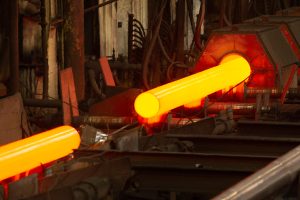
Seamless stainless steel tube production is based on the solid stainless steel billet, which is heated to a high temperature, about 1200℃. A rotary piercing mill is then used to punch a hole through the middle of the hot billet to create a hollow shell. This shell is rolled down to a small diameter with a mandrel mill or plug mill. Following this, the tube is subjected to additional size passes to get closer to the desired OD and wall thickness. Without a weld seam, seamless tubes are often more capable of withstanding high pressures and are less prone to defects in the tube welds, making them a better choice for applications like boiler tubes, hydraulic lines, and chemical processing.
How Welded Stainless Steel Tubing Is Manufactured
Welded stainless steel tubing is made from a flat-rolled stainless steel strip or coil. The strip passes through forming rolls, which progressively mold the strip into a round cross-section, and the two edges are rolled together and welded. Today, the most common methods of producing most of the welded tubes are through Tungsten Inert Gas (TIG) welding or High-Frequency Induction (HFI) welding. TIG welding provides a cleaner weld bead and is used for food-grade and sanitary tubes. For larger volume production, HFI welding is used in a faster process. The weld bead is typically removed or smoothed after welding, and the tube is sized to the desired final dimensions. Welded tubes are typically less expensive than seamless tubes and are made with varying wall thickness, but they are not suitable for all applications and pressure or temperature ranges.
Cold Drawn vs Hot Finished Stainless Steel Tubing
After initial forming, seamless tubes in particular can be processed by either hot finishing or cold drawing. Hot-finished tubes are processed at elevated temperatures and then allowed to cool. The surface is typically rougher, and dimensional tolerances are wider compared to cold-drawn products. Cold-drawn tubes are pulled through a die at room temperature, sometimes over a mandrel. This process refines the dimensions considerably and improves surface finish and mechanical properties. Cold drawing increases strength through work hardening and produces tighter tolerances, which matters in precision instrumentation and aerospace applications. Most seamless tubes supplied to tight dimensional specifications will have gone through at least one cold drawing pass. Hot-finished tubes are used where precision is less critical, and cost needs to be controlled.
Heat Treatment and Finishing Processes
Most stainless steel tubes are annealed after forming and cold drawing. Annealing involves heating the tube to a specific temperature range and holding it there before controlled cooling. For austenitic grades like 304 and 316, solution annealing at around 1050 to 1120 degrees Celsius dissolves carbides back into the matrix and relieves internal stresses introduced during cold working. This restores ductility and corrosion resistance. Bright annealing is carried out in a controlled-atmosphere furnace to prevent surface oxidation, producing a clean, reflective finish without any need for pickling. Where bright annealing is not used, tubes are pickled in acid solutions to remove oxide scale. Surface finishing after annealing can include polishing to various Ra values, electropolishing, or passivation, depending on the end application.
Raw Materials Used in Stainless Steel Tubing Manufacturing
The key raw materials are billet stainless steel, which is used to make seamless tubes, or flat-rolled coil, which is used to make welded tubes. Both types of stainless steel are made in an electric arc furnace by melting scrap steel with ferroalloys such as chromium, nickel, and molybdenum. The exact mix depends on the grade. Grade 304 typically contains about 18% chromium and 8% nickel. Grade 316 has a similar base but also includes around 2–3% molybdenum to improve resistance to pitting corrosion. Duplex grades may also include added nitrogen to increase strength. In TIG welding, the shielding gas, usually argon or argon and helium gas mixture, is employed to protect the weld pool. The quality of raw materials also affects the quality of the final tube, so it is important that the raw materials are sourced from reputable suppliers that can provide certified materials.
Quality Testing in Stainless Steel Tubing Manufacturing
Testing is an essential part of the stainless steel tube production process and cannot be avoided throughout. The thickness and straightness of the outer diameter and ovality are covered by dimensional inspection. Mechanical properties are tensile strength, yield strength, hardness, and elongation. Eddy current testing is the most common non-destructive testing method to detect surface and near-surface defects in a tube without damage. Hydrostatic pressure testing verifies that the tube does not permit leakage when it is subjected to pressure. Where internal defects must be detected, ultrasonic testing is used. For corrosion-critical applications, intergranular corrosion tests such as the Strauss test or Huey test are carried out on samples. Positive material identification (PMI) by X-ray fluorescence is often used to verify alloy composition. All test results are documented in material test reports that accompany the product.
ASTM Standards for Stainless Steel Tubing
Several stainless steel tubing standards govern the manufacture and supply of stainless steel tubes in the ASTM system. ASTM A269 covers seamless and welded austenitic stainless steel tubing for general service. ASTM A213 applies to seamless ferritic and austenitic alloy steel boiler, superheater, and heat-exchanger tubes. ASTM A249 covers welded austenitic steel tubes for boilers and heat exchangers. ASTM A270 is specific to sanitary tubing for food, dairy, and pharmaceutical use. ASTM A632 covers small-diameter seamless and welded austenitic tubes. ASTM A688 deals with welded austenitic feedwater heater tubes. ASTM A268 covers seamless and welded ferritic stainless steel tubing. ASTM A789 applies to duplex stainless steel tubes for general service. ASTM A511 covers seamless stainless steel mechanical tubing. ASTM A554 applies to welded stainless steel mechanical tubing. ASTM A1016 and ASTM A908 cover general requirements applicable across multiple product specifications.
Factors Affecting Stainless Steel Tubing Quality
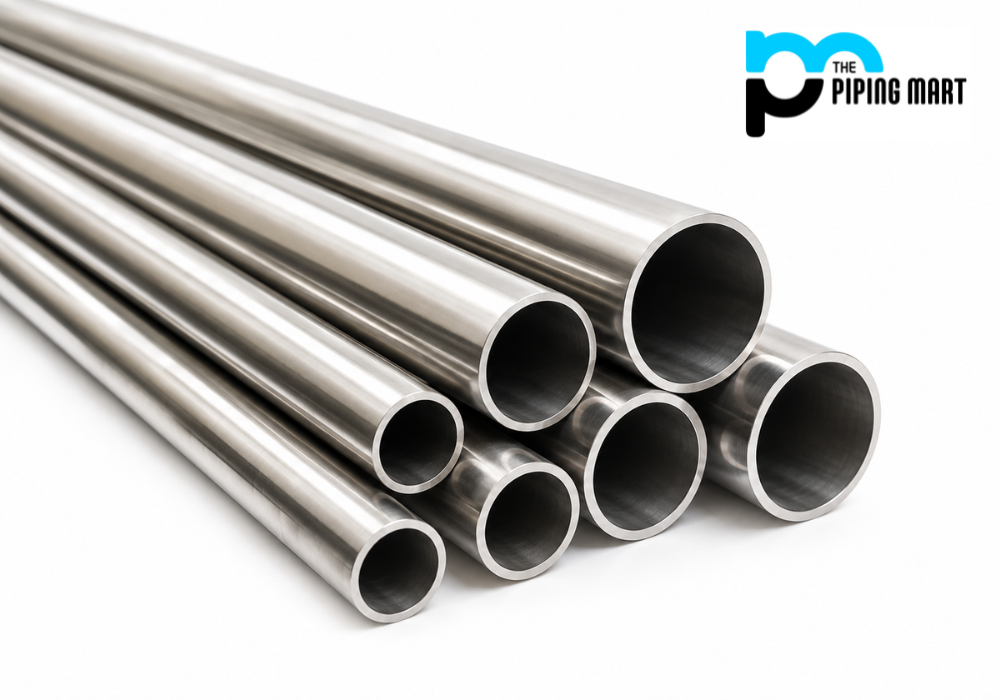
The Quality of Stainless Steel Tubes is affected by several factors during their production process. The quality of raw materials is essential, especially the cleanliness of the melt and the accuracy of the alloy additions. Surface condition and lubrication conditions in forming have an influence on the surface finish and dimensional accuracy of cold drawing. The annealing temperature and atmosphere directly affect the properties of the grain structure and corrosion resistance. Weld speed, heat input, and the amount of shielding gas are all factors that will affect the quality of the weld in welded tubes. If required, post-weld heat treatment needs to be done within the correct temperature range throughout the product. Precision straightening machines are used to control the straightness after heat treatment. If any of these parameters are varied, the mechanical property, surface finish, or dimensional non-conformance of the tubes can vary.
Conclusion
The stainless steel tube manufacturing process involves a sequence of controlled operations, each of which affects the final product. Whether the tube is produced by seamless piercing or welded from strip, the material then goes through forming, heat treatment, surface finishing, and testing before it leaves the mill. The choice of manufacturing route, grade, and applicable stainless steel tubing standards depends on the end application. For pressure-critical or high-temperature use, seamless tubes to ASTM A213 or A269 are typically specified. For sanitary applications, welded tubes to ASTM A270 are standard. Understanding these distinctions helps buyers and engineers make better sourcing decisions and reduces the risk of specifying the wrong product.
FAQs
What is the difference between seamless and welded stainless steel tubing manufacturing?
A seamless tube is produced by the solid billets that are pierced and rolled to create a seamless tube with no weld seam along the length of the tube. Welded tubes are formed from a flat strip that is welded at both ends. The pressure and temperature resistance properties of seamless and welded tubes are better, the size and dimension of the tube are more uniform, and the cost of the tube is lower, but the production rate is not high, and the price is higher for less critical applications.
What raw materials are used in stainless steel tubing production?
The primary raw material is mainly stainless steel, which is made in an electric arc furnace using scrap steel and ferroalloys (chromium, nickel, molybdenum). The particular additions depend on the grade being made. The seamless tubes are cast steel billets, and the welded tubes are rolled from a flat coil. During the welding stage, shielding gas (most often argon) is also used.
Why is annealing important in stainless steel tubing manufacturing?
The ductility and corrosion resistance may be reduced during cold drawing or welding and can be restored by annealing. On austenitic grades, solution annealing removes chromium carbides, which can lower the amount of chromium at the grain boundaries and lead to intergranular corrosion. It also mitigates the stresses that are generated during the forming process to enhance the dimensional stability and the likelihood of less cracking during service.
What quality tests are performed on stainless steel tubing?
The common tests include dimensional, hydrostatic, and pneumatic pressure testing; thermal current testing for surface defects; and tensile and hardness testing. Depending on the specification, other testing is also required, such as ultrasonic testing, intergranular corrosion testing, and positive material identification. All results are recorded in material test certificates and certify the product to the standard.
Which ASTM standards apply to stainless steel tubing manufacturing?
The major ASTM standards for stainless steel tubing are A269 for general service austenitic tubes, A213 for boiler and heat exchanger tubes, A249 for welded austenitic boiler tubes, A270 for sanitary tubing, A268 for ferritic tubes, A511 for seamless mechanical tubing, and A554 for welded mechanical tubing. General requirements are specified in A1016 and A908 (which are common to several specifications).