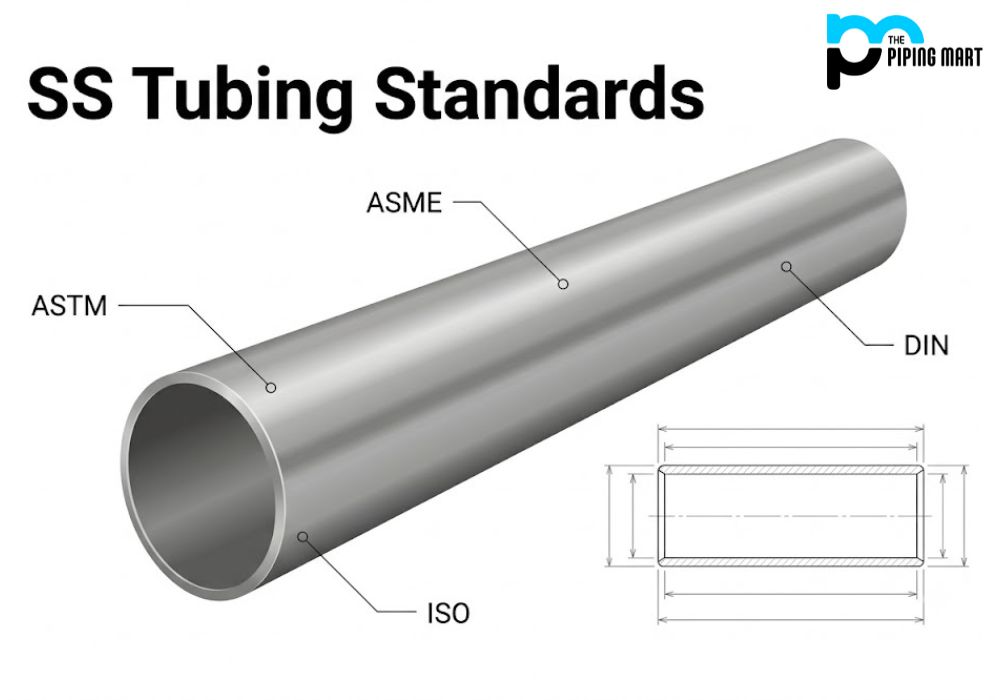
Stainless steel tubing is used under demanding conditions, such as boiler systems, chemical lines, and high-pressure instrumentation, and the material’s performance in those situations depends heavily on which standard it was produced to. ASTM stainless steel tubing standards define everything from material composition and mechanical properties to dimensional tolerances and required testing. Without understanding which standard applies to your application, there is a real risk of specifying the wrong product, which causes procurement problems and, in critical systems, safety concerns. This guide covers the most commonly used stainless steel tubing standards, what they cover, how the grades differ, and how to match the right specification to the right job. The information here is intended for engineers, procurement teams, and fabricators working with precision tubing.
What Are Stainless Steel Tubing Standards?
Stainless steel tubing standards are technical documents produced by organisations like ASTM International that specify how tubing must be manufactured, tested, and supplied. They define the acceptable chemical composition for different grades, the required mechanical properties such as tensile and yield strength, dimensional tolerances for outer diameter and wall thickness, and the test methods that must be applied before dispatch. Compliance with a standard means the material has been produced and verified according to a defined, repeatable process. In pressure systems, heat exchangers, and instrumentation lines, this matters a great deal. Buyers and engineers use these specifications to ensure consistency across suppliers and batches.
Common ASTM Standards for Stainless Steel Tubing
ASTM grades provide several specifications that cover stainless steel tubing. Each one applies to a specific type of tubing or end use. The four most frequently referenced are listed below.
ASTM A213 Stainless Steel Tubing
ASTM A213 stainless steel tubing covers seamless ferritic and austenitic alloy-steel boiler, superheater, and heat-exchanger tubes. This specification is common in high-temperature and high-pressure applications. Grades covered include TP304, TP316, TP321, and TP347, among others. Hydrostatic testing or nondestructive electric testing is required under this standard. Wall thickness and OD tolerances are tightly controlled, and heat treatment is mandatory for all grades.
ASTM A269 Stainless Steel Tubing
ASTM A269 stainless steel tubing covers seamless and welded austenitic stainless steel tubing for general service and instrumentation. This is one of the most frequently specified standards for small-diameter precision tubing. Grades 304 and 316 are the most common under this specification. The standard permits both seamless and welded construction, and tolerances are suitable for instrument and hydraulic tubing applications where dimensional accuracy matters.
ASTM A249 Welded Tubing
ASTM A249 covers welded austenitic steel boiler, superheater, heat exchanger, and condenser tubes. The key difference from A213 is that A249 is specifically for welded tubes, not seamless. It applies to similar high-temperature service conditions. Grades covered include TP304, TP304L, TP316, and TP316L. Radiographic inspection or eddy-current examination is often used in place of hydrostatic testing.
ASTM A312 vs Tubing Standards
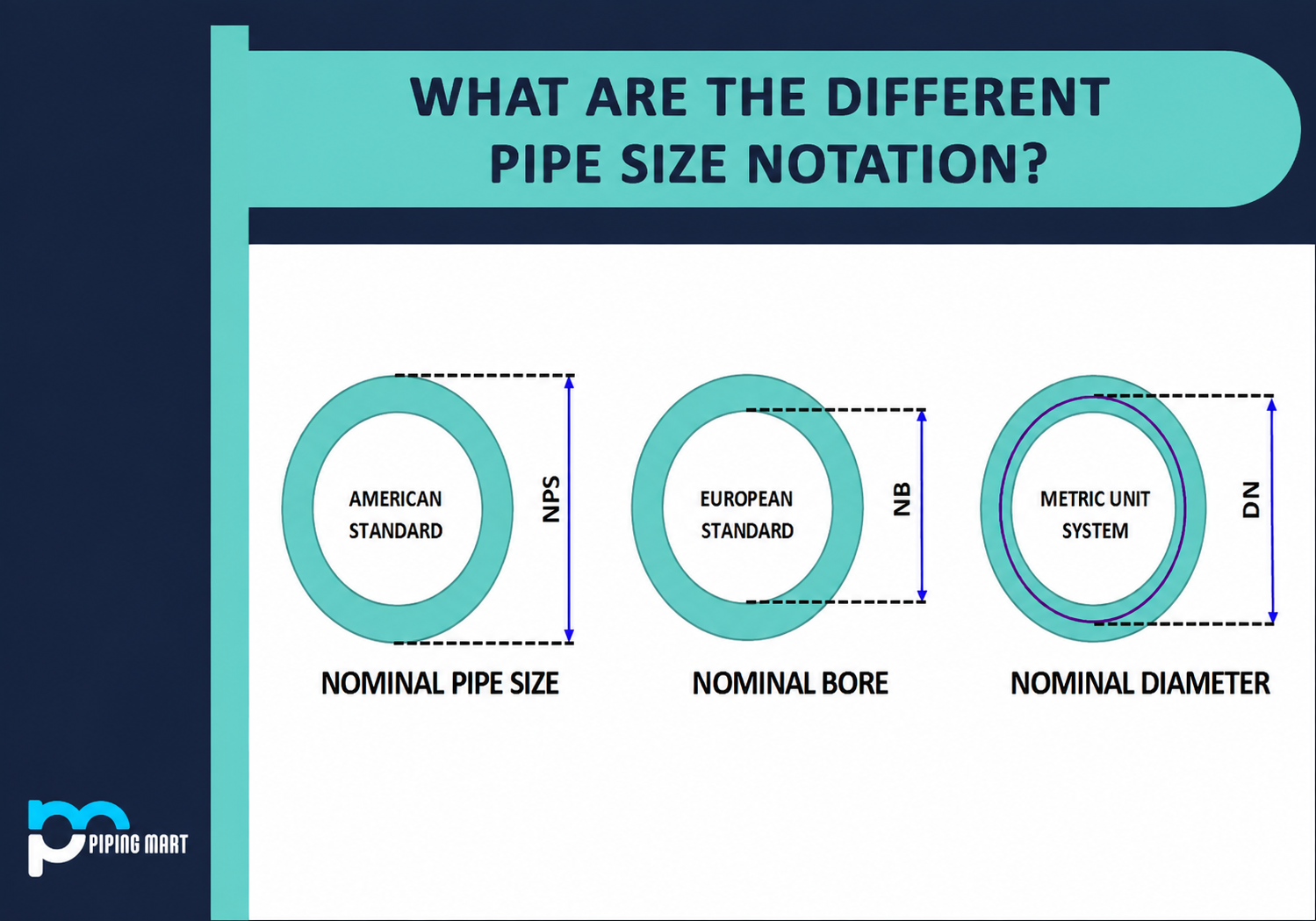
ASTM A312 is a pipe specification, not a tubing standard. Pipe is typically ordered by nominal pipe size and schedule, while tubing is ordered by actual outside diameter and wall thickness. A312 covers seamless, straight-seam, and helical-seam welded pipe for general corrosive and high-temperature service. Confusing pipe and tubing specifications is a common error. If your application requires precise OD dimensions or thin walls, a tubing standard like A213 or A269 is the correct reference, not A312.
Types of Stainless Steel Tubing Covered by ASTM Standards
ASTM specifications cover different construction types of stainless steel tubing. The type you choose depends on the pressure requirements, dimensional tolerances needed, and service conditions.
Seamless Stainless Steel Tubing
Seamless tubing has no weld seam. It is produced by hot or cold working a solid billet of stainless steel. This results in a more uniform grain structure, which is better suited for high-pressure and high-temperature service. Seamless tubing generally costs more than welded tubing. Under ASTM A213, all tubing is seamless. For critical applications such as boiler tubes, seamless is typically required.
Welded Stainless Steel Tubing
Welded tubing is formed from a flat-rolled stainless steel strip and then seam-welded. ASTM A249 and A269 both permit welded construction. Modern welding and inspection techniques have made welded tubing reliable for many applications. Welded tubing is more cost-effective and is available in a broader range of sizes. For non-critical general service and instrumentation lines, welded tubing under A269 is a practical and widely used option.
Instrumentation and Hydraulic Tubing
Instrumentation tubing is produced to tighter tolerances than general-purpose tubing. ASTM A269 is the primary specification here. Small OD sizes, commonly from 1/8 inch to 1 inch, are typical. Wall thickness consistency is critical in this product category because tubing is used with compression fittings that rely on precise OD dimensions to form a reliable seal. Hydraulic tubing follows similar requirements, with the added need for pressure ratings based on wall thickness.
Stainless Steel Tubing Dimensions and Tolerances
Stainless steel tubing dimensions and tolerances are specified within each ASTM standard. Different standards apply slightly different limits, and the values also vary by size range. Below are the key dimensional parameters.
Outer Diameter (OD) Tolerances
Under ASTM A269, OD tolerances for tubing up to 1.5 inches are typically plus or minus 0.005 inches. For larger sizes, the tolerance widens slightly. OD accuracy is particularly important for instrumentation tubing because fittings grip the OD directly. Under ASTM A213, OD tolerances depend on the outside diameter range and whether the tube is hot-finished or cold-drawn. Cold-drawn tubing generally holds tighter tolerances than hot-finished tubing.
Wall Thickness Requirements
Wall thickness tolerances are expressed as a percentage of the specified wall. Under most ASTM stainless steel tubing specifications, the minus tolerance on wall thickness is 12.5%. This means a tube specified at 0.065 inches with a wall could be as thin as 0.057 inches and still be within specifications. For pressure calculations, the minimum wall is what determines the safe working pressure, not the nominal value. Some specifications allow tighter tolerances when agreed between the supplier and purchaser.
Length and Straightness Standards
Tubing can be supplied in random lengths, fixed lengths, or specific cut lengths, depending on the order. Random lengths under ASTM standards are commonly 16 to 22 feet. Straightness is specified as a maximum bow per unit length, typically not more than 1/8 inch per 3 feet under A269. Coiled tubing is also available for instrumentation applications, particularly in small ODs. Straightness requirements are tighter for tubing that will be installed with compression fittings.
Material Grades Used in ASTM Stainless Steel Tubing
Stainless steel tubing grades differ in chemical composition, corrosion resistance, and mechanical properties. The grade selection depends on the service environment, temperature, and required strength. Below are the three most commonly used grades.
304 Stainless Steel Tubing
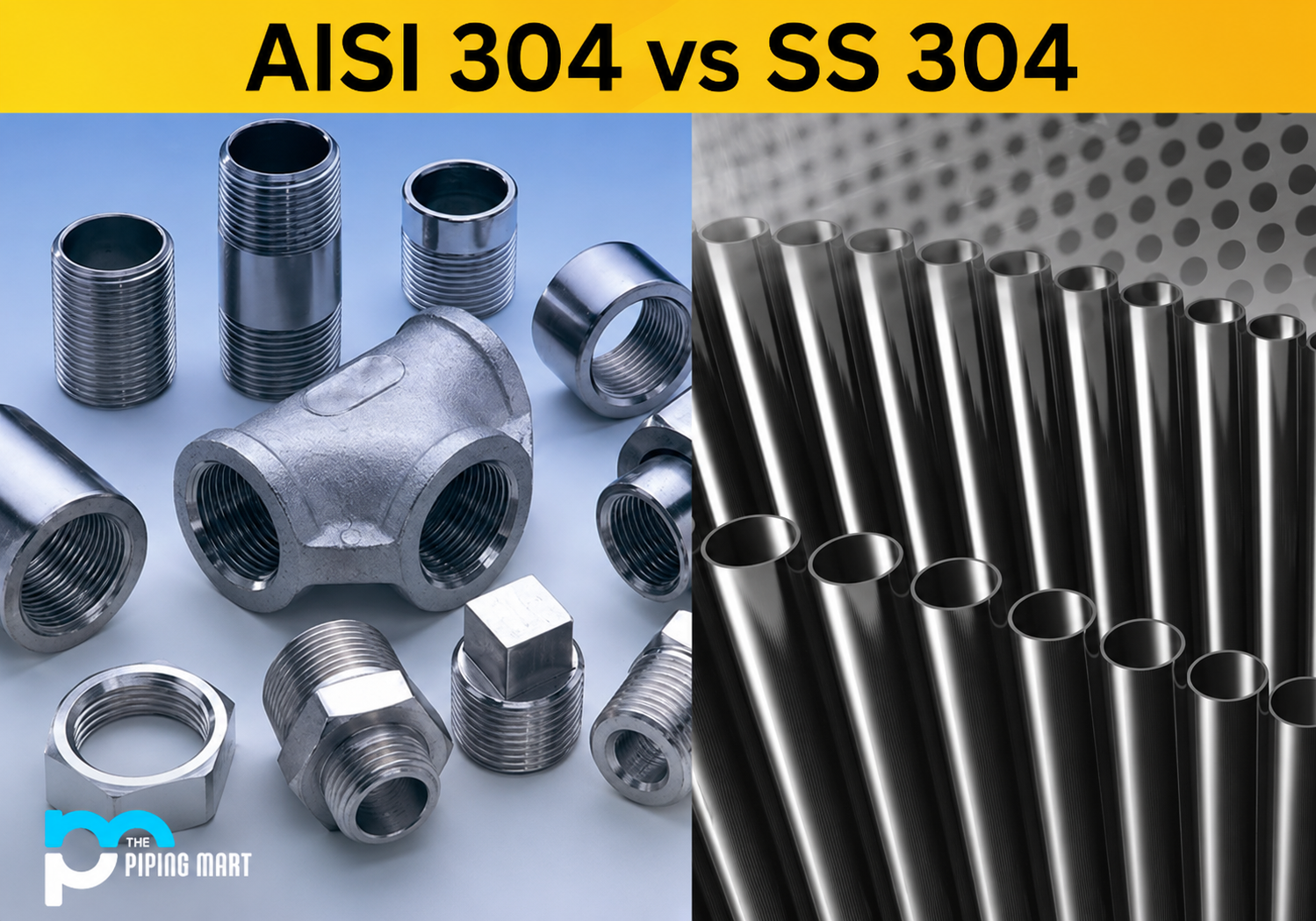
Grade 304 is the most common stainless steel in tubing applications. It contains 18% chromium and 8% nickel, which gives it good corrosion resistance in most environments. Grade 304L is the low-carbon version, preferred for welded applications to reduce the risk of sensitisation. This grade is used across chemical processing, food and beverage, and general industrial applications. It is not the best choice for environments with chloride exposure.
316 Stainless Steel Tubing
Grade 316 adds molybdenum to the 304 composition, typically 2 to 3%. This significantly improves resistance to chlorides and pitting corrosion. For offshore, marine, and pharmaceutical applications, 316 is generally preferred over 304. Grade 316L is the low-carbon variant and is standard for instrumentation and hydraulic tubing in corrosive environments. It is more expensive than 304, but the corrosion resistance justifies the cost in the right application.
321 Stainless Steel Tubing
Grade 321 is stabilised with titanium. The titanium binds carbon and prevents sensitisation during welding and high-temperature service. This makes 321 suitable for elevated-temperature applications where 304 or 316 might suffer intergranular corrosion. ASTM A213 covers grade 321 tubing under the designation TP321. It is used in aircraft exhaust systems, boiler components, and other high-temperature process lines.
How to Select the Right ASTM Standard for Your Application
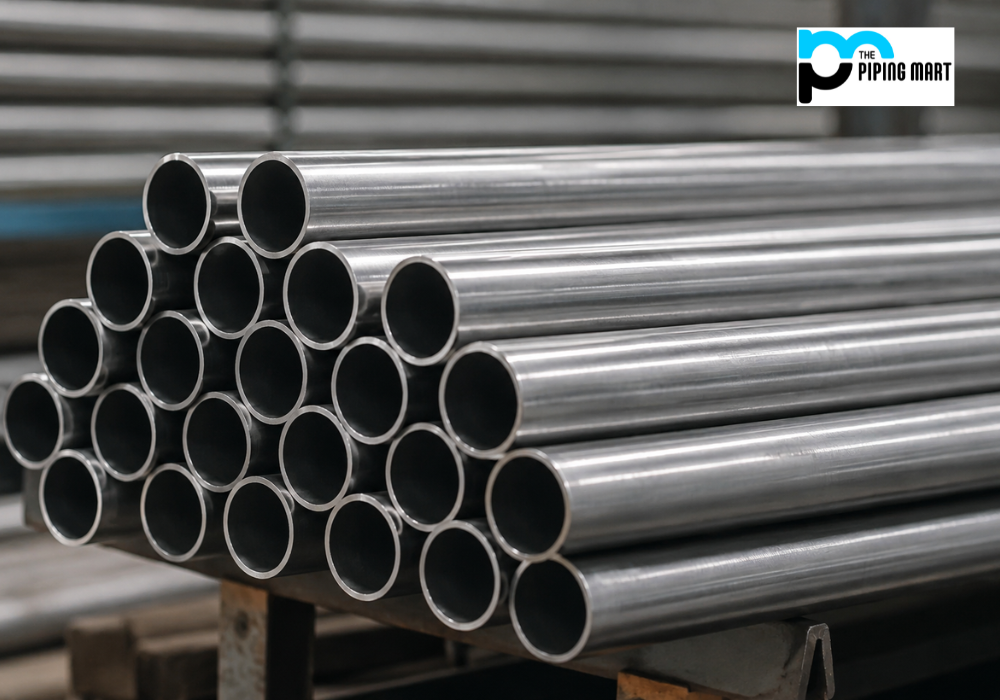
Start with the service condition. If the tubing is used for a boiler, heat exchanger, or superheater at elevated temperature, ASTM A213 is the standard to specify, and you will need seamless tubing. For general service or instrumentation lines, ASTM A269 covers both seamless and welded options and is more affordable. If the application is a pressure vessel or high-pressure hydraulic line, check the design code requirements, as some codes mandate specific ASTM specifications. Grade selection follows from the environment. Use 304 or 304L for most general applications, 316 or 316L where chlorides or harsh chemicals are present, and 321 for sustained high-temperature service. Always confirm the stainless steel tubing specifications with your supplier before ordering, particularly the tolerance requirements and test certifications needed.
Conclusion
The correct specification from the beginning of the project will save time and money and prevent issues at the fabrication or commissioning phase. ASTM stainless steel tubing standards offer a clear, concise guide to selecting materials, sizes, and quality checks. If the application requires high-temperature service, you may choose ASTM A213; if for instrumentation lines, you may choose ASTM A269, but understanding the differences between the standards and between the grades will help you make the right selection. Always work from the actual service requirements and check the applicable design code before finalising your specification.
FAQs
What is the difference between ASTM and ASME Standards?
ASTM International publishes material specifications that define chemical composition, mechanical properties, and test requirements. ASME, the American Society of Mechanical Engineers, adopts many ASTM specifications into its Boiler and Pressure Vessel Code and adds rules for design, fabrication, and inspection. In practice, an ASME-coded pressure vessel will reference ASTM material specifications but also require compliance with ASME rules. The prefix changes from ASTM to SA, so ASTM A213 becomes ASME SA-213.
What is the difference between ASTM A213 and ASTM A269 tubing?
ASTM A213 covers seamless tubing specifically for boiler, superheater, and heat-exchanger service at elevated temperatures. It requires seamless construction and mandatory heat treatment. ASTM A269 covers both seamless and welded tubing for general service and instrumentation applications. A269 is broader in its application scope and is not restricted to high-temperature service. For instrumentation or hydraulic tubing, A269 is the more common specification.
What are the standard tolerances for stainless steel tubing?
Tolerances vary by standard and size range. For OD, ASTM A269 specifies plus or minus 0.005 inches for tubing up to 1.5 inches in diameter. Wall thickness tolerances are typically minus 12.5% of the specified wall under most ASTM stainless steel tubing specifications. Tighter tolerances can be agreed upon between buyer and supplier for special applications. Always verify the applicable tolerance table in the specific ASTM standard being used.
What tests are required for stainless steel tubing?
Required tests depend on the applicable standard. Hydrostatic testing or nondestructive electric testing, such as eddy-current or ultrasonic testing, is required under ASTM A213 and A269. Tensile testing and hardness testing are typically required to verify mechanical properties. Flattening, flange, or reverse bend tests may be required depending on the grade and application. Full mill test reports are supplied with compliant material and should be reviewed against the specification before accepting delivery.