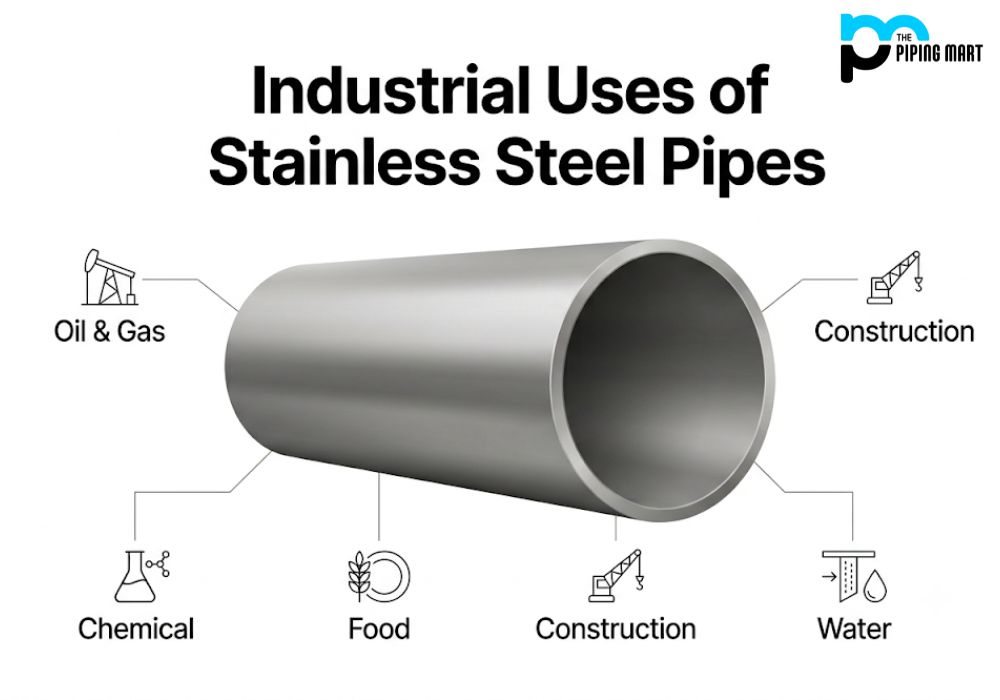
Stainless steel pipes are a standard choice across industries that operate in difficult conditions, whether that involves high heat, corrosive chemicals, hygiene controls, or sustained pressure. The material holds up well in harsh conditions, which is why industries like oil and gas, pharmaceuticals, and food processing rely on it so heavily. These pipes are available in various grades and wall thicknesses, and the right selection depends on the specific operating environment. Understanding stainless steel pipe applications helps in making better procurement decisions and avoiding costly failures in the field. This article covers the main stainless steel pipe applications in industry, what to look at before selecting a pipe, and answers questions that come up frequently during procurement.
Top Industrial Applications of Stainless Steel Pipes
Industrial stainless steel pipes are found in some of the most demanding process environments. The sections below cover the key sectors where stainless steel piping systems are regularly specified and why they tend to outperform other materials in those settings.
Oil and Gas Industry
Oil and gas pipelines are exposed to corrosive materials, varying pressures, and a wide range of temperatures depending on the process stage. Stainless steel piping systems are being used in the upstream exploration, midstream transportation, and downstream refining phases. The grades, such as 316L and duplex stainless steel, are specified and are resistant to chloride-induced corrosion and stable in sour gas service. Carbon steel or lower-grade alloys tend to fail much faster in these environments.
Chemical and Petrochemical Plants
The stainless steel pipes can handle the tough conditions in chemical plants fairly well. They are made to resist acids, solvents, and other harsh chemicals that would normally cause regular metal pipes to rust or wear out. The material used for transfer lines, heat exchangers, reactor connections, and storage pipe runs is industrial stainless steel pipes, primarily 304 and 316. The material is not affected by most process chemicals and is mechanically stable over a reasonable temperature range. This is particularly relevant for processing systems, as a single pipeline can be employed to carry various materials at different parts of the processing.
Food and Beverage Processing
The materials used for pipes in the food and beverage industry are carefully selected due to hygiene standards. Most pipes are constructed from 304 or 316L stainless steel, which has a smoothly lined inside to prevent bacteria from adhering and growing. These lines carry milk. juices, alcohol, sauces, and similar products. They also go through regular cleaning-in-place cycles using hot water and caustic solutions, so the material needs to resist both the product and the cleaning agents. Uses of stainless steel pipes here are as much about compliance as they are about performance.
Pharmaceutical Industry
In pharmaceutical manufacturing, material purity is non-negotiable. Contamination from the piping itself can compromise an entire batch. Stainless steel piping systems in this sector are generally electropolished and built to ASME BPE standards. Grade 316L is the preferred grade, as it has the lowest carbon content, reducing the risk of intergranular corrosion at weld joints. The pipes are used for the transportation of purified water, water for injection, sterile process water, and for cleaning.
Power Generation Plants
For applications in thermal and nuclear power plants, stainless steel is used in steam lines, condenser tubing, cooling circuits, and heat exchangers. The material handles high-temperature steam without scaling or significant loss of mechanical strength over time. Nuclear applications add another layer of requirement around material traceability and code compliance. Stainless steel meets these requirements fairly consistently, which is why it has remained a standard choice in this sector for decades.
Water Treatment and Desalination
Water treatment facilities and desalination plants work with chlorinated water, brine, and other corrosive media on a continuous basis. Uses of stainless steel pipes in these plants include filtration system pipework, pump connections, and distribution lines. In desalination, duplex stainless steel grades are commonly preferred because standard austenitic grades can experience pitting in high-salinity conditions. An additional benefit is that stainless steel does not impart any taste or odor to the water passing through.
Construction and Infrastructure
Large construction projects use stainless steel for both utility piping and exposed architectural pipework, particularly where the installation needs to last without much maintenance. Industrial piping solutions for buildings include fire suppression systems, HVAC pipe runs, and structural tube applications. Stainless steel is also specified in coastal and marine infrastructure like bridges and tunnel drainage systems, where moisture and salt exposure are ongoing concerns.
Marine and Offshore Applications
Offshore platforms and marine vessels face some of the harshest corrosion conditions of any application. Constant seawater exposure, salt spray, and high humidity levels accelerate deterioration in most metals. Stainless steel pipes are used in seawater cooling lines, ballast systems, and deck drainage. Super duplex grades like 2507 are standard in offshore applications because conventional austenitic grades do not provide enough resistance in those chloride concentrations.
How to Choose the Right Stainless Steel Pipe for Industrial Applications?
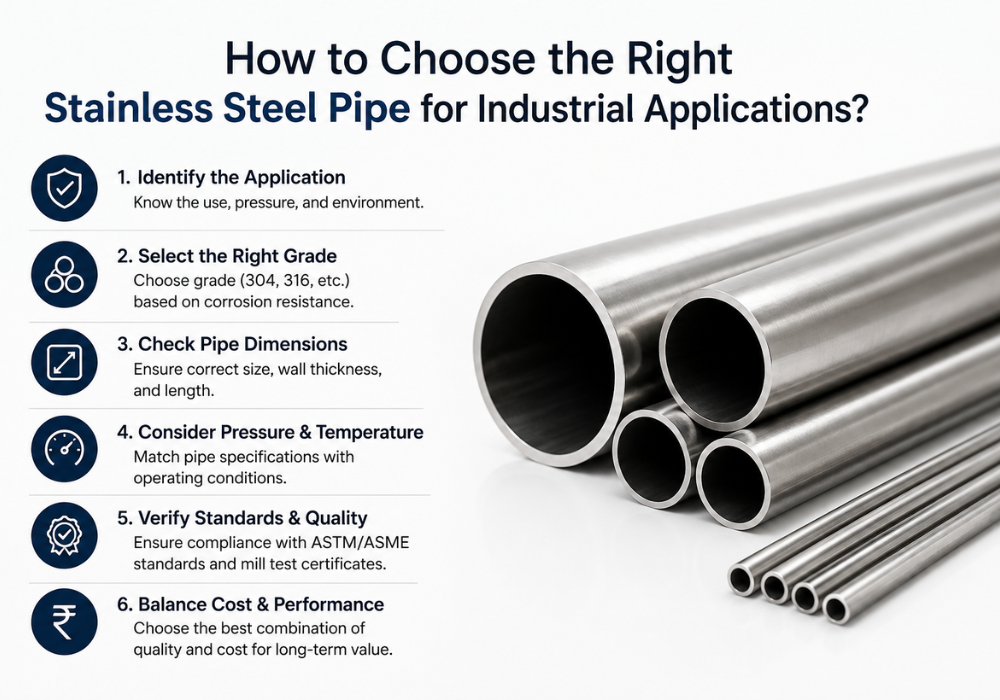
Selecting the wrong pipe grade is one of the more common and costly mistakes in industrial procurement. A few clear factors should drive the decision before finalising a grade or specification.
Based on Corrosion Exposure
The corrosive media and their concentration are the starting point for any grade selection. Grade 304 is generally adequate for atmospheric conditions or clean water service. Grade 316 or 316L is the better option for chloride-rich environments such as coastal sites, seawater contact, or chemical plant service. For more aggressive conditions involving concentrated acids or very high chloride levels, duplex or super duplex grades are more appropriate. Specifying a grade that is too low for the environment results in pitting, crevice corrosion, or stress corrosion cracking, none of which are easy to deal with once the system is in service.
Based on Pressure and Temperature
Every stainless steel grade has defined mechanical properties at different temperature and pressure ratings. High-pressure steam applications require pipes with adequate wall thickness and a grade that retains tensile strength at operating temperature. Grades such as 310S and 321 are chosen for systems that operate at high temperatures. In high‑pressure applications, seamless stainless steel pipes are usually preferred over welded pipes because they provide more reliable strength under pressure. A welded seam, if not properly inspected and qualified, can be a weak point under sustained pressure cycles.
Based on Industry Standards
Most industries specify piping materials against recognised standards. ASTM, ASME, and DIN cover the majority of industrial applications. The food and pharmaceutical sectors add requirements from standards like 3-A and ASME BPE on top of the base material specs. Before procurement, confirm that the pipes come with the correct certifications and material test reports. In regulated industries, using non-compliant material is not just a technical problem; it can trigger audits, force line shutdowns, or result in product recalls.
Conclusion
Stainless steel pipes have held their position across demanding industrial sectors because the material genuinely performs where others fall short. Corrosive chemicals, high-pressure steam, and strict hygiene requirements are all conditions it handles reliably. The selection process is straightforward as long as the operating conditions are clearly understood from the start. For any industrial piping solutions, it is worth taking the time to match the grade and specification to the actual service environment. Defaulting to whatever was used previously, without checking the application details, is how most piping failures happen.
FAQs
What are stainless steel pipes used for in industries?
Stainless steel pipe applications cover oil and gas, chemical processing, food and beverage, pharmaceuticals, power generation, water treatment, and infrastructure. The pipes carry gases. liquids, steam, and chemicals, depending on the industry. They are specified for their corrosion resistance, mechanical strength, and long service life with minimal maintenance.
Why are stainless steel pipes preferred over carbon steel pipes?
Carbon steel will corrode if it is in prolonged contact with moisture, chemicals, or corrosive gases. Chromium is added to stainless steel to help to create a passive oxide layer on the surface of the steel that helps to prevent further corrosion. Unless there is a contamination risk, chemical exposure, or a requirement for hygiene, stainless steel will not wear out as quickly as carbon steel and often will require no further protective coating.
Which stainless steel grade is best for industrial piping?
There are no specific criteria that apply to all stainless steel grades as ideal for industrial piping. Grade 304 is suitable for general-purpose applications; 316 and 316L are better in corrosive or chloride-rich environments. For more severe environments, duplex grades such as 2205 are offered, with these grades being stronger and offering enhanced corrosion-resistant properties. The selection of the proper grade depends on the temperature, pressure, and fluid that is being carried.
Are stainless steel pipes suitable for high-pressure applications?
Yes. The seamless stainless steel pipes are primarily used in applications requiring high pressure, such as steam lines, hydraulic systems, and chemical reactors. The pipe should be chosen for the appropriate grade, pressure schedule, and wall thickness according to the application. ASTM or ASME standards may also be required, and material test reports must ensure that the pipe complies with the standards.
What industries use stainless steel seamless pipes?
The seamless pipes are used in applications such as oil and gas, power generation, pharmaceutical processing, and petrochemicals. These pipes are preferred for high-pressure and high-temperature applications due to the absence of the weld seam, which can be a source of weakness and failure. In hydraulic and instrumentation systems where uniformity of wall thickness is essential for providing uniform performance, seamless pipes are also employed.
What is the difference between industrial and sanitary stainless steel pipes?
Industrial stainless steel pipes are designed to meet mechanical requirements, pressure, and durability for the process. Smooth, polished inside surface finish sanitary pipes are used for food, beverage, and pharmaceutical applications and are free from contamination. They also employ special end connections like tri-clamp fittings that enable the lines to be demounted and thoroughly cleaned in between manufacturing runs.