Alloy steel and carbon steel are both iron-based materials, but they are manufactured differently and used for different purposes. Carbon steel is made up of only two components: iron and carbon. Alloy steel has additional elements that change the material’s properties. Knowing which one fits your requirement depends on what the part needs to handle: load, temperature, wear, or cost. This guide covers their definitions, properties, composition, and applications that help you to make the right decision.
What Is Alloy Steel?
Alloy steel is produced by adding elements like chromium, nickel, molybdenum, manganese, vanadium, or silicon to the base iron-carbon mix. These additions are made in controlled amounts to improve specific properties, usually strength, hardness, or wear resistance. The exact composition varies based on what the steel is expected to do. High-strength fasteners, gears, drill bits, and structural machine parts are common examples. Not every alloy steel is the same; the grade is selected based on the application requirement.
What Is Carbon Steel?
Carbon steel is primarily composed of iron and carbon. Carbon content normally ranges from 0.05% to 2.0%, and the steel is classified as low, medium or high carbon based on this range. Low-carbon steel is soft and easily shaped. Medium-carbon steel offers better strength. High-carbon steel is harder but less ductile. It contains minimal amounts of other elements, as it is one of the most extensively used materials in manufacturing due to its low cost and good performance under typical settings.
Key Differences: Alloy Steel vs Carbon Steel
The main difference lies in the chemical composition and how they respond to stress. Carbon steel is generally more affordable and weldable, whereas alloy steel offers superior strength and durability in extreme conditions.
| Aspect | Carbon Steel | Alloy Steel |
| Composition | Iron + carbon (up to 2%) | Iron + carbon + Cr, Ni, Mo, Mn, V, Si |
| Strength | Good; increases with carbon content | High; further improved by heat treatment |
| Hardness | Moderate to high | Very high |
| Corrosion Resistance | Low | Moderate; depends on alloying elements |
| Wear Resistance | Moderate | High |
| Toughness | Lower in high-carbon grades | Generally better |
| Cost | Lower | Higher |
| Weldability | Easier in low-carbon grades | Requires care; preheating sometimes needed |
| Typical Applications | Structural, construction, pipelines | Automotive, aerospace, tooling, defence |
Carbon Steel vs Alloy Steel Properties
The performance of these steels depends on how they react to heat treatment and mechanical force. While carbon steel is valued for its simplicity and malleability, alloy steel is known for its ability to stay strong under high heat and friction.
Properties of Carbon Steel
Carbon steel is known for being highly cost-effective and easy to work with in its low-carbon form. However, as carbon levels increase, the material becomes much harder but also more brittle and difficult to weld.
- Strength: Strength goes up as carbon content increases. High-carbon steel can handle heavy loads but becomes brittle at very high carbon levels.
- Hardness: High-carbon grades can be hardened through heat treatment. Low-carbon grades stay softer and are easier to form.
- Ductility: Low and medium-carbon steels are quite ductile. As carbon increases, ductility drops. That is a trade-off you need to account for during part design.
- Weldability: Low-carbon steel welds without much trouble. High-carbon steel is harder to weld and can crack without proper care.
- Corrosion Resistance: Carbon steel has poor natural resistance to corrosion. Surface treatments, coatings, or paint are usually needed in outdoor or wet environments.
Properties of Alloy Steel
Alloy steel provides a versatile range of properties like high hardenability and wear resistance. It is designed to withstand high impact or corrosive conditions that would quickly degrade regular carbon steel.
- Hardenability: Heat treatment works effectively on alloy steel. Hardening is possible not only at the surface but also deeper into the material cross-section due to elements like molybdenum and chromium.
- Strength and Toughness: Both are generally better than carbon steel of comparable grade. It handles impact and sustained load without fracturing as easily.
- Wear Resistance: Higher than carbon steel. That is why it is commonly used in cutting tools, gears, and any parts exposed to constant friction.
- Corrosion Resistance: Better than carbon steel, but it still needs surface protection in corrosive conditions. It is not in the same range as stainless steel.
- High-Temperature Performance: Certain alloy steels hold their hardness at elevated temperatures. Useful in tooling and engine-related components.
Carbon Steel vs Alloy Steel: Application Differences
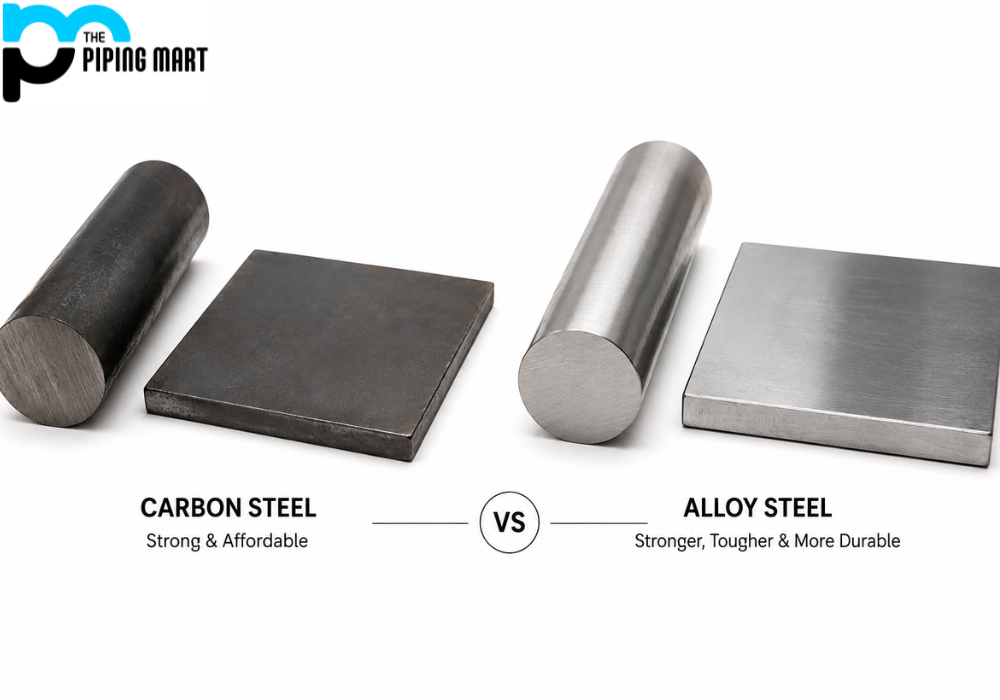
Choosing between these two often depends on the specific demands of the job and the budget. Carbon steel is used for general structures, while alloy steel is reserved for precision parts and heavy machinery.
Applications of Carbon Steel
For regular infrastructure and construction projects, this metal is the standard option. It is often used for home pipelines, automobile frames, and building constructions. The following is the detailed information about the applications.
- Construction and Infrastructure: Reinforcement bars, beams, and structural frames where cost matters more than corrosion resistance
- Pipelines: Used in oil and gas transmission lines, usually with external coatings
- Automotive: Body panels, chassis components, and basic structural parts
- Machinery: Shafts, rollers, and general machine parts where extreme conditions are not involved
- Railway: Tracks, wheels, and rail components that need moderate strength at a reasonable cost
- Household Products: Tools, hardware, and appliances
Industrial Applications of Alloy Steel
Alloy steel is used where safety and performance are critical under high stress. It is a staple in the aerospace, energy, and mining sectors for components like landing gear, turbine blades, and high-pressure valves.
- Automotive: Gears, axles, crankshafts, and suspension parts that need high strength and wear resistance
- Aerospace: Structural components, landing gear, and engine parts requiring a good strength-to-weight ratio
- Energy Sector: Pressure vessels, pipelines, and drilling equipment in oil, gas, and power generation
- Construction: High-load structural beams and bridge elements where additional strength is required
- Defence: Armour plating and military vehicle parts
- Tooling and Machinery: Cutting tools, dies, moulds, and industrial equipment needing consistent hardness
Carbon Steel vs Alloy Steel: Composition Comparison
The chemical composition of the steel dictates its final strength and flexibility. Carbon steel keeps things simple with iron and carbon, while alloy steel uses a complex blend of minerals to reach specific performance targets.
Chemical Composition of Carbon Steel
In this metal, carbon is the primary alloying agent, usually kept below 1.5%. Small amounts of manganese are also present to help remove impurities during the melting process.
- Iron (Fe): The primary element, making up around 98–99% of the material
- Carbon (C): Ranges from 0.05% to 2.0%; higher carbon means greater hardness but lower ductility
- Manganese (Mn): Usually present in small amounts (up to 1.65%) for basic strength improvement
- Silicon (Si): Present in minor quantities, mainly as a deoxidizer during production
- Sulphur and Phosphorus: Kept at very low levels to avoid brittleness
Alloy Steel Composition
Alloy steel contains a variety of elements like chromium for hardness, nickel for toughness, and molybdenum for heat resistance. The exact percentages are adjusted based on whether the steel needs to be hard, flexible, or heat-proof.
- Chromium (Cr): Added in amounts between 0.3% and 5% to improve hardness and some corrosion resistance
- Nickel (Ni): Improves toughness, particularly at low temperatures
- Molybdenum (Mo): Increases high-temperature strength and resistance to deformation under sustained load
- Manganese (Mn): Improves hardenability and tensile strength
- Vanadium (V): Refines grain structure, which adds strength and toughness without making the material brittle
- Silicon (Si): Acts as a deoxidizer and adds some strength in specific grades
How to Choose the Right Type of Steel?
Before purchasing the right steel for your project, consider the following factors:
- Budget: If it’s a simple bracket or a frame that will be painted and kept indoors, carbon steel is the way to go. It’s cheaper and gets the job done.
- Environment: Will the part be outside near the ocean or in a chemical plant? Carbon steel will rust quickly without a thick coating. Alloy steel might be better, or you might even need to look at stainless.
- Stress Levels: These additions are made in controlled amounts to improve specific properties, usually strength, hardness, or wear resistance.
- Manufacturing: Low-carbon steel is significantly easier to deal with if you need to weld several parts fast. Alloy steels often need specific welding rods and require heating before starting, which increases costs and time.
Conclusion
Carbon steel is a reliable, low-cost option for most structural and mechanical parts. It performs well under normal operating conditions, when corrosion can be controlled with coatings. Alloy steel is a better choice when the components need to handle more, higher loads, heat, friction, or impact and when material failure has serious consequences. The decision really comes down to what the application demands and what the budget allows. Choosing based on actual conditions rather than general preference leads to fewer problems down the line.
FAQ
Which is better for machining: alloy steel or carbon steel?
Low- and medium-carbon steel machines more easily. Alloy steel can be harder to machine depending on its composition and heat treatment condition, but it holds up better after machining in demanding applications.
Which is stronger: alloy steel or carbon steel?
Alloy steel is often more durable, particularly after heat treatment. Carbon steel’s strength is mostly determined by its carbon concentration, which has limits before brittleness becomes a concern.
Which type of steel is more suitable for high-temperature environments?
Alloy steel performs better at elevated temperatures. Specific grades with molybdenum and chromium retain their hardness and strength, where carbon steel would soften.
Is alloy steel worth the higher cost compared to carbon steel?
It depends on the application. If the component is exposed to excessive damage, high stress, or extreme temperatures, the additional cost is usually justified. Carbon steel is a better option for ordinary structural applications.
Which is better for fabrication projects: alloy steel or carbon steel?
Low‑carbon steel is easier to cut, shape, and weld. Alloy steel needs more careful handling during fabrication and sometimes preheating, but the finished part performs better in extreme conditions.