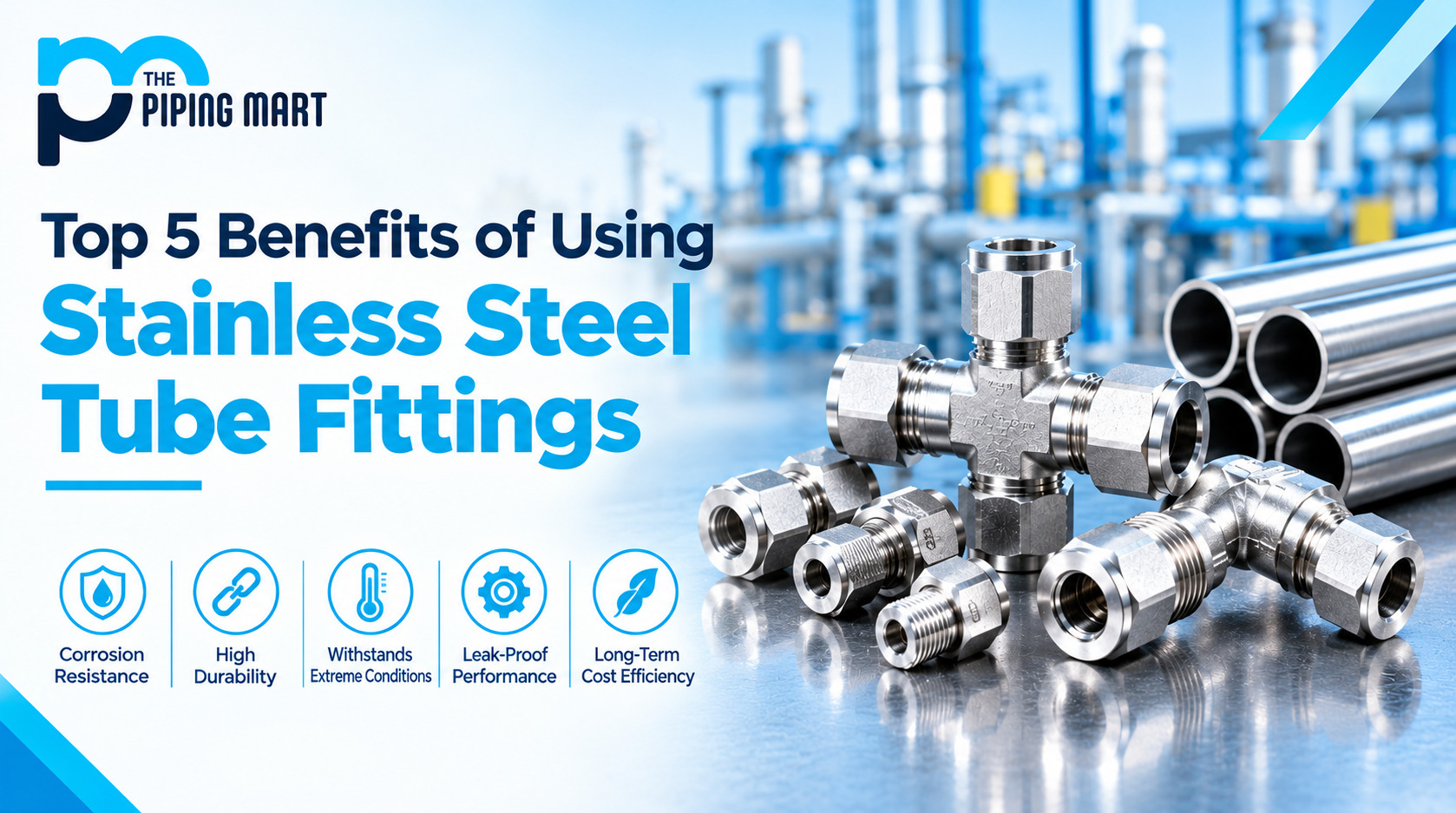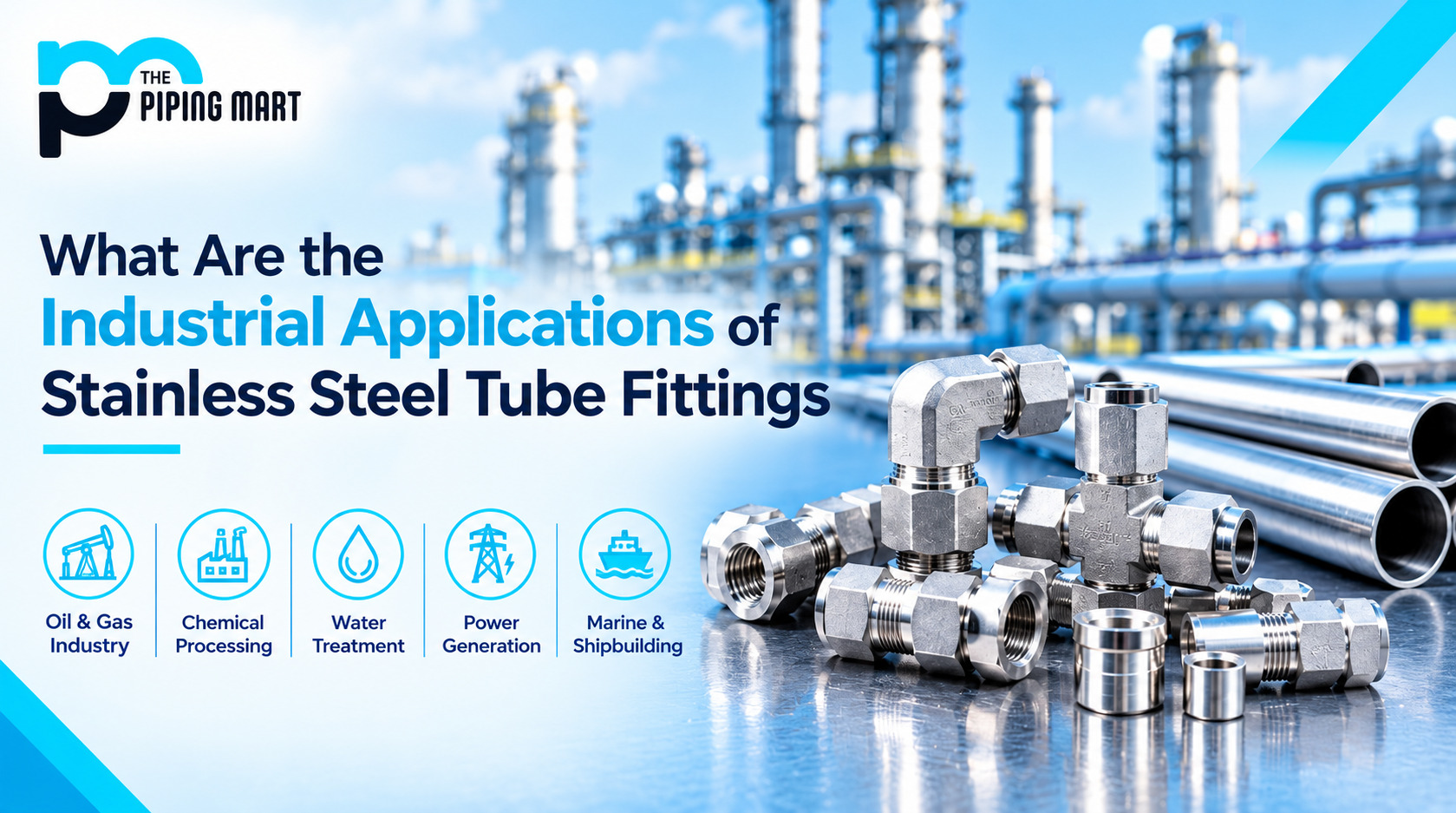
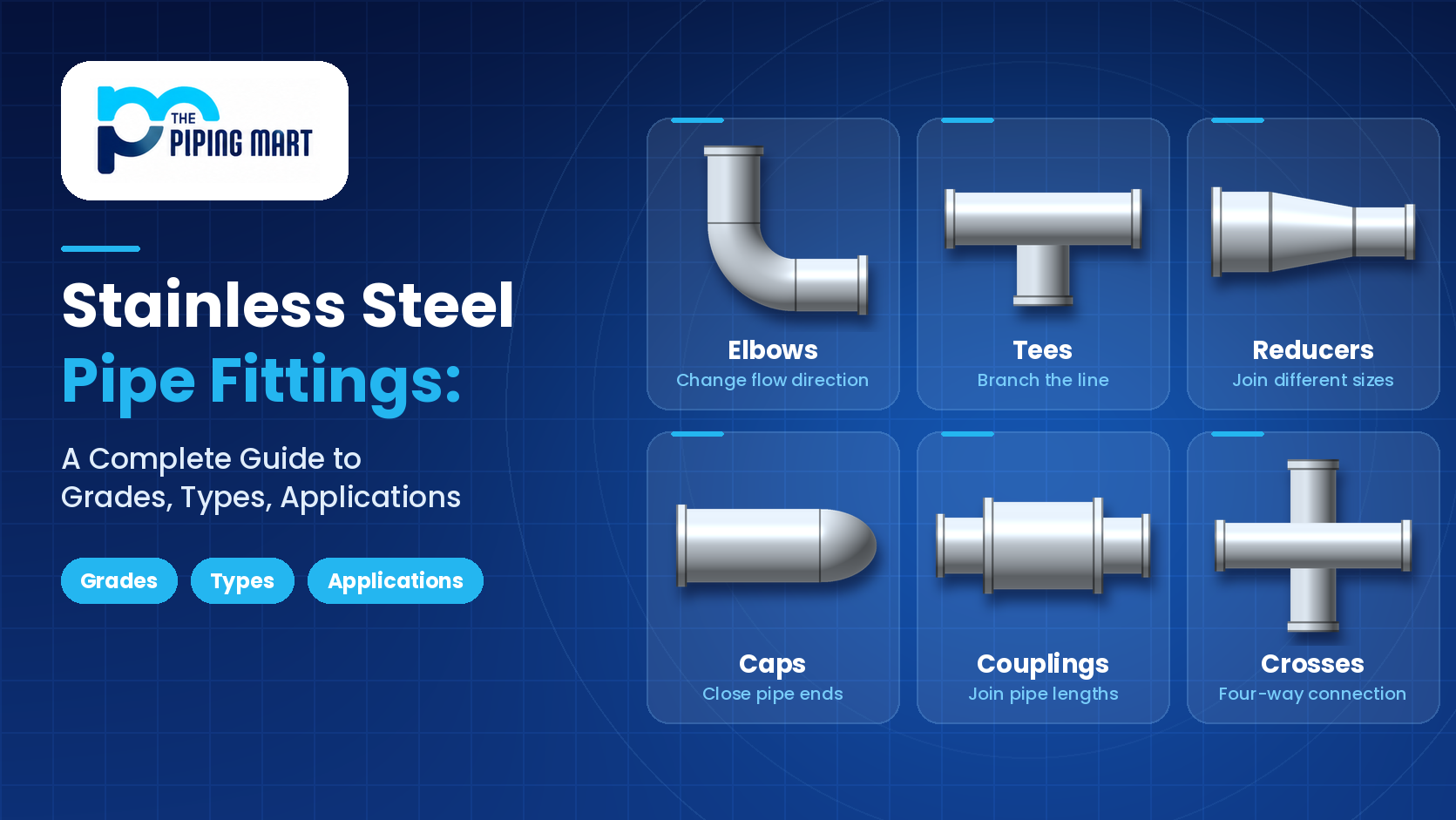
Stainless steel pipe fittings join, redirect, branch, resize, and seal piping systems used for carrying water, chemicals, hydrocarbons, and food products. Elbows redirect flow, tees split it, reducers join various diameters, and caps close the end. The selection of stainless steel is based on the resistance to corrosion, strength at temperature, service life, and ease of cleaning.
What Are Stainless Steel Pipe Fittings?
Stainless steel pipe fittings are manufactured components that join pipes to each other, valves, pumps, vessels, and process equipment. They change direction, create branches, reduce line size, extend a run, and terminate a line. A pipe carries the fluid. A fitting decides the route the pipe takes. Pipe arrives in straight lengths, while fittings supply the bends, junctions, and closures a layout demands. Material compatibility decides whether a joint lasts, because a fitting that cannot withstand the process fluid becomes a weak point precisely where flow changes.
Stainless Steel Pipe Fittings Specifications
Buyers and engineers confirm ten details on every order. Material grade sets corrosion and temperature performance. Nominal Pipe Size (NPS) and outside diameter fix compatibility with the pipe. Schedule, such as Sch 10S, 40S, or 80S, specifies wall thickness. Fitting configuration specifies the form, from a 90° long-radius elbow to an eccentric reducer. The connection method covers butt weld, socket weld, threaded, or sanitary ends. Pressure class applies to forged and threaded fittings. Dimensional standards determine tolerances. Surface finish matters in sanitary service. A Material Test Certificate (MTC) with a heat number links each fitting to its melt for traceability.
Common Standards
ASME B16.9 covers factory-made wrought butt-welding fittings such as elbows, tees, reducers, and caps. ASTM A403 covers wrought austenitic stainless steel fittings. ASME B16.11 addresses forged socket-weld and threaded fittings, and ASME BPE determines sanitary components. The applicable standard depends on fitting type, material, connection method, and project specification.
Properties of Stainless Steel Pipe Fittings
Chromium content of at least 10.5% forms a thin passive oxide layer that offers corrosion resistance. Austenitic grades add nickel for toughness and formability, keeping strength across a wide temperature range. Grade 310 resists oxidation in hot atmospheres, while stabilized grades resist sensitization after welding. Smooth surfaces clean easily, which supports hygienic service. Most austenitic grades weld without preheat. Chlorides, strong reducing acids, and stagnant crevices corrode any grade that lacks the alloying to withstand them.
Stainless Steel Pipe Fitting Grades
304 and 304L Grades
Grade 304 carries approximately 18% chromium and 8% nickel, making it the general-purpose austenitic option. It forms and welds easily and resists atmospheric and mild chemical corrosion. Food processing, water systems, and general industrial piping use it. Welding can precipitate chromium carbides at grain boundaries when carbon reaches 0.08%. Grade 304L caps carbon at 0.03%, so welded assemblies avoid that intergranular corrosion.
316 and 316L Grades
Molybdenum, at 2 to 3%, gives 316 stronger resistance to chloride pitting than 304. Marine piping, chemical lines, pharmaceutical systems, food plants, and other demanding industrial services specify it for that reason. Grade 316L retains carbon at 0.03% maximum and gives welded joints the same protection against sensitization that 304L provides.
321 and 321H Grades
Titanium stabilizes 321. It binds carbon before carbon can combine with chromium, so welded fittings keep their corrosion resistance after exposure to the 425 to 850°C range. Elevated-temperature piping supports this grade. Grade 321H has a higher carbon content and adds creep strength for sustained hot service.
347 and 347H Grades
Niobium performs the stabilizing role in 347. Refineries, power plants, and process lines that cycle between hot and cold use it because it endures repeated thermal stress. Grade 347H adds carbon for extra strength at temperature.
309, 309S, 310 and 310S Grades
Chromium near 23% in 309 and 25% in 310, paired with high nickel, gives these grades scale resistance in hot, oxidizing atmospheres. They serve thermal processing, furnaces, and heat treatment equipment rather than ordinary corrosion-resistant piping. The S suffix marks a lower-carbon version that welds more readily.
317/317L, 904L and SMO 254
Higher alloy grades are needed when 316L reaches its limit. Grade 317/317L holds 3 to 4% molybdenum and suits chemical processing lines. Grade 904L adds 4 to 5% molybdenum plus copper for demanding process conditions, including sulfuric acid service. SMO 254 contains about 6% molybdenum and resists pitting and crevice corrosion in severe chloride exposure.
| Grade | Key Characteristic | Typical Service Consideration |
| 304/304L | General corrosion resistance | General industrial and food applications |
| 316/316L | Improved chloride resistance | Marine, chemical, pharmaceutical |
| 321/321H | Stabilized for elevated temperature | High-temperature piping |
| 347/347H | Stabilized for thermal service | High-temperature process systems |
| 309/310 Series | High temperature and oxidation resistance | Thermal processing |
| 317/317L | Higher corrosion resistance | Chemical environments |
| 904L | High corrosion resistance | Demanding process environments |
| SMO 254 | Very high pitting and crevice resistance | Severe chloride exposure |
Types of Stainless Steel Pipe Fittings
Elbows
The 45° and 90° versions cover most layouts, and 180° return bends reverse flow. Long radius elbows use a centerline radius of 1.5 times NPS and keep pressure drop low, while short-radius elbows use 1 time NPS and fit tight spaces. Both appear in process piping.
Tees
Equal tees present the same size at all three openings. Reducing tees keep the run at one size and step the branch down. Both create branches that divide one flow into two or merge two streams into one.
Reducers
Concentric reducers taper evenly around a shared centerline and join two diameters in a straight run. Eccentric reducers keep one side flat. Installed flat side up at a pump suction, they prevent air pockets, and flat side down keeps the pipe bottom level on a rack while supporting drainage.
Caps
Caps close the end of a pipe. A welded cap of matching schedule contains pressure at the line end, while a threaded cap allows for later extension of the run.
Couplings and Unions
Couplings join two pipe sections end to end and come in full, half, and reducing forms. Unions add a separable three-part joint, so crews can disconnect equipment for maintenance without cutting the pipe.
Crosses and Specialty Fittings
Crosses provide four openings where two lines intersect in compact layouts. Laterals, stub ends, nipples, and bushings serve other design needs.
Pipe Fittings by Connection Method
Butt Weld Fittings
A beveled end welded around the full circumference creates a permanent, smooth bore joint. Elbows, tees, reducers, and caps all come in this form. Process piping favors them for high-pressure lines and larger diameters.
Socket Weld Fittings
Pipe slides into a recessed socket, and a fillet weld seals the outside. ASME B16.11 covers this style up to NPS 4, which makes it a fit for small-bore piping.
Threaded Fittings
Tapered threads, commonly NPT under ASME B1.20.1, connect without welding. Choose them where hot work is restricted or where a removable joint is needed. Threaded joints carry lower pressure and temperature limits than welded ones, so verify each application.
Sanitary Fittings
Crevice-free geometry and polished bores define sanitary fittings. Food, beverage, pharmaceutical, and biotechnology systems use them in 316L, with a surface roughness of Ra 0.8 micrometer or lower, so residue cannot lodge.
Uses and Applications of Stainless Steel Pipe Fittings
Chemical and Petrochemical
Process piping, chemical transfer lines, vessel connections, and utility piping depend on fittings that resist the process fluid. Grades 316L, 317L, and 904L resist chloride and acid exposure.
Oil and Gas
Fittings join process and utility lines and connect to pumps, separators, and compressors in upstream and downstream facilities. Pressure, temperature, fluid composition, and corrosion conditions set the grade.
Food and Beverage
Dairy plants, breweries, and packaging equipment run hygienic piping in 304L and 316L. Cleanability and resistance to cleaning chemicals drive the choice.
Pharmaceutical and Biotech
Purified water systems, clean utilities, process piping, and equipment connections use 316L sanitary fittings. Surface finish and contamination control determine acceptance.
Marine and Water Treatment
Seawater lines, desalination units, filtration skids, and treatment plants expose fittings to chlorides. Chloride concentration guides the step from 316L to 904L or SMO 254.
Power Generation and Equipment
Cooling water systems, heat exchangers, process lines, thermal equipment, and auxiliary systems use stainless fittings. Hot lines require 321H or 347H, while cooling circuits run on 304L or 316L.
Limitations of Stainless Steel Pipe Fittings
Stainless steel costs more upfront than carbon steel or plastic alternatives. Chloride exposure corrodes unsuitable grades through pitting, crevice corrosion, and stress corrosion cracking. A wrong grade or a fitting choice shortens service life. Even the correct fitting fails when welding and installation skip proper practice.
Stainless Steel Pipe Fittings: Key Selection Factors
Use this table as a quick reference.
| Selection Factor | Examples | Why It Matters |
| Grade | 304L, 316L, 321H, 904L | Determines material suitability |
| Fitting type | Elbow, tee, reducer, cap | Determines piping configuration |
| Connection | Butt weld, socket weld, threaded | Influences installation and maintenance |
| Size | NPS and dimensions | Ensures compatibility with pipe |
| Schedule | Applicable wall thickness | Relates to piping dimensions and design |
| Service | Chemical, water, food, marine | Determines material requirements |
How to Choose the Right Fittings
1. Identify the Service Medium
Name the fluid first: water, chemicals, gases, food products or hydrocarbons. Every later decision follows from it.
2. Check Temperature and Pressure
Record operating and design values, then confirm the fitting specification covers both.
3. Select the Appropriate Grade
Match corrosion resistance, temperature capability, and strength to the real service environment.
4. Choose the Fitting Type
Read the layout to see whether it needs an elbow, tee, reducer, cap, coupling, or union.
5. Confirm Size and Connection
Match the fitting dimensions, pipe size, schedule and connection method to the existing line.
6. Verify Standards and Documentation
Check the governing standards, material certification, traceability, and inspection and testing requirements.
Conclusion
Grades, types, sizes, and connection methods vary, so service conditions should drive the grade, not the highest alloy by default. Fitting configuration and dimensions must match the piping system. Standards and documentation need confirmation before purchase. Well-matched stainless steel pipe fittings protect a system for years.
FAQs
What are stainless steel pipe fittings used for?
They connect pipes, change flow direction, create branches, join different pipe sizes, and close pipe ends in systems carrying water, chemicals, hydrocarbons, and food products.
Which stainless steel grade is commonly used for pipe fittings?
Grades 304/304L and 316/316L cover most requirements. Selection between them, or a step up to a higher alloy, follows the service environment.
What are the common types of stainless steel pipe fittings?
Elbows, tees, reducers, caps, couplings, unions, and crosses. Each comes in butt weld, socket weld, threaded, or sanitary form.
What is the difference between 304 and 316 stainless steel fittings?
Molybdenum separates them. Grade 316 contains 2 to 3% molybdenum, which improves resistance to chloride corrosion, while 304 suits general service.
What standards apply to stainless steel pipe fittings?
ASME B16.9 and ASTM A403 cover wrought butt-weld fittings, and ASME B11.11 covers forged socket-weld and threaded fittings. ASME BPE applies to sanitary fittings.