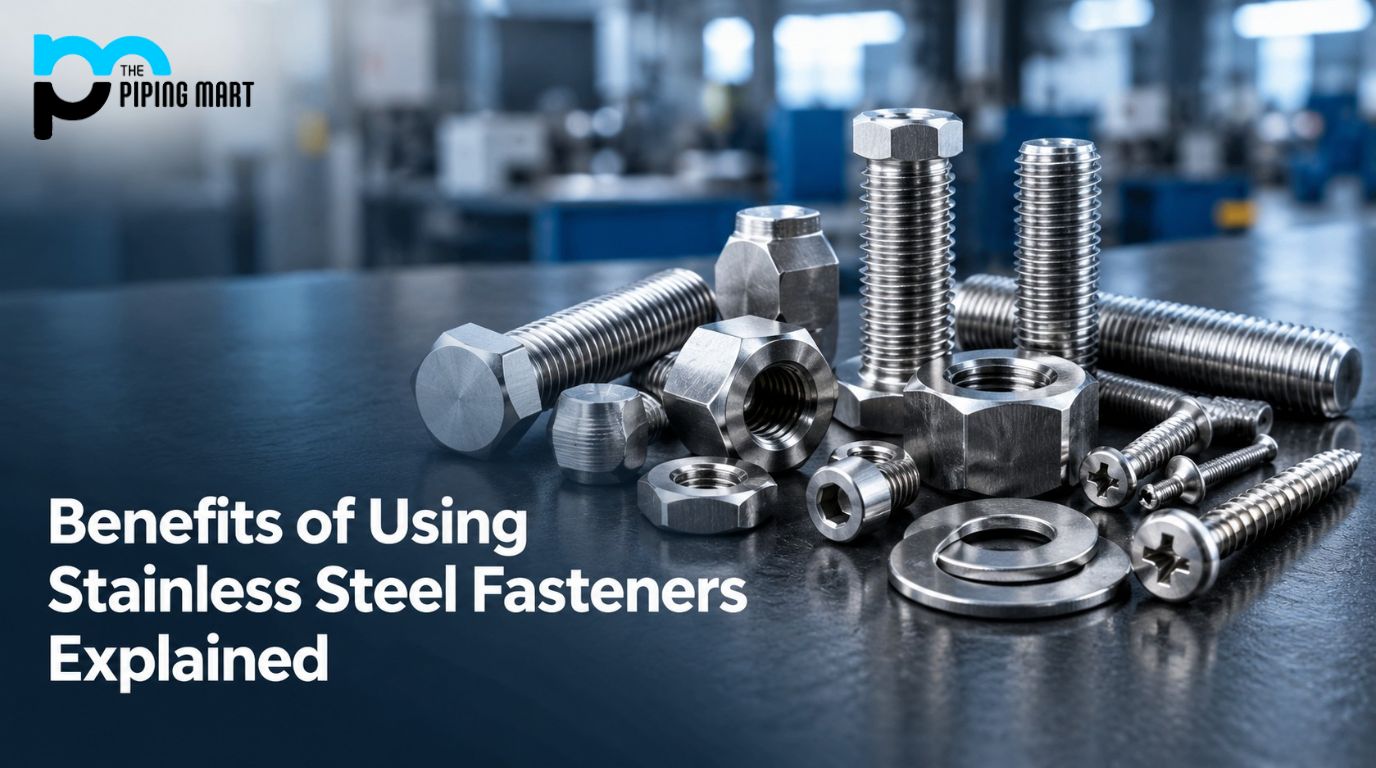
A single failed bolt can stop a production line, loosen a structural joint, or force a costly shutdown. Stainless Steel Fasteners are mechanical components that join, secure, and assemble parts into finished structures, and the material behind them decides how long each connection holds its clamp load. Uncoated carbon steel rusts once moisture reaches it, and that rust weakens threads and makes removal difficult.
What Are Stainless Steel Fasteners?
Made from iron alloys that contain at least 10.5 percent chromium, these components form a thin oxide film on the surface that protects the metal underneath. That film forms on its own, so no plating step adds cost or fails at the surface. Common forms include bolts, nuts, screws, washers, studs, and threaded rods, and each one plays a defined role in mechanical and structural assemblies.
Grade selection matters as much as fastener type. Austenitic grade 304 suits atmospheric and freshwater exposure. Grade 316 adds 2 to 3 percent molybdenum, which improves resistance to pitting in chloride environments such as coastal air. Martensitic grade 410 hardens for higher strength but offers lower corrosion resistance. Match the grade to the service environment and the load, not to the price list alone.
Key Benefits of Stainless Steel Fasteners
Five benefits explain why engineers specify stainless steel over plated or coated carbon steel.
Corrosion Resistance
The chromium oxide film protects the surface in atmospheric and industrial exposure, and it reforms after a scratch when oxygen is present. Performance still varies by grade and environment. Grade 304 handles clean outdoor air, while grade 316 holds up better near salt water. Pitting and crevice corrosion appear first where chlorides concentrate, which makes grade selection the first decision.
Durability
Properly selected stainless steel fastening products withstand vibration, thermal cycling, and repeated washdown cycles without the coating wear that affects zinc-plated parts. A chipped coating exposes bare carbon steel, but stainless steel carries its chromium content throughout the material. That consistency supports long-term clamp load retention when the grade suits the service conditions.
Mechanical Strength
Strength depends on grade and condition. Austenitic fasteners under ISO 3506 range from class 50 at 500 MPa minimum tensile strength to class 80 at 800 MPa. Martensitic grades reach class 110, or 1,100 MPa, after heat treatment. Industrial Fasteners in structural and pressure joints carry sustained tensile and shear loads, so check load, preload and joint design against the published property class before you finalise the selection.
Low Maintenance
Suitable corrosion resistance cuts the need for repainting, recoating, and frequent replacement in the right environment. Stainless steel fastening products are not maintenance-free, though. Chloride exposure, crevices, and contact with dissimilar metals still call for scheduled inspection. Coastal and chemical sites need shorter inspection cycles than dry indoor installations.
Appearance
A clean metallic finish stays visible on architectural facades, handrails, and commercial fixtures, so exposed fasteners add to the design instead of detracting from it. Polished and brushed finishes also resist the rust streaks that stain surrounding surfaces. Because the finish comes from the alloy itself, it does not flake or peel the way paint and plating can.
Applications of SS Fasteners
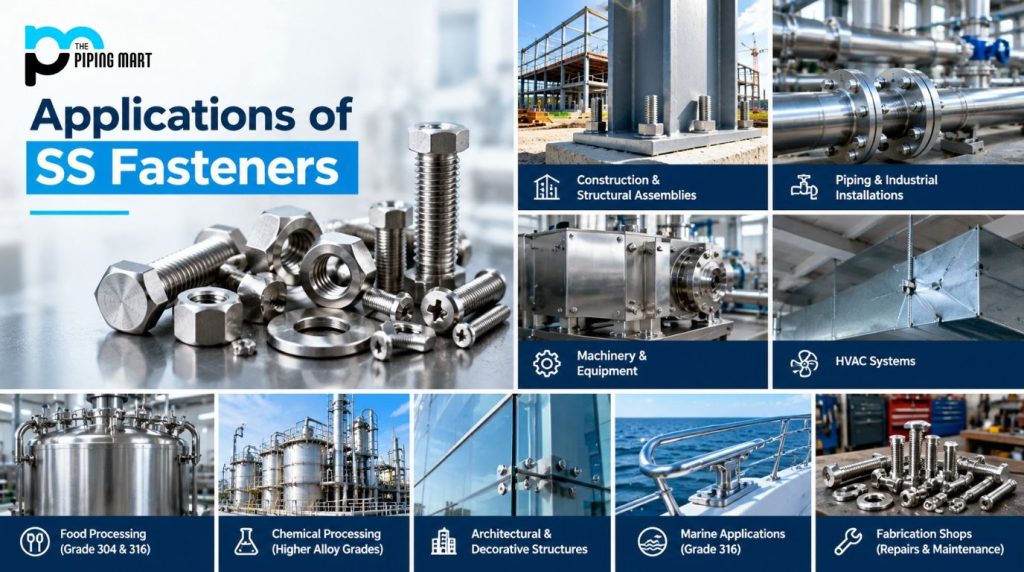
Stainless steel fastening products serve construction and structural assemblies, machinery and equipment, piping and industrial installations, and HVAC systems. Anchor bolts hold structural supports in place. Flange studs and nuts clamp gaskets in piping systems, while threaded rods hang ducts and cable trays in HVAC installations.
Food processing equipment relies on grade 304 and 316 hardware that tolerates frequent cleaning, and chemical processing equipment calls for higher alloyed grades matched to the process media. Architectural and decorative structures use visible stainless fixings for their finish and maintenance, and fabrication shops stock common sizes for repairs. Marine-related decks, rails, and fittings use grade 316 to tolerate salt spray. In every case, grade selection depends on the operating environment and the loads the joint carries.
Conclusion
Stainless Steel Fasteners combine corrosion resistance, durability, mechanical performance, and a broad range of uses in one product family, and they cut recoating and replacement work in suitable environments. Reliable fastening still depends on four choices: the correct grade, the fastener type, the dimensions, and the applicable standard such as ISO 3506 or ASTM F593. Confirm all four against the service environment before you order. Fewer replacements mean fewer shutdowns and less rework over the service life of an installation.
FAQs
Are stainless steel fasteners corrosion resistant?
Yes, within limits set by grade and exposure. Grade 304 resists atmospheric and freshwater corrosion, while grade 316 handles coastal air better. Chlorides, heat, and crevices can still cause pitting in either grade.
Which stainless steel grades are commonly used for fasteners?
Grades 304 and 316 lead the list, matching the A2 and A4 groups in ISO 3506. Grade 410 serves hardened, higher-strength needs, and duplex grades such as 2205 suit severe chloride service.
How do I choose the right stainless steel fasteners?
Start with the service environment, then confirm the grade, property class, size, thread form, and standard. Check the load and the metals the fastener touches, since dissimilar metals can start galvanic corrosion.
Are SS fasteners suitable for outdoor applications?
Grade 304 suits clean inland air. Grade 316 suits coastal sites, industrial air, and road salt exposure.
Do stainless steel fasteners require maintenance?
They need less upkeep than coated carbon steel, yet inspection still matters. Clean off salt, chemical residue, and debris that trap moisture in crevices.