Stainless Tube Fittings connect, redirect, branch, and close tubing lines that carry liquids and gases. Each joint decides whether a system holds pressure or leaks, so fitting quality shapes plant safety and system uptime. A leak in a single fitting can halt a production line or release process media. Engineers choose stainless steel for these parts because it resists corrosion, carries mechanical load, lasts through repeated service cycles, and responds well to machining, forming, and welding.
What Are Stainless Tube Fittings?
Stainless Steel Tube Fittings are precision components that join tube sections to one another and to valves, instruments, and equipment. Within a tubing assembly, they hold the tube in position and seal the joint. Common types include elbows, tees, unions, couplings, adapters, reducers, and connectors. Each type solves a specific routing task, from a 90-degree turn to a change in tube diameter.
Manufacturers supply them in different grades, sizes, and connection configurations, so one product family can cover instrument tubing and larger process tubing alike. Selection starts with the tube material, then moves to the fluid, operating pressure, temperature, and installation method. A fitting that suits a clean water line can fail in a chloride-rich process stream.
Top 5 Benefits of Stainless Tube Fittings
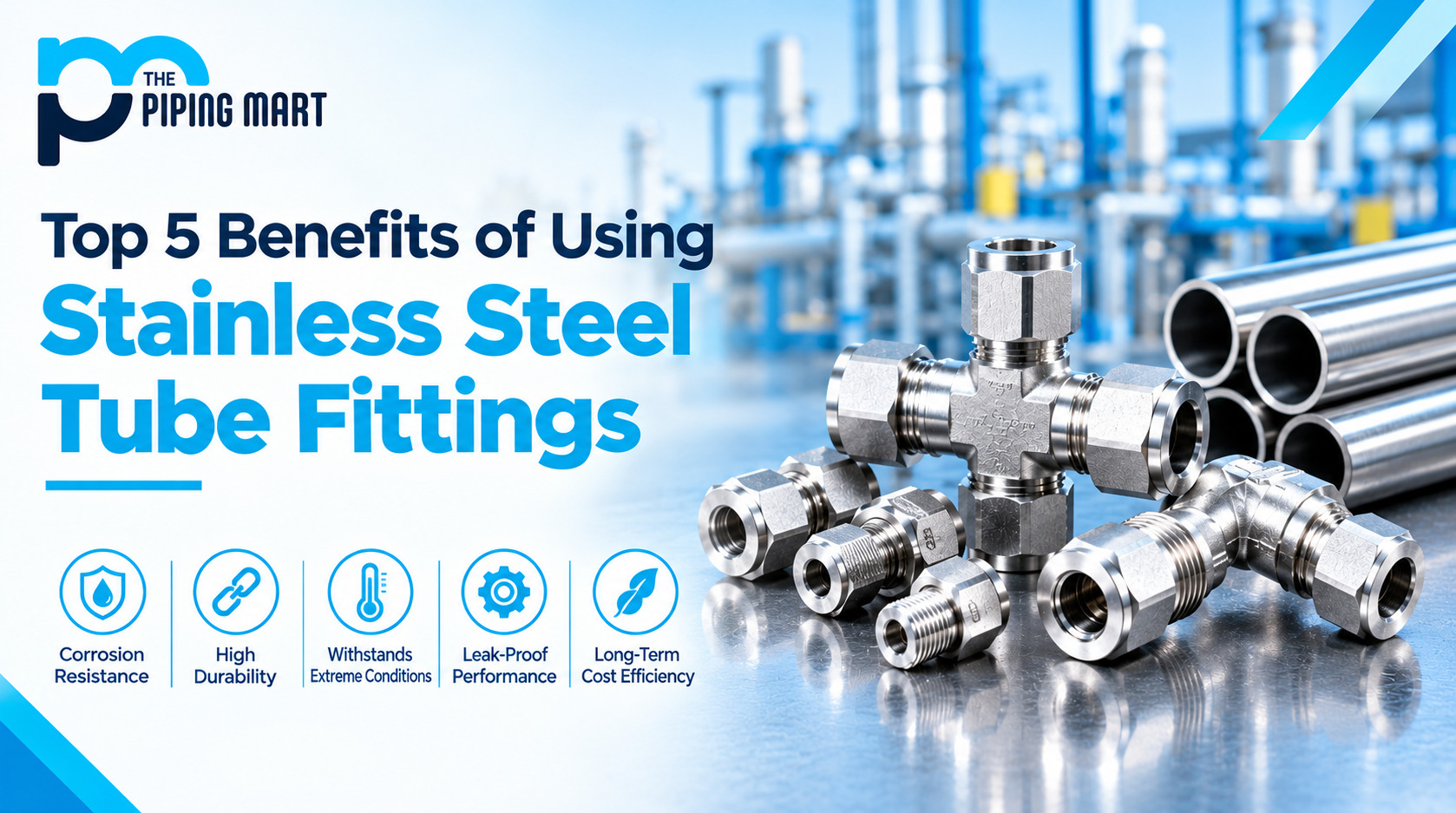
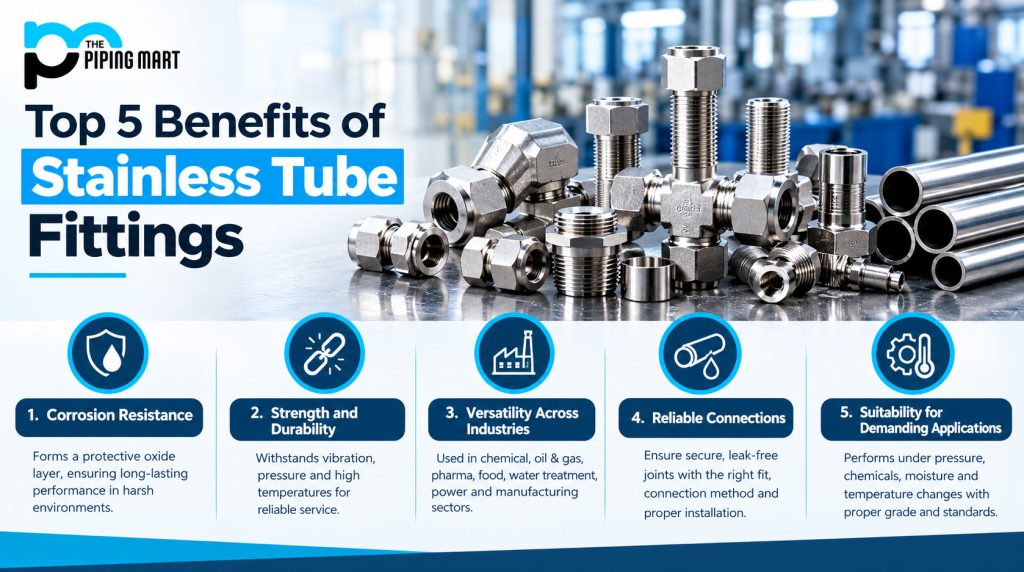
Five benefits explain why engineers specify stainless tube fittings for lines that carry fluids, gases, and process media. Each benefit below is linked to a practical selection factor that buyers can verify.
Corrosion Resistance
Stainless steel contains at least 10.5 percent chromium, which forms a thin oxide film that protects the surface in atmospheric and industrial environments. That film matters on moisture-exposed, process, and fluid-handling lines. Grade sets the limit: 304 covers atmospheric exposure, while 316 adds 2 to 3 percent molybdenum for chloride service. The service environment determines the final decision.
Strength and Durability
Austenitic stainless steel gives fittings the mechanical strength to withstand vibration, pressure pulses, and tightening torque when users specify and install them correctly. These grades also retain strength at elevated temperatures, which is why High Temperature Tube Fittings use grades such as 310 and 321. Load and pressure limits come from the manufacturer’s rating, not from the material name.
Versatility Across Industries
SS Tube Fittings serve chemical processing, oil and gas, pharmaceutical, food processing, water treatment, power generation, and manufacturing plants. Elbows turn a line, tees branch it, reducers change its diameter, and adapters join dissimilar connections. One material family therefore covers the routing needs of separate sectors, from a pharmaceutical skid to a feed line for a power plant.
Reliable Connections
Stainless Steel Tube Fittings link tubing to valves, gauges, and process equipment with secure joints when engineers select them correctly. Dimensional compatibility comes first because the tube’s outside diameter, wall thickness, and fitting size must match. Compression, threaded, and welded connections suit different duties, and correct installation completes the joint. Tube hardness and surface finish affect how a compression ferrule seals, so pair each fitting with a compatible tube.
Suitability for Demanding Applications
Industrial Stainless Tube Fittings operate in systems exposed to moisture, chemicals, pressure, and temperature changes. High-pressure stainless steel fittings go further because the manufacturer designs and rates them for stated pressure and temperature conditions. Suitability depends on material grade, fitting design, dimensions, connection method, and applicable standards such as ASTM, ASME, and ISO. Verify each factor on the datasheet.
Industrial Applications of Stainless Tube Fittings
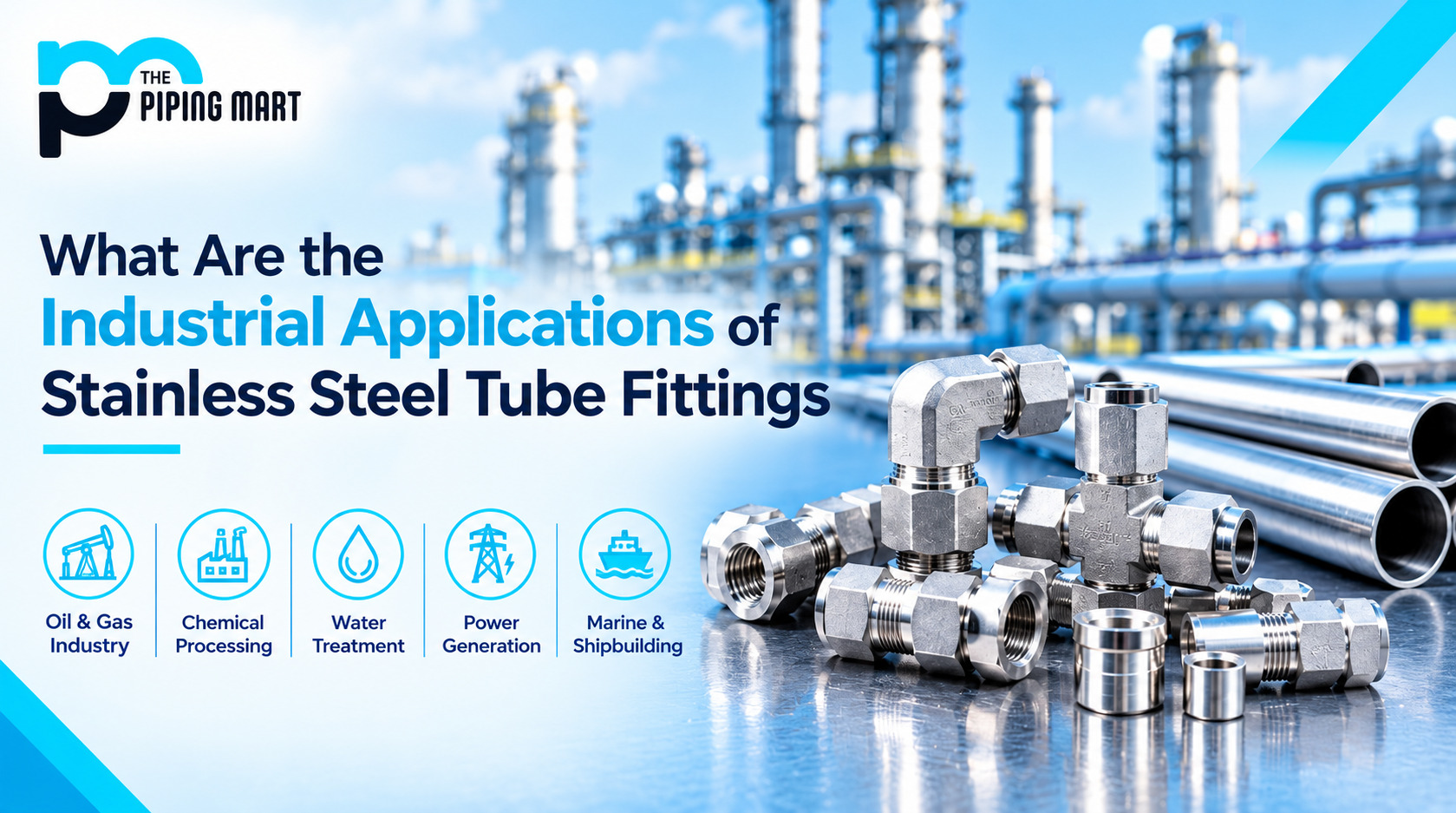
SS Tube Fittings serve eight application areas, and each area sets its own fluid, pressure, and cleanliness requirements.
- Process and instrumentation tubing: Small-bore tubing links gauges, transmitters, and sampling points to the main process line. The fittings keep those impulse and sample lines sealed while operators calibrate, isolate, or replace instruments.
- Chemical processing: Corrosive reagents call for molybdenum-bearing 316, while heated transfer lines use High Temperature Tube Fittings in grades 310 or 321.
- Oil and gas systems: Fittings route chemical injection, hydraulic control, and gas sampling lines on platforms, pipelines, and refineries. Salt-laden air and produced fluids make corrosion resistance a basic selection factor.
- Pharmaceutical and biotechnology equipment: Smooth stainless surfaces are easy to clean, which is ideal for sterile fluid path and process skid applications. The fittings of these systems require the same documented material traceability and cleaning protocol-compatible finishes.
- Food and beverage processing: Dairy, brewing, and beverage lines favour stainless steel because its smooth surface limits residue build-up and tolerates frequent washdown. Fittings here must also suit the cleaning chemicals and temperatures the plant uses.
- Water treatment: Dosing, filtration and desalination lines subject fittings to moisture and chlorides, making 316 grades preferable. Chlorinated and saline effluents increase the chloride concentration, and therefore the selection of the grade is important.
- Hydraulic and pneumatic systems: Compression fittings connect pressurised hydraulic and compressed air lines to pumps, cylinders, and actuators. The fitting pressure rating must cover the system working pressure with an appropriate safety margin.
- Industrial machinery and equipment: Lubrication, cooling, and fluid transfer lines inside machines need fittings that tolerate vibration and constant coolant exposure. Stainless steel also limits rust contamination in fluids that feed precision components.
Conclusion
Stainless tube fittings provide corrosion resistance, strength and durability, multi-industry compatibility, secure connections, and application in high-end markets. These benefits exist only if the grade, size, pressure rating, and connection type match the real system. Check the fluid, temperature, pressure, and method of installation first, then check each fitting against the system design and standards (if applicable) before buying.
FAQs
What are the main benefits of stainless tube fittings?
Five benefits stand out: corrosion protection, strength and durability, use across industries, secure connections, and performance in demanding service. Grade and rating decide how far each applies in a system.
Are SS Tube Fittings resistant to corrosion?
Yes, within limits set by grade and environment. Grade 304 handles atmospheric exposure, 316 resists chlorides, and strong acids or hot chloride solutions can require duplex or nickel alloy grades.
Why are stainless tube fittings suitable for demanding applications?
They withstand wet conditions, process chemicals, pressure, and temperature variations when grade and design match the duty. High Temperature Tube Fittings in grade 310 or 321 serve heated process lines.
Are stainless tube fittings suitable for high pressure systems?
Only when the manufacturer rates them for that duty. Industrial Stainless Tube Fittings need a confirmed pressure and temperature rating, a matching tube wall thickness, and a suitable connection type.
How should I choose the right stainless tube fittings?
Start with tube material and size, then pick a grade for the fluid, pressure, and temperature. Confirm the connection type, applicable standard, and installation method, then read the datasheet before ordering.