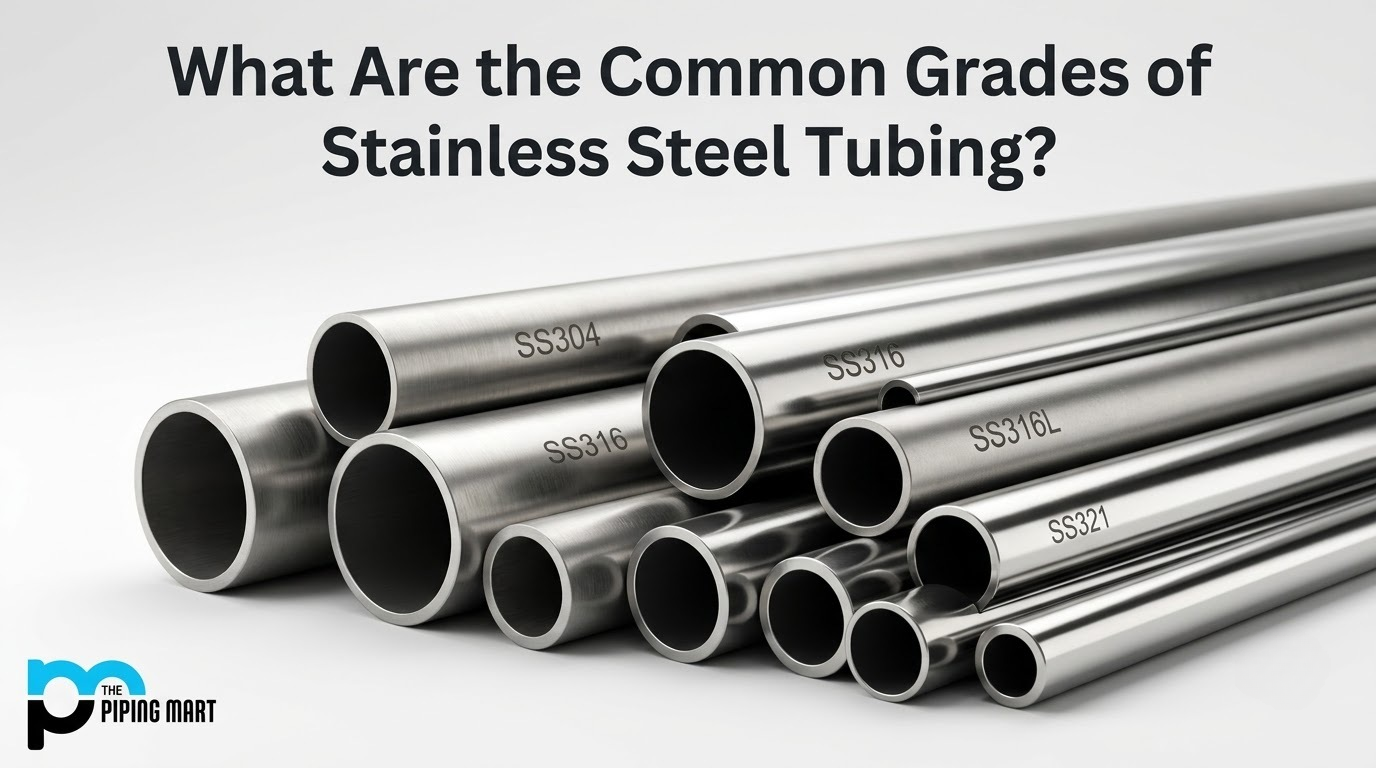
Stainless steel tubing carries fluids and gases and forms structural and process connections in plants, vessels, and heat exchangers. Grade selection depends on corrosion resistance, operating temperature, fabrication method, mechanical demand, and service environment. Grades 304/304L and 316/316L see the widest use, while 321, 347, 310/310S, and 904L serve narrower conditions. This guide explains each grade and shows buyers how to match stainless steel tubing grades to real service conditions.
What Is Stainless Steel Tubing?
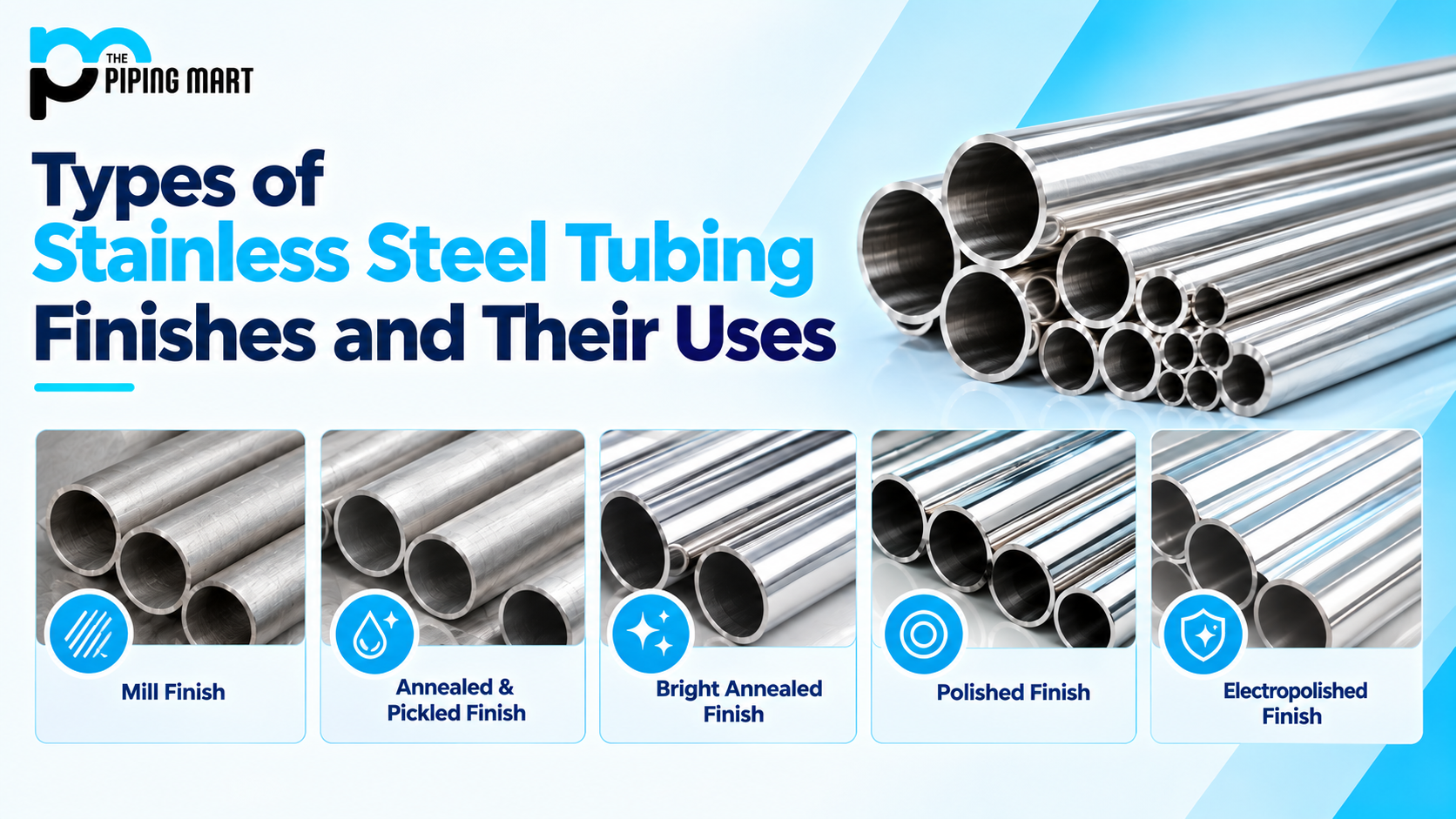
Stainless steel tubing is a hollow product with controlled outside diameter and wall thickness for instrumentation lines, heat exchangers, boilers, and process systems. Stainless steel pipe follows nominal bore for flow capacity, while tubing follows actual outside diameter and tighter dimensional tolerances. Compared with carbon steel, stainless steel contains at least 10.5% chromium, which forms a thin passive oxide film that resists rust and chemical attack. That chemistry gives tubing a long service life, clean, smooth surfaces, and good formability.
What Are the Common Grades of Stainless Steel Tubing?
The following grade families define the stainless steel tube grades that buyers specify most. Each answers a different mix of corrosion, temperature, and fabrication needs, as the short descriptions below show.
304 and 304L Stainless Steel Tubing
304 is the general-purpose austenitic grade, with roughly 18% chromium and 8% nickel. It resists atmospheric corrosion and mild chemicals, and it forms and welds easily. 304 stainless steel tubing is used in food processing, water lines, and heat exchangers. The 304L variant holds carbon to 0.03% maximum, which limits carbide precipitation after welding.
316 and 316L Stainless Steel Tubing
316 adds 2% to 3% molybdenum, which lifts resistance to pitting and crevice corrosion in chloride environments. 316 stainless steel tubing suits marine hardware, chemical processing, pharmaceutical lines, and process skids. The 316L version limits carbon to 0.03% for welded assemblies. Choose 316 over 304 when chlorides contact the tube.
321 Stainless Steel Tubing
321 contains titanium, which ties up carbon and limits chromium carbide formation between roughly 425°C and 850°C. That stabilization reduces sensitization and intergranular attack after welding or thermal exposure. 321 stainless steel tubing serves exhaust manifolds, aircraft ducting, expansion joints, and furnace components that run at sustained elevated temperatures.
347 Stainless Steel Tubing
347 uses niobium as its stabilizer, which fixes carbon as niobium carbide. It resists intergranular corrosion after sensitizing exposure and holds strength in continuous service near 870°C. 347 stainless steel tubing serves refinery heaters, steam lines and process equipment. Compared with 321, 347 suits welded service that needs stronger stabilization.
310 and 310S Stainless Steel Tubing
310 carries about 25% chromium and 20% nickel, which resists oxidation in temperatures up to 1100°C. Furnace tubes, combustion chambers, and heat treatment equipment use 310 stainless steel tubing for that reason. The 310S grade holds carbon at 0.08% maximum against 0.25% for 310, so welded assemblies use 310S.
904L Stainless Steel Tubing
904L is a specialized super austenitic grade with about 23% chromium, 25% nickel, 4.5% molybdenum, and 1.5% copper. That alloy content resists sulfuric acid, phosphoric acid, and severe chloride attack where 316L corrodes. Buyers specify 904L only when service conditions justify the higher material cost.
How Do Common Stainless Steel Tubing Grades Compare?
This table links each grade to its main characteristic and its usual role in stainless steel tubing applications, so readers can shortlist grades quickly before checking full specifications and test certificates.
| Grade | Main Characteristic | Typical Application/Selection |
| 304/304L | General-purpose corrosion resistance | Food, water, and general process lines |
| 316/316L | Molybdenum improves chloride resistance | Marine, chemical, and pharmaceutical service |
| 321 | Titanium stabilized | Exhaust and furnace systems with repeated heating |
| 347 | Niobium stabilized | Refinery heaters and welded high-temperature lines |
| 310/310S | High chromium and nickel for oxidation resistance | Furnaces, heat treatment, and combustion equipment |
| 904L | High alloy acid and chloride resistance | Severe chemical service where cost is justified |
How Do You Choose the Right Stainless Steel Tubing Grade?
Follow these eight steps in order. Each step narrows the grade choice until actual service conditions, rather than price or popularity, decide the final specification.
Identify the Medium
List every fluid, gas, or chemical that touches the tube inside and outside, including cleaning agents. Concentration, purity requirements, and contamination limits narrow the list of suitable grades at once.
Assess Corrosion and Chloride Exposure
Measure chloride content in process fluid, cooling water, and ambient air. Chloride levels well above mild exposure push selection away from 304 toward 316, and severe cases point to 904L.
Establish Operating Temperature
Record minimum and maximum service temperatures, including upset conditions. Above roughly 600°C, stabilized grades 321 or 347 replace 304 tubing, and oxidizing furnace service above 900°C points directly to 310S.
Decide Whether Welding Is Required
Confirm whether crews will weld the tube in the field or in the shop. Welded assemblies call for the low-carbon 304L and 316L, or for stabilized 321 and 347 in heat.
Check Pressure and Mechanical Requirements
Check pressure, wall thickness, and strength requirements against allowable stress values at operating temperature. Higher pressure may need heavier walls, a stronger temper, or a grade with higher yield strength.
Confirm Dimensional Requirements
Specify outside diameter, wall thickness, length, and tolerance. Instrumentation and heat exchanger tubing need tighter tolerances than structural tubing, and some grades come in a narrower size range than others.
Identify the Applicable Specification
Match tube type to a standard such as ASTM A213 for boilers and heat exchangers, A269 for general service, or A249 for welded tubes. The standard fixes chemistry and testing.
Select the Grade From Service Conditions
Select the grade that meets the service conditions confirmed in steps one to seven. Price and popularity never justify a grade, because an unsuitable choice raises failure and replacement costs.
What Standards Apply to Stainless Steel Tubing?
Three ASTM specifications anchor stainless steel tubing procurement.
- ASTM A213 governs seamless austenitic and ferritic tubes for boilers, superheaters, and heat exchangers.
- ASTM A269 covers seamless and welded austenitic tubing for general service.
- ASTM A249 applies to welded austenitic tubes for boilers, superheaters, heat exchangers, and condensers.
The correct standard depends on tubing type, manufacturing method and intended service. A dedicated guide to stainless steel tubing standards explains chemistry, testing and tolerance requirements for each.
Frequently Asked Questions About Stainless Steel Tubing Grades
What are the most common grades of stainless steel tubing?
304/304L and 316/316L are for general use, while 321, 347, 310/310S, and 904L serve specific needs. Stabilized grades handle heat, 310S resists furnace oxidation, and 904L handles severe acids and chlorides. ThePipingMart lists suppliers for each grade.
What is the difference between 304 and 316 stainless steel tubing?
316 contains 2% to 3% molybdenum, while 304 contains none. That addition gives 316 better pitting and chloride resistance, so it suits marine and chemical service, whereas 304 serves food, water, and mild environments at lower cost.
Which stainless steel tubing grade is used for high-temperature applications?
321 and 347 serve elevated temperature systems because titanium and niobium stabilization resist sensitization, while 310/310S withstands oxidation in furnace service above 900°C. Selection depends on peak temperature and exposure duration. 304 suits moderate heat service.
Why is 316 stainless steel tubing used in chloride environments?
Molybdenum strengthens the passive film on 316 and raises its resistance to pitting and crevice corrosion. Seawater, brines, road salts, and chemical process solutions attack 304 tubing faster, so 316 tubing lasts longer in those exposures.
How do I select the right stainless steel tubing grade?
Start with the medium, chloride level, operating temperature, and welding needs, then check pressure, dimensions, and the applicable ASTM specification. Final selection should rest on service conditions, and suppliers on The Piping Mart can confirm grade availability and test certificates.