Getting the right dimensions matters more than most people realise. Stainless steel tubing is specified by outer diameter, inner diameter, and wall thickness, and even a small mistake in any one of these can create problems in fabrication, flow performance, or pressure rating. Engineers working across sectors like chemical processing, food and beverage, pharmaceuticals, instrumentation, and structural applications regularly need to compare stainless steel tubing sizes, check wall thickness options, and confirm whether a given size meets the relevant standard. This guide covers the core dimensions, standard stainless steel tubing size charts, wall thickness options, and the applicable ASTM and ASME standards, so you have the technical details needed to select correctly.
Introduction To Stainless Steel Tubing
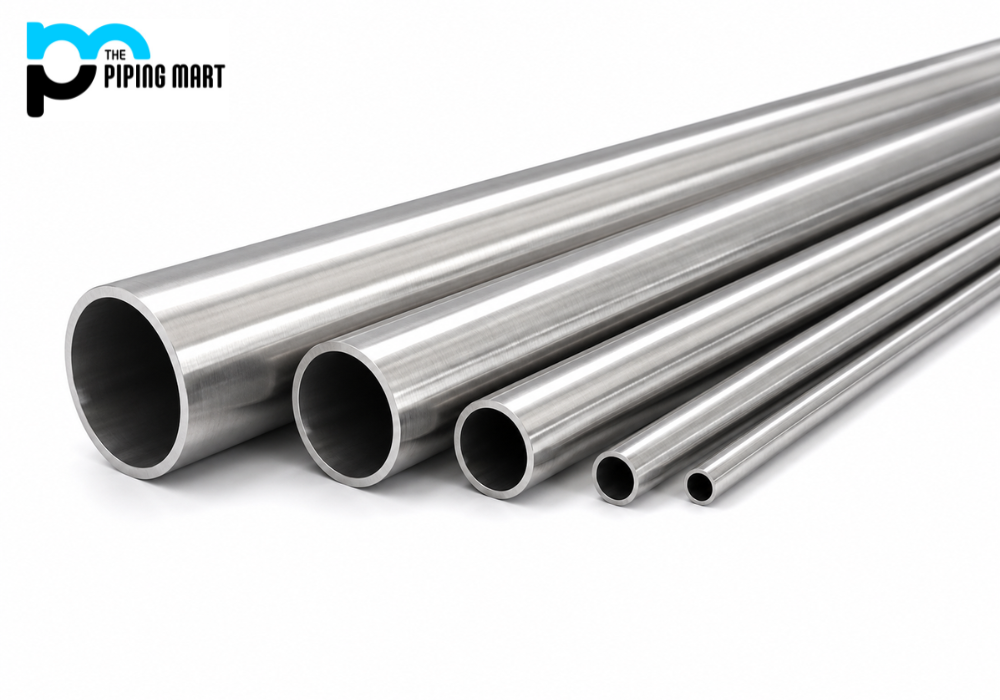
Stainless steel tubing is a round, hollow-section material precision-manufactured to dimensional tolerances. Tubing is specified by the actual outer diameter and wall thickness of the pipe, unlike pipe, where pipe sizes are by nominal bore and schedule. This makes it more predictable for instrumentation, hydraulic, and process applications where bore and flow area are critical. The two most prevalent grades are 304 and 316, and 316 is the preferred grade when corrosion resistance is more important, such as in marine or chemical environments. The standard sizes of stainless steel tubing range widely from less than 1/4” OD to many inches, and each size is available in a variety of stainless steel tubing wall thickness options, depending upon the application pressure.
Understanding OD, ID, and Wall Thickness
These three measurements define a tube completely. Understanding how they relate to each other is basic but important.
Outer Diameter (OD): The OD is the total outside width of the tube. Dimensional sizes for stainless steel tubing are always based on the outside diameter of the tube. Wall thickness does not affect the OD of a given size designation. A 1/2″ tube will always be 12.70mm OD regardless of the wall thickness (0.035″ or 0.065″).
Inner Diameter (ID): The inside diameter of the tube is determined by calculation as the difference between the OD and twice the wall thickness. The ID directly influences flow capacity, so when flow rate is important, as in most lines that are used for process or instrumentation, you must check the ID, in addition to the OD designation.
Wall Thickness: Wall thickness is specified in inches or millimetres and determines the pressure rating and structural strength of the tube. Thicker walls give higher pressure ratings but reduce the bore. The stainless steel tubing gauge chart is sometimes used alongside direct thickness values, though most engineering specifications state the actual wall thickness rather than gauge. For critical applications, always confirm the stainless steel tubing thickness directly in inches or mm rather than relying on gauge alone.
Standard Stainless Steel Tubing Dimensions
The table below lists commonly stocked stainless steel tubing standard sizes with their corresponding wall thickness and approximate ID values in both imperial and metric units.
| OD (inch) | OD (mm) | Wall (inch) | Wall (mm) | Approx. ID (inch) | Approx. ID (mm) |
| 1/4 | 6.35 | 0.028 | 0.71 | 0.194 | 4.93 |
| 1/4 | 6.35 | 0.035 | 0.89 | 0.180 | 4.57 |
| 3/8 | 9.53 | 0.028 | 0.71 | 0.324 | 8.23 |
| 3/8 | 9.53 | 0.035 | 0.89 | 0.310 | 7.87 |
| 3/8 | 9.53 | 0.049 | 1.25 | 0.282 | 7.16 |
| 1/2 | 12.70 | 0.035 | 0.89 | 0.430 | 10.92 |
| 1/2 | 12.70 | 0.049 | 1.25 | 0.402 | 10.21 |
| 1/2 | 12.70 | 0.065 | 1.65 | 0.370 | 9.40 |
| 5/8 | 15.88 | 0.035 | 0.89 | 0.545 | 13.84 |
| 5/8 | 15.88 | 0.049 | 1.25 | 0.527 | 13.39 |
| 5/8 | 15.88 | 0.065 | 1.65 | 0.495 | 12.57 |
| 3/4 | 19.05 | 0.035 | 0.89 | 0.680 | 17.27 |
| 3/4 | 19.05 | 0.049 | 1.25 | 0.652 | 16.56 |
| 3/4 | 19.05 | 0.065 | 1.65 | 0.620 | 15.75 |
| 3/4 | 19.05 | 0.083 | 2.11 | 0.584 | 14.83 |
| 1 | 25.40 | 0.035 | 0.89 | 0.930 | 23.62 |
| 1 | 25.40 | 0.049 | 1.25 | 0.902 | 22.92 |
| 1 | 25.40 | 0.065 | 1.65 | 0.870 | 22.10 |
| 1 | 25.40 | 0.083 | 2.11 | 0.834 | 21.18 |
| 1 | 25.40 | 0.120 | 3.05 | 0.760 | 19.30 |
| 1 1/4 | 31.75 | 0.065 | 1.65 | 1.120 | 28.45 |
| 1 1/4 | 31.75 | 0.083 | 2.11 | 1.084 | 27.53 |
| 1 1/4 | 31.75 | 0.120 | 3.05 | 1.010 | 25.65 |
| 1 1/2 | 38.10 | 0.065 | 1.65 | 1.370 | 34.80 |
| 1 1/2 | 38.10 | 0.083 | 2.11 | 1.334 | 33.88 |
| 1 1/2 | 38.10 | 0.120 | 3.05 | 1.260 | 32.00 |
| 2 | 50.80 | 0.065 | 1.65 | 1.670 | 42.42 |
| 2 | 50.80 | 0.083 | 2.11 | 1.634 | 41.50 |
| 2 | 50.80 | 0.120 | 3.05 | 1.560 | 39.62 |
Stainless Steel Tubing Size Chart
This stainless steel tubing size chart provides a quick reference across all standard OD sizes and wall thickness combinations, including the smaller 1/8 inch OD range not always listed in dimensional tables.
| OD (inch) | Wall (inch) | OD (mm) | Wall (mm) | Approx. ID (inch) |
| 1/8 | 0.028 | 3.18 | 0.71 | 0.074 |
| 1/4 | 0.028 | 6.35 | 0.71 | 0.194 |
| 1/4 | 0.035 | 6.35 | 0.89 | 0.180 |
| 3/8 | 0.028 | 9.53 | 0.71 | 0.324 |
| 3/8 | 0.035 | 9.53 | 0.89 | 0.310 |
| 3/8 | 0.049 | 9.53 | 1.25 | 0.282 |
| 1/2 | 0.035 | 12.70 | 0.89 | 0.430 |
| 1/2 | 0.049 | 12.70 | 1.25 | 0.402 |
| 1/2 | 0.065 | 12.70 | 1.65 | 0.370 |
| 5/8 | 0.035 | 15.88 | 0.89 | 0.545 |
| 5/8 | 0.049 | 15.88 | 1.25 | 0.527 |
| 5/8 | 0.065 | 15.88 | 1.65 | 0.495 |
| 3/4 | 0.035 | 19.05 | 0.89 | 0.680 |
| 3/4 | 0.049 | 19.05 | 1.25 | 0.652 |
| 3/4 | 0.065 | 19.05 | 1.65 | 0.620 |
| 3/4 | 0.083 | 19.05 | 2.11 | 0.584 |
| 1 | 0.035 | 25.40 | 0.89 | 0.930 |
| 1 | 0.049 | 25.40 | 1.25 | 0.902 |
| 1 | 0.065 | 25.40 | 1.65 | 0.870 |
| 1 | 0.083 | 25.40 | 2.11 | 0.834 |
| 1 | 0.120 | 25.40 | 3.05 | 0.760 |
| 1 1/4 | 0.065 | 31.75 | 1.65 | 1.120 |
| 1 1/4 | 0.083 | 31.75 | 2.11 | 1.084 |
| 1 1/4 | 0.120 | 31.75 | 3.05 | 1.010 |
| 1 1/2 | 0.065 | 38.10 | 1.65 | 1.370 |
| 1 1/2 | 0.083 | 38.10 | 2.11 | 1.334 |
| 1 1/2 | 0.120 | 38.10 | 3.05 | 1.260 |
| 2 | 0.065 | 50.80 | 1.65 | 1.870 |
| 2 | 0.083 | 50.80 | 2.11 | 1.834 |
| 2 | 0.120 | 50.80 | 3.05 | 1.760 |
ASTM and ASME Standards for Stainless Steel Tubing
Stainless steel tubing is manufactured and supplied to several ASTM and ASME standards depending on the application. ASTM A269 covers seamless and welded austenitic stainless steel tubing for general service, and it is one of the most commonly referenced standards for instrumentation and general process tubing. ASTM A213 applies to seamless ferritic and austenitic alloy steel boiler, superheater, and heat exchanger tubes, while ASTM A249 covers welded austenitic steel boiler tubes. For surface condenser and heat exchanger applications, ASTM A688 is relevant. On the ASME side, the corresponding standards under ASME SA designations mirror ASTM requirements but are used specifically where ASME Boiler and Pressure Vessel Code compliance is required. Selecting the right standard depends on the operating conditions, pressure rating, and any regulatory requirements in your specific application.
Conclusion
Choosing the correct stainless steel tubing requires an understanding of the OD and wall thickness, and then a verification of the resulting ID size in accordance with your flow or clearance needs. The dimensions of the stainless steel tubing listed in this guide are the most commonly used in instrumentation, process, and structural applications. The size chart of stainless steel tubing is a good starting point, but always refer to the appropriate ASTM or ASME standard for your application. The selection of wall thickness should take into account the pressure rating as well as the bore size, and where it is critical, it is worth checking the actual dimensional tolerances of your supplier as well as the nominal wall thickness.
FAQs
How are stainless steel tubing sizes measured?
Stainless steel tubing sizes are measured by actual outer diameter and wall thickness, both stated in inches or millimetres. Unlike pipe, there is no nominal bore system, so the OD you specify is the real outside measurement of the tube. The inner diameter is then derived by subtracting twice the wall thickness from the OD.
What is the difference between OD and ID in stainless steel tubing?
The outer diameter (OD) is the reference size, and it is used to specify the tube size. ID is the inner diameter, or the bore through which the flow will be measured. ID depends on the wall thickness selected; the thicker the wall, the smaller the ID.
What are the standard sizes of stainless steel tubing?
The common stainless steel tubing standard sizes range from 1/8 inch OD up to 2 inches OD and beyond, with various wall thickness options for each OD. The most frequently stocked sizes run from 1/4 inch to 1 inch OD, with walls from 0.028 inch to 0.120 inch depending on the application.
How do you choose the right wall thickness for stainless steel tubing?
The wall thickness selection depends on the operating pressure, the required bore size, and any structural loads the tube needs to handle. Higher-pressure applications need thicker walls, but this reduces the ID. In most cases, you should calculate the minimum wall thickness needed for the pressure rating first, then check that the resulting ID still meets your flow requirements.
What is the difference between stainless steel pipe size and tube size?
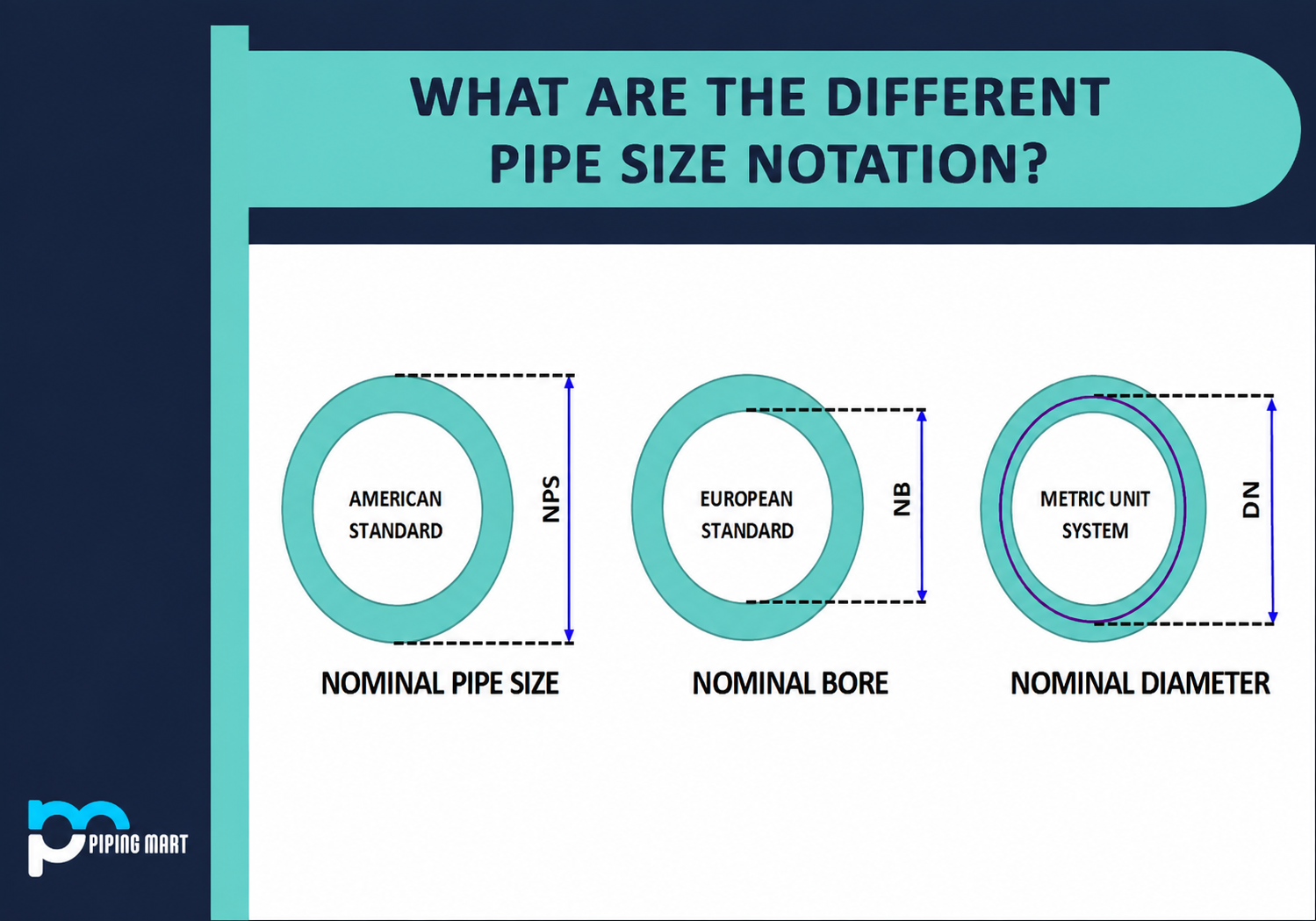
Pipe size uses a nominal bore system where the stated size does not directly reflect the actual OD, and wall thickness is defined by schedule numbers. Tube size, by contrast, is specified by its actual OD and exact wall thickness. This makes tubing more precise and predictable for instrumentation and close-tolerance applications compared to pipe.