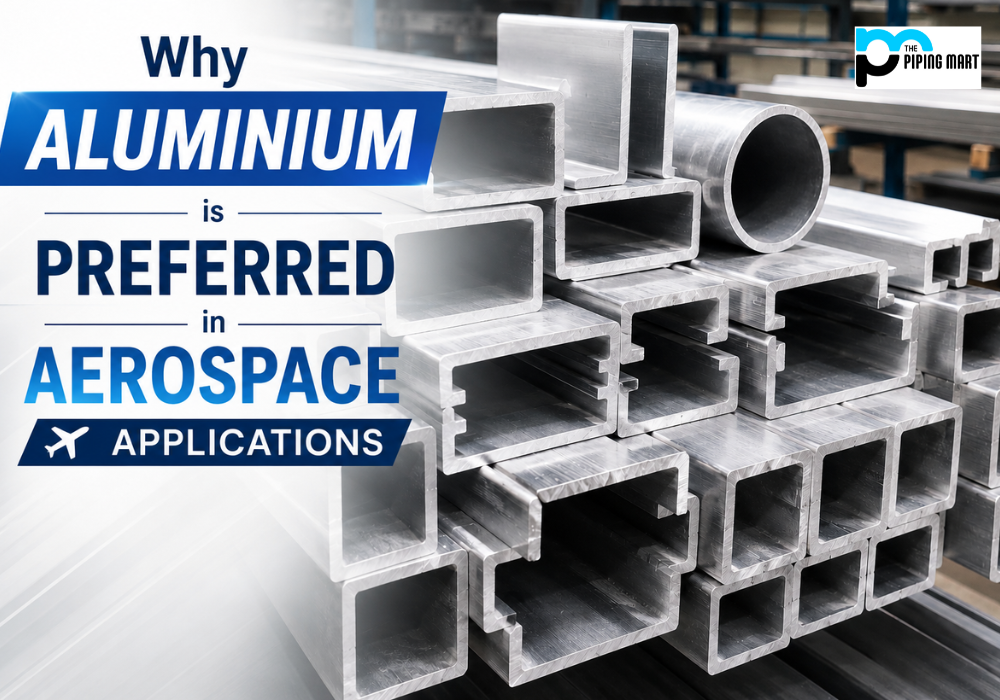
The aerospace industry demands materials that perform reliably across temperature extremes, pressure cycles, and long service life. Aluminium has met these demands for over a century. It offers a strong balance of structural performance, low weight, and cost without major trade-offs. Even with the rise of advanced composites, aluminium in aerospace is the widely used material. It can be shaped into complex forms without losing strength, is machined easily, and performs well under pressure changes and thermal shifts at high altitudes. It is used across many aerospace applications, from major wing structures to small electronic housings. Its continued use is based on consistent and proven performance.
Key Reasons Why Aluminium is Preferred in Aerospace Applications
Aluminium is widely used in aerospace because it gives a good balance of strength, weight, and cost. It performs well in demanding conditions without adding unnecessary weight to the structure. At the same time, it is easier to shape and manufacture it with other metals, allowing for more efficient production and cost management.
Strength-to-Weight Ratio
Aluminium can carry structural loads without adding much weight. This matters a lot in aircraft design. Lower weight directly reduces fuel use and also allows more payload. Because of this, aluminium is used in airframes, wing sections, and panels where both strength and weight need to be controlled. It does the job without overloading the structure.
Corrosion Resistance at High Altitudes
Aircraft operate in conditions where moisture, oxygen, and temperature changes are constant. Aluminium naturally forms a thin oxide layer on its surface. This layer slows down corrosion and protects the material underneath. In most cases, this reduces the need for frequent maintenance. It also improves reliability over time, especially in areas that are not easy to inspect or repair regularly.
Excellent Fatigue Resistance
An aircraft goes through repeated pressurisation cycles, turbulence, and mechanical stress during every single flight. That cycle repeats thousands of times over the aircraft’s service life. Aluminium alloys are well suited to this environment; they withstand repeated stress cycles without progressive degradation, which is exactly what you need in a structural material.
Good Thermal and Electrical Conductivity
Aluminium conducts heat and electricity well. In aerospace systems, this makes it useful for cooling parts and electrical wiring, where both weight and conductivity are important. This dual role helps make material choices easier.
Ease of Fabrication and Machining
Aerospace components are often highly complex in geometry. Aluminium machines well, forms accurately, and responds predictably during manufacturing, qualities that matter enormously when producing tight-tolerance parts at scale. We’ve found it far more forgiving to work with than many alternative metals.
Recyclability and Cost Efficiency
Aluminium can be recycled several times without losing its key properties. Over an aircraft’s lifetime, material costs are much more than the initial purchase; aluminium cuts material costs and helps meet sustainability goals. This sustainability benefit is becoming more important as the industry is pushed to reduce its environmental impact.
Aluminium in Aerospace: Key Applications and Components
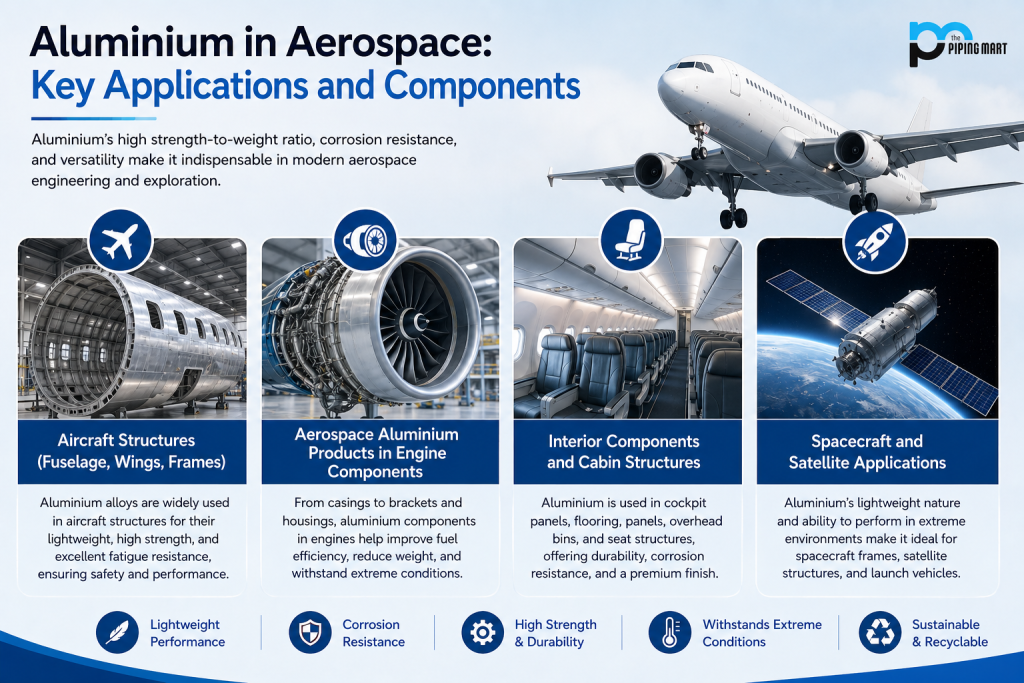
Aluminium shows up throughout the aircraft, from the outer skin to the interior fittings. Here’s where it makes the biggest difference.
Aircraft Structures (Fuselage, Wings, Frames)
The fuselage, wing skins, spars, ribs, and structural frames are among the most demanding applications for any material. Aluminium alloys are used extensively here because they provide the combination of low weight and structural integrity that keeps aircraft airworthy. It’s one of the most weight-critical applications in engineering, and aluminium survives it reliably.
Aerospace Aluminium Products in Engine Components
Certain engine components, particularly housings, casings, and mounting brackets, use aluminium where temperatures remain within its operating range. The aerospace aluminium products serve these roles well, offering the dimensional stability and machinability that engine component manufacturing demands.
Interior Components and Cabin Structures
Interior components and cabin structures in aircraft are designed to improve passenger comfort, safety, and efficiency while keeping weight low to save fuel. These systems now use more composite materials and modular designs, making it easier to change and adjust cabin layouts when needed.
Spacecraft and Satellite Applications
In space, extra weight is an even bigger problem than in aviation. Aluminium alloys are used in satellite frames, panels, and other spacecraft parts because they are light, stable in changing temperatures, and resist corrosion. Aluminium-lithium alloys are now used more often in modern space structures for these same reasons.
Commonly Used Aluminium Grades for Aerospace Applications
Not every aluminium alloy is suited to aerospace work. The industry relies on specific grades, each chosen for distinct performance characteristics.
2024 Aluminium Alloy
2024 is a workhorse of aerospace manufacturing, widely used in aircraft structures such as fuselage skin panels and wing structures. Its high strength and superior fatigue resistance make it suitable for components under cyclic stress. It’s one of the most recognised grades in the industry.
2014 Aluminium Alloy
2014 offers high strength and good machinability and is used in applications where heavier loads are expected. It’s a common choice in structural forgings and heavy-duty fittings.
6061 Aluminium Alloy
6061 is a broadly used grade across many industries, but its combination of corrosion resistance and good mechanical properties makes it particularly suitable for structural and support components in aerospace. We supply this grade for a wide range of applications where versatility and weldability are priorities.
5052 Aluminium Alloy
5052 stands out for its excellent corrosion resistance and formability. It’s commonly found in fuel tanks, hydraulic tubes, and other components exposed to fluids or harsh environments within the airframe.
7075 Aluminium Alloy
7075 is one of the strongest aluminium alloys available and is used in high-stress aerospace parts such as wing spars, bulkheads, and load-bearing structural members. Where strength is the primary requirement and weight must still be minimised, 7075 delivers.
7050 Aluminium Alloy
7050 has similar high strength to 7075, but it resists stress‑corrosion cracking better. It’s used for thick structural parts where both strength and reliability are very important.
Aluminium-Lithium Alloys: Lightweight Advanced Materials
Aluminium-lithium alloys represent the advanced end of the material spectrum, used in modern commercial aircraft and spacecraft where every gram counts. They offer improved stiffness and reduced density compared to conventional aluminium alloys. Adoption is growing steadily.
Benefits of Aluminium in Aerospace
The function of aluminium is not diminishing; it is evolving. As manufacturers aim for lighter aeroplanes and lower emissions levels, aluminium remains crucial:
- New alloys are filling the gap with titanium and composites.
- Better manufacturing methods allow complex shapes with less waste.
- High recyclability supports circular economy and sustainability goals.
Aluminium is one of the most recycled metals and fits well with end‑of‑life material recovery. It remains a core aerospace material for the long-term future.
Conclusion
Aluminium has earned a place at the core of aerospace manufacturing through decades of consistent performance. Its lightweight, structural strength, corrosion resistance, and thermal qualities make it more versatile than most other materials. From commercial aircraft structures to satellites and interior fittings, aluminium delivers across applications and environments. Engineers may choose the exact material for each component due to the availability of a wide range of alloy grades, each suited for unique demands. We supply aerospace-grade aluminium across the full range of standard grades, and we understand the material well enough to support specification decisions as well as supply. When the application demands reliability at altitude, aluminium is a material you can depend on.
FAQs
Why is aluminium widely used in aerospace applications?
Aluminium is used because it keeps the weight low without losing too much strength. That directly affects fuel use, so lighter aircraft need less fuel. It also handles exposure to air and moisture well, so corrosion is less of a problem over time. Maintenance stays manageable. For most structural parts, it gives a good balance without pushing costs too high.
Which aluminium grades are used in aircraft manufacturing?
Different grades are selected based on where they are used. 2024 is common in areas that face repeated stress and fatigue. 7075 and 7050 are used where higher strength is needed, especially in load-bearing sections. 6061 is more general-purpose and easier to work with. 5052 is chosen where corrosion resistance matters more. Aluminium-lithium alloys are used in newer aircraft to reduce weight further, especially in critical structures.
What are aerospace aluminium products commonly used for?
Aerospace aluminium products are used across airframes, fuselage panels, wing structures, engine housings, interior fittings, and satellite components. It is used for both structural and non-structural applications wherever lightweight and durability are required.
Is aluminium stronger than titanium in aerospace use?
Titanium is stronger in terms of absolute strength and handles high temperatures better. So it is used near engines and high-heat areas. Aluminium is lighter, which matters more in many structural sections. In practice, aluminium is used more because it is easier to handle, less expensive, and strong enough for most parts.
Why are aluminium alloys preferred over pure aluminium in aircraft?
Pure aluminium is too soft. It cannot handle structural loads on its own. When elements like copper, magnesium, or zinc are added, the material becomes stronger and more stable. It also resists cracking better under stress. That is why alloys are used almost everywhere instead of pure aluminium.
Why is material selection critical in aerospace engineering?
In aerospace, choosing the right material is critical for safety, performance, and cost. A poor choice can make an aircraft too heavy, cause parts to crack over time, or let them rust, all of which are dangerous. Aluminium alloys avoid many of these problems. They are reliable, well-studied materials, which is why they have been one of the main choices for aircraft since flying began.