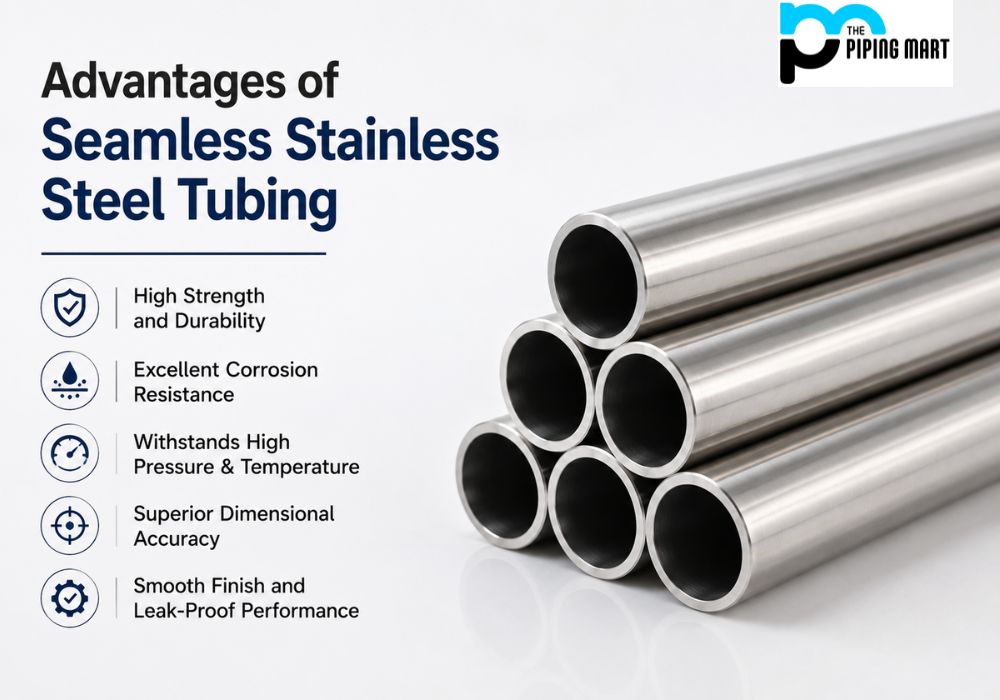
Seamless stainless steel tubing is used in some of the most demanding industrial applications, and there are good reasons for that. Unlike welded tubing, seamless tubing has no joint along its length. The entire tube is formed from a single piece of material. That alone changes how the tube behaves under pressure, heat, and stress. Industries like oil and gas, pharmaceuticals, power generation, and hydraulics rely on this type of tubing because failure is simply not an option in those settings. This article discusses the key advantages of seamless stainless steel tubing and why it is often the preferred option over welded alternatives in critical systems.
Introduction to Seamless Stainless Steel Tubing
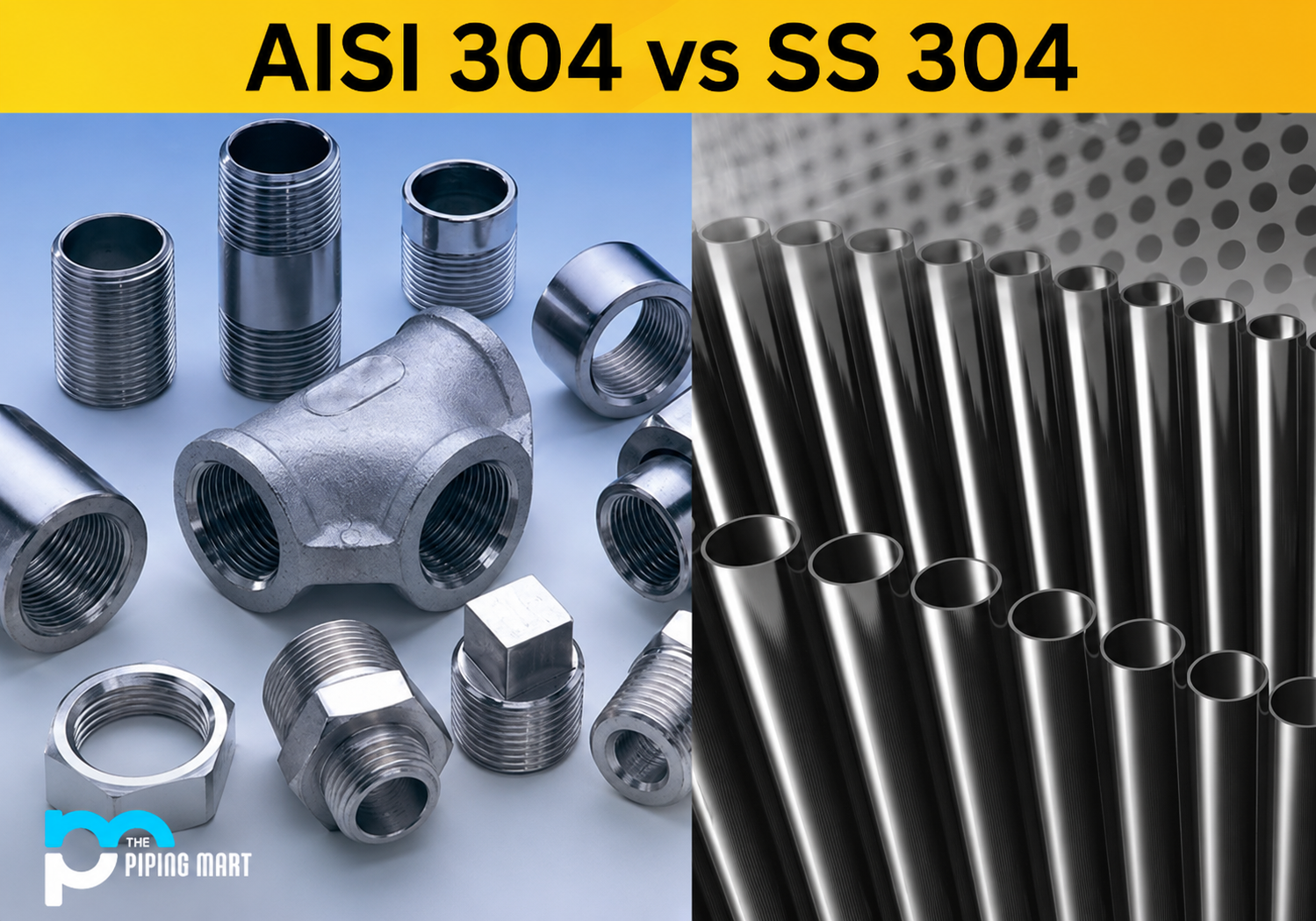
Seamless Stainless Steel Tubing is produced by extruding or piercing a solid billet of stainless steel to create a hollow tube without welding or joining. This process results in a tube with a continuous, uniform structure throughout its wall. It can be found in stainless steel seamless tube sizes ranging from small-bore instrument tubing to larger industrial pipe sizes. Common grades include 304, 316, and 316L, with each grade suited for different environments. The absence of a weld seam is what makes this tubing fundamentally different from ERW or welded alternatives. That structural difference directly affects performance in pressurised and corrosive service conditions.
Key Advantages of Seamless Stainless Steel Tubing
There are several reasons why seamless steel tubing continues to be specified over welded tubing in industrial projects. The points below cover the main ones.
Superior Strength and Structural Integrity
Seamless tubing is formed from a single billet; there is no weld seam that could act as a weak point. The grain structure of the metal remains consistent throughout the tube wall. In welded tubes, the weld zone may have different behaviour from the rest of the material, especially when subject to cyclic loading or stress. Seamless stainless steel tubing avoids that entirely. The structural integrity is uniform along the full length, which matters in applications where mechanical stress is constant or unpredictable.
Higher Pressure Handling Capability
High-pressure stainless steel tubing is almost always seamless. The seamless tube pressure rating is generally higher than that of a comparable welded tube in the same grade and wall thickness. This is because the pressure capacity of welded tubing is often derated to account for the weld joint efficiency factor. Seamless tubing carries no such derating. In hydraulic lines, instrumentation systems, and process pipework operating at elevated pressures, this difference is significant. Engineers specify “seamless” when the system pressure leaves no margin for compromise.
Improved Corrosion Resistance
The inherent corrosion resistance of stainless steel is adequate due to the chromium content. This resistance is uniform throughout the wall thickness for seamless tubing, as there is no heat-affected zone of the material, whose properties are changed by the welding. The corrosive resistance of the tubing in the heat-affected area may be slightly less than that of the base material, especially in corrosive chemical environments. Seamless construction maintains uniform metallurgical properties. This consistency is important for applications with chlorides, acids, or other corrosive media.
Uniform Wall Thickness
Seamless tubing is manufactured with tighter tolerances on wall thickness compared to welded alternatives. The wall is consistent around the full circumference and along the length. This is important for precision parts requiring bore consistency for flow, measurement accuracy or mechanical fit. Small changes in tube wall thickness will cause problems in instrumentation tubing. Welded tubing can have a slight thickening at the weld, which is not always acceptable in tight-tolerance assemblies.
Enhanced Reliability in Critical Applications
Seamless tubing sees regular use in sectors where a tube failure causes serious consequences. Oil and gas, nuclear, aerospace, and pharmaceutical manufacturing all use seamless steel tubing because reliability over time is a hard requirement. The absence of a weld means one less potential failure point. In long service life applications, that counts for a lot. Maintenance intervals can also be longer because there is less concern about weld degradation over time.
Better Performance at Extreme Temperatures
At elevated or cryogenic temperatures, the behaviour of a weld zone can differ from the parent material. Thermal expansion and contraction cycles can stress a weld joint over time. Seamless stainless steel tubing handles these conditions more predictably because the material is homogeneous throughout. In heat exchangers, fired heater tubing, and cryogenic service lines, this thermal consistency is important. The tubing expands and contracts as a uniform piece rather than as a structure with a potentially inconsistent joint running along it.
Conclusion
Seamless stainless steel tubing is not always the affordable option, but it is in applications where pressure ratings, corrosion resistance, and durability are key considerations. As there is no weld seam, the structural advantages will directly equate to its performance in severe service conditions. In engineering and procurement situations where the failure of tubing is a real possibility, the extra expense of seamless tubing usually outweighs the savings. Choosing the right grade and size in the range of stainless steel seamless tube sizes and verifying the seamless tube pressure rating is appropriate for the application and is the most important prerequisite to the specification.
FAQs
Why is seamless tubing stronger than welded tubing?
Seamless tubing is produced from a single piece of material and will not have a weld seam around the length of the tube. The strength of welds may vary from the base material when subjected to stress, particularly under cyclic loading or high-pressure loads. A seamless tube is more consistent in mechanical properties and, therefore, is more resistant to fatigue and has a higher pressure rating than a welded tube.
Is seamless stainless steel tubing more expensive?
Yes, seamless tubing is normally more expensive than welded tubing of the same grade and size. The manufacturing is more complicated, and the yield of the material is lower. Welded tubing may be a more cost-effective choice for noncritical applications. In a high-pressure or corrosive service, however, the cost difference is often considered with the performance benefits that seamless tubing may provide.
Where is seamless stainless steel tubing commonly used?
Seamless stainless steel tubing is used in oil and gas pipelines, hydraulic systems, instrumentation lines, heat exchangers, pharmaceutical processing equipment, and power generation plants, as well as any other application that requires high pressure, high temperatures, or aggressive chemicals. It is also used in food and beverage processing applications that require sterility and a smooth surface.
How do I choose between seamless and welded tubing?
The main considerations are the operating pressure, temperature, fluid/gas carried, and the effect of failure. Seamless is the preferred method of application when high-pressure stainless steel tubing requirements, corrosive media, and critical service environments are involved. When cost is the most important factor for lower pressure and non-corrosive applications, then welded tubing might be adequate. It is also used to meet the appropriate pressure and material requirements for your application, helping you make the right decision.
Why Is Seamless Tubing Preferred for High-Pressure Systems?
The seamless tube pressure rating is higher because there is no weld joint to act as a potential weak point. In welded tubing, the joint efficiency factor is used to derate the pressure capacity. Seamless tubing does not carry this penalty. In systems operating close to the maximum allowable pressure, or where pressure surges occur, that extra capacity provides a meaningful safety margin.