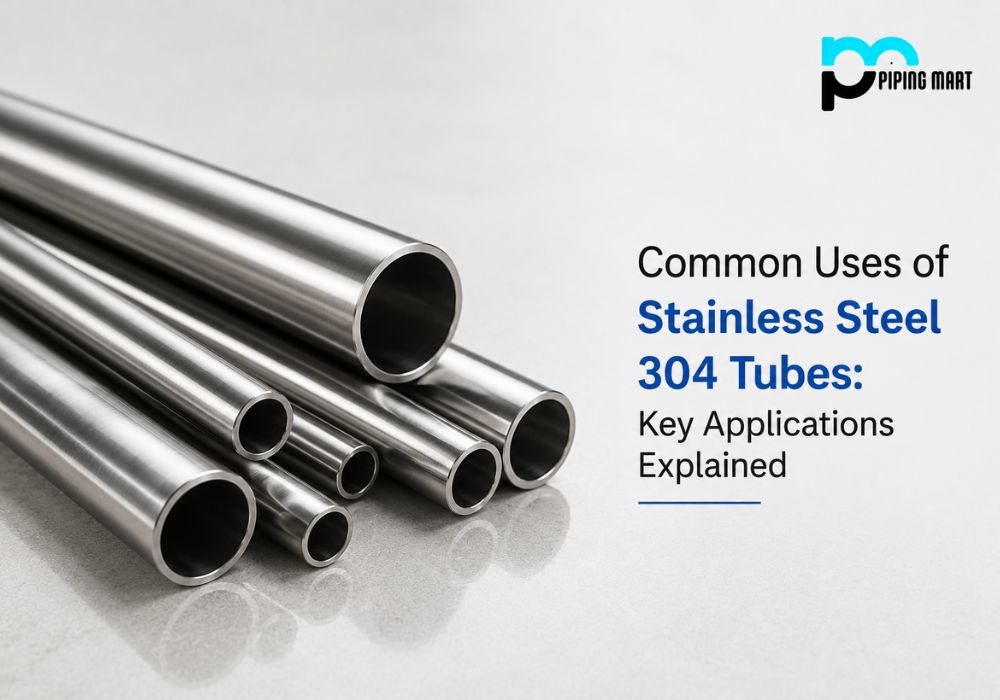
Stainless steel 304 tubes are one of the most widely used tubular products across manufacturing and processing industries. They are made from a standard austenitic grade that contains roughly 18% chromium and 8% nickel, which gives them a solid combination of corrosion resistance, strength, and workability. These tubes are available in seamless and welded forms and are used in everything from food processing lines to structural frameworks. This blog covers the key industrial and general applications of SS 304 tubes and explains why specific industries prefer them, and it also outlines the key properties that make them a practical choice for so many different projects.
What Are Stainless Steel 304 Tubes?
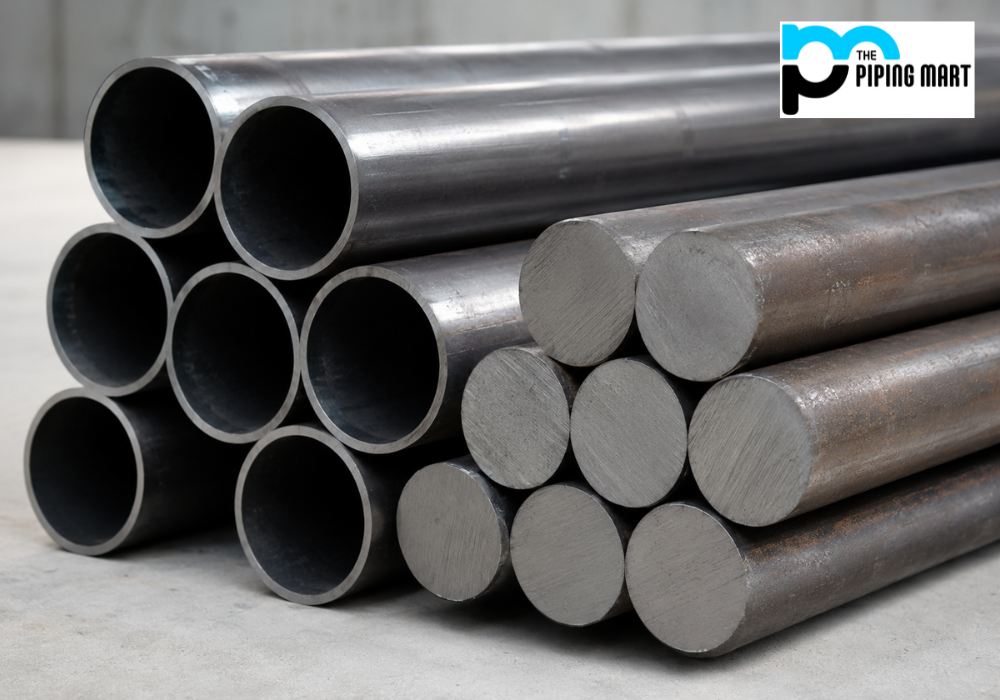
Stainless steel 304 tubes are hollow cylindrical products made from grade 304 austenitic stainless steel, which contains around 18% chromium and 8% nickel. The chromium forms a protective oxide layer that provides strong corrosion resistance. These tubes are available in seamless and welded forms with different sizes, wall thicknesses, and surface finishes. They are widely used in fluid transfer, structural, heat-exchanger, and hygienic processing applications. Grade 304 is one of the most commonly used stainless steel grades due to its versatility and cost-effectiveness.
Industrial Uses of SS 304 Tubes
SS 304 tubes are used across a broad range of industries, as they can withstand various service conditions without requiring special coatings or treatments. Below are the main sectors where these tubes are routinely specified.
SS 304 Tubes in the Food and Beverage Industry
Food and beverage processing plants rely on SS 304 tubes for transferring liquids, gases, and semi-solid materials through production lines. The material does not react with most food substances and does not impart taste or odour to the product. Its smooth surface is easy to clean and holds up well to the repeated washdowns and sterilisation cycles that food-grade equipment must go through. Dairy, brewing, bottling, and edible oil plants are among the operations that commonly use these tubes.
Stainless Steel 304 Tubes for Chemical Industry
Chemical processing plants use SS 304 tubes in pipelines, reactors, and instrument connections where the service involves dilute acids, alkalis, or organic chemicals under standard operating temperatures. The grade is not suited to high-concentration acid environments or services with significant chloride content; grade 316 is generally the appropriate choice in those cases, but it covers a broad enough range of general chemical applications to remain a common specification. Storage vessel connections and analytical instrument tubing are also typical uses within chemical facilities.
SS 304 Tubes for Water Supply Systems
SS 304 tubes are used in potable water distribution systems both within buildings and in municipal infrastructure. The material does not corrode under normal freshwater conditions and does not introduce rust, scale, or contamination into the water supply. Standard water supply pressures fall well within the pressure-handling capability of these tubes. Commercial and industrial buildings frequently specify SS 304 for internal water lines, particularly where pipework is exposed, and the quality of the finish is relevant to the installation.
Stainless Steel Tubes in the Oil and Gas Industry
In oil and gas facilities, SS 304 tubes are used for non-corrosive fluid transfer lines, instrument tubing, and heat exchange applications in refinery and downstream processing environments. They are not appropriate for highly corrosive wellhead conditions involving sour gases or high chloride concentrations, but they perform reliably in many utility and process line applications within refineries and processing plants. Hydraulic and pneumatic control tubing in oilfield equipment is another established use.
SS 304 Tubes in Construction and Infrastructure
SS 304 tubes are used in construction projects for structural and architectural purposes. The most common applications include handrails, balustrades, column cladding, and exposed structural frames. The material is easy to cut, bend, and weld on-site, and its polished appearance is excellent for public installations. Civil infrastructure projects, such as bridges, walkways, and public structures, often choose SS 304 for exposed metalwork where long-term durability and weather resistance are required.
Stainless Steel Tubing in the Pharmaceutical Industry.
For pharmaceutical manufacturing, materials need to consistently comply with rigorous hygiene requirements. SS 304 is used for process piping, clean-in-place systems and utility lines where contamination is to be minimised. A smooth bore surface minimises areas for bacteria or product residue to collect. Many pharmaceutical plants insist on providing electropolished SS 304 tubing for critical process lines, which further improves the cleanability and surface finish of the tubes.
Other Common 304 Stainless Steel Tube Uses
Beyond the primary process industries, SS 304 tubes are used in a range of other applications where a balance of corrosion resistance, mechanical performance, and cost is required.
Automotive and Transportation Industries
The 304 tubes are used in automotive and heavy transport exhaust systems, fuel lines and structural parts. The material provides a higher service life than carbon steel in exhaust service and can resist heat and vibration without corroding too fast. In passenger transport vehicles, like buses, coaches, and railway carriages. SS 304 tubes are specified for handrails, grab bars, and interior structural frames. Hydraulic and fluid transfer lines in heavy transport equipment also use this grade.
Heat Exchangers and Boilers
The tube bundle is often made of SS 304 tubes in heat exchangers, power generation facilities and industrial process plants in HVAC systems where one process fluid is circulated through the bundle while heat is transferred to or from the other fluid. The ability of the material to withstand scaling, along with acceptable thermal resistance, makes it appropriate for use in moderate temperature applications. Furthermore, SS 304 tubes are considered for use in steam lines, condensate lines, and boiler systems where higher alloyed material is not needed.
Marine and Coastal Applications
These applications include handrails, deck ladders, and equipment housings on marine vessels and shore structures above the waterline, where SS 304 tubes are used. This material is acceptable for exposure to salt spray and humidity in these conditions. Grade 316 is generally more suitable for use in environments where the seawater can be immersed for extended periods or in coastal environments subject to severe corrosion because of the higher amount of molybdenum and greater resistance to chloride corrosion. Grade 304 is the more common of the two grades for applications in less corrosive marine environments where budget is a factor.
Cleaning and Home Use
In smaller applications, SS 304 tubes are used for kitchen fittings, furniture frames, shower enclosures and decorative architecture. The smooth surface finish is excellent for humid or wet conditions, easy to clean and will give a clean look. Bathroom grab bars, countertop supports, display shelving frames, and kitchen sink structures are common examples of domestic and commercial uses.
Why Stainless Steel 304 Tubes Are Widely Used?
Several material properties make SS 304 tubes a practical and frequently specified option across industries. These properties are consistent across applications and collectively account for the grade’s broad acceptance.
Excellent Corrosion Resistance
The 18% of chromium in grade 304 creates a passive oxide film on the surface of the material, which prevents the surface from corroding and rusting in atmospheric conditions, freshwater, and a variety of chemical service environments. The surface layer is renewed if the surface is damaged, so that the need for long-term maintenance is reduced. The property of self-repair is a useful feature for use in applications where a very small amount of mechanical damage may occur to the surface of the tube during service.
High Strength and Durability
The 304 grade stainless steel possesses good tensile strength and yield strength, resisting internal pressure, mechanical load, thermal stress, etc., without losing its shape and strength. The useful temperature range is wide, from cryogenic service to approximately 870°C for intermittent high-temperature applications. Most of the industrial and commercial applications fall into that range and do not require special design provisions.
Hygienic and Easy to Clean
The smooth surface of SS 304 tubes does not easily trap bacteria and product residues, especially in polished or precision-rolled 304 surface finishes. This property is beneficial in food, beverage and pharmaceutical applications where it helps to meet hygiene regulations and cleaning validation requirements. The material withstands multiple exposures to hot water, steam and industrial cleaning agents without surface degradation. It is odour- and flavour-free, a specific requirement in food contact applications.
Good Weldability and Fabrication
Machines should be designed to be both good for welding and good for fabricating.
Grade 304 is appropriate for many welding methods, such as TIG, MIG and plasma welding. Post-weld heat treatment is not required for most applications, and hence, the fabrication process is simpler. The material can be cut, bent and shaped without cracking and is easily machined to acceptable tolerances with minimal problems. These qualities decrease the number of fabrication steps and the cost of projects requiring multiple forming, cutting or joining steps.
Conclusion
Stainless steel 304 tubes are widely used in industry as they provide a dependable combination of corrosion resistance, mechanical strength, and fabrication practicality over a wide range of service conditions. The grade consistently meets standard application requirements for various industries, such as food processing, pharmaceutical production, construction, water supply, and heat exchange, without the added cost or complexity of higher-alloyed materials. For applications that do not require severe chloride exposure or highly concentrated acidic conditions, SS 304 tubes remain a technically sound and cost-effective option.
FAQs
What are the most typical applications of 304 stainless steel tubes?
The most common applications of SS 304 tubes are food and beverage processing, pharmaceutical manufacturing, potable water supply, chemical processing, oil and gas, and construction. They are also employed in vehicle exhaust, heat exchangers, marine above-the-waterline fittings and various domestic and commercial applications.
What are the reasons behind the use of SS 304 tubes in food and beverage applications?
The material is non-reactive with the majority of food ingredients, as it can resist corrosion in standard processing environments and has a smooth surface that is easily cleaned. It can endure various sterilisation processes without deterioration and does not impart taste or aroma to the product, all of which are required in food-grade applications.
Can stainless steel 304 tubing be used in marine applications?
SS 304 tubes work well for use in and around marine environments, where the exposure includes salt spray and humidity, but not exposure to seawater. Grade 316 is usually recommended when exposed to direct seawater or conditions where a corrosive environment is present in the coastal areas due to its molybdenum content and its resistance against chloride-induced corrosion.
What is the difference between stainless steel 304 and 316 tubes in terms of applications?
Grade 316 has molybdenum in it, which provides increased resistance to chlorides and stronger acids than grade 304. Therefore, 316 is the material of choice for marine and chemically challenging applications and environments. Grade 304 is used in less severe service and is the more commonly used grade if the extra corrosion resistance obtained from 316 is not needed.
What factors should be considered when choosing SS 304 tubes for a project?
The primary factors that should be considered while choosing the SS 304 tubes are the service environment, such as operating temperature and pressure; the composition of the fluids or chemicals; and the required tube dimensions and wall thickness. The choice between seamless and welded construction depends on the pressure rating and application requirements. Where chlorides or concentrated acids are present in the service medium, grade 316 or an alternative alloy should be evaluated before confirming SS 304 as the specification.