Stainless steel 304 pipes are used across a wide range of industries, from food processing and chemical plants to construction and oil and gas. They perform well in these areas mainly because of how they are manufactured. The manufacturing process directly affects the mechanical strength, dimensional accuracy, surface quality, and corrosion resistance of the final product. Understanding this process helps procurement teams, engineers, and project managers make better decisions when specifying or sourcing pipes. This blog covers both the seamless and welded pipe manufacturing methods for SS 304, along with a comparison of the two, and quality control practices.
What are Stainless Steel 304 Pipes?
The Stainless Steel 304 pipes are hollow cylindrical pipes produced of SS grade 304. The material comprises around 18% chromium and 8% nickel, which provides it with corrosion resistance, particularly against oxidising acids and normal atmospheric exposure. SS 304 Pipes can be found in different diameters, thicknesses, and lengths. They can be produced as seamless or welded, based on the application requirements. The food and beverage industry, pharmaceutical manufacturing, water treatment, petrochemical facilities and structural use are just some of the many applications in which these SS 304 pipes are used. They meet international specifications, including ASTM A312, ASTM A213 and various DIN and EN
Overview of Stainless Steel Pipe Production Methods
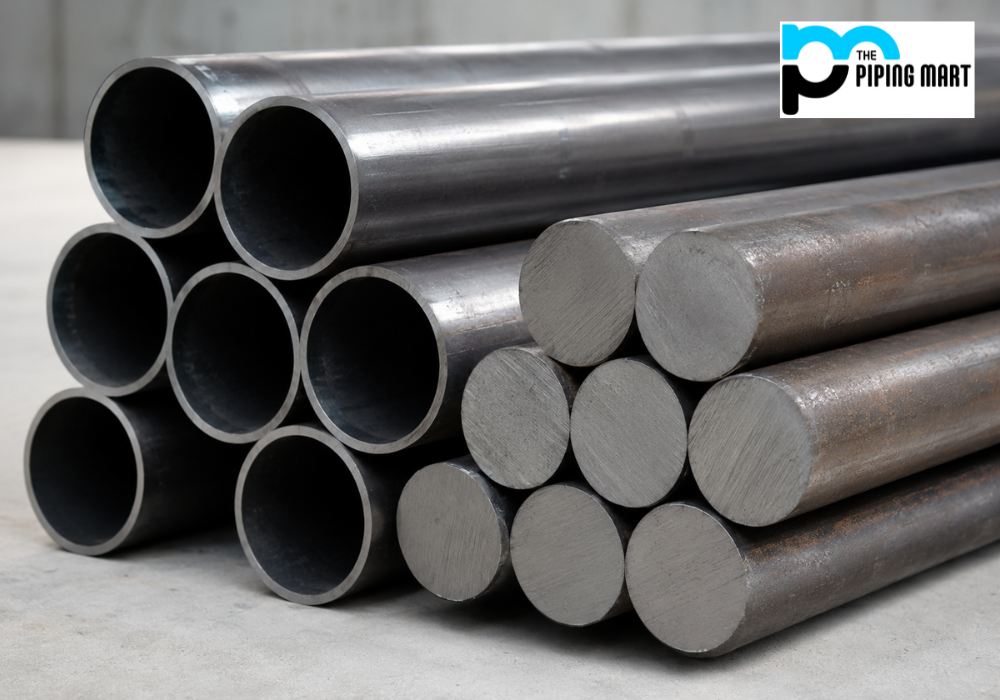
There are two approaches used in the production of stainless steel pipes: seamless and welded.
A seamless pipe is manufactured from a solid billet of material that is heated, punched, and rolled into a hollow tube. The pipe has no weld connections along its length, making it suitable for high-pressure and high-temperature applications.
Welded pipes are formed by rolling a flat stainless steel strip or roll into a pipe and welding its edges together. They are often less expensive to build and are commonly used in low to medium pressure applications, constructions, and moderate fluid transport conditions.
Both methods are suitable in certain cases and circumstances, depending on the operating circumstances, budget, and specifications necessary for the task.
Stainless Steel 304 Seamless Pipes Manufacturing
The seamless pipe manufacturing process for SS 304 begins with a solid round billet and goes through multiple stages before the pipe is ready to ship. Each stage directly affects what the next stage can achieve, so control at every point matters.
Step 1: Heating the Stainless Steel Billet
The billet-to-seamless-pipe process begins by placing a solid SS 304 billet into a rotary hearth furnace or pusher furnace. The billet is heated to between 1150°C and 1260°C, which brings the steel to a plastic state where it can be deformed without cracking or tearing. Getting the temperature uniform across the full cross-section is critical; if the core is cooler than the surface, the material will not deform evenly, and that creates problems in the next step. The billet stays in the furnace long enough based on its diameter and mass before it moves on.
Step 2: Piercing Process (Pipe Extrusion and Piercing Process)
The pipe extrusion and piercing process takes the heated billet and pushes it through a rotary piercing mill. Two barrel-shaped rolls set at opposing angles grip the billet and cause it to spin and move forward simultaneously. A fixed piercing plug sits at the centre of the billet’s path, and as the billet rotates into it, the plug forces an opening through the middle, forming a hollow shell. This shell is sometimes called a bloom or mother hollow. At this stage, the inner diameter and wall thickness are not precise; they are rough and uneven. Any plug misalignment or roll imbalance here creates off-centre walls or internal surface cracks, which carry through to the finished pipe.
Step 3: Hot Rolling Process for Stainless Steel Pipes
Once the hollow shell is formed, the hot rolling process for stainless steel pipes begins. The shell, still at elevated temperature, is passed through a mandrel mill or plug mill. A long mandrel bar sits inside the hollow and supports the inner wall as the external rolls squeeze the shell down. Each roll pass reduces wall thickness and stretches the pipe longer. The mandrel controls bore size while the rolls govern the outer diameter and wall reduction. Several passes are used depending on the final dimensions required. Hot rolling refines the grain structure and brings the pipe much closer to its target size, though final tolerances still need cold work in most cases.
Step 4: Cold Drawing Seamless Pipe Process
Not every pipe goes through cold drawing, but where tighter tolerances or a cleaner surface are needed, the cold-drawing seamless pipe process is used. The pipe is drawn on a die that has been hardened, and the pipe is pulled through with a plug or floating mandrel inside the bore to control the size. This decreases the outer diameter, the wall thickness and also work hardens the material, which increases the tensile strength of the material. Surface finish is significantly better than the hot-rolled surface finish. For pipes needing substantial size reduction, multiple drawing passes are done with intermediate annealing between them to restore ductility before the next draw.
Step 5: Heat Treatment of Stainless Steel Pipes
The heat treatment of stainless steel pipes, solution annealing, is not optional for SS 304. After cold work or hot rolling, carbide precipitates can form in the grain boundaries, and those precipitates reduce corrosion resistance. Annealing heats the pipe to between 1010°C and 1120°C, which dissolves the precipitates back into the matrix, then rapid quenching in water or air locks that structure in place. The austenitic microstructure is restored. Residual stresses from cold drawing are also relieved, and ductility comes back. Skipping or doing this step incorrectly leads to sensitised material that will corrode in service much faster than expected.
Step 6: Straightening and Sizing
Pipes coming out of annealing are rarely straight. The heating and cooling cycle causes some bowing, and hot rolling can introduce curvature as well. A rotary straightener or roller-type straightening machine corrects this by flexing the pipe progressively between offset rolls until it meets straightness tolerances. After straightening, a sizing mill may also be used to bring the outer diameter and roundness within final specification limits. Pipes going into close-clearance assemblies or threaded connections particularly need this step done properly.
Step 7: Cutting, Finishing, and Inspection
The final process involves cutting pipes to length with cold saws or plasma cutting machines and end finishing, beveling, facing, or threading as required by the customer. Pickling is next, in which the pipe surface is cleaned using a solution of nitric and hydrofluoric acids to remove iron contamination and oxide scale. The surface is restored with the formation of a chromium oxide passive layer and then passivated. Inspection includes dimensional checks, visual surface inspection, non-destructive testing (ultrasonic or eddy current), hydrostatic pressure testing and mechanical testing (on representative samples). Pipes passing all checks get marked with heat number, grade, size, and standard and then prepared for shipping.
Stainless Steel 304 Welded Pipes Manufacturing
Welded SS 304 pipes are produced from flat-rolled stainless steel coil or strip. The process runs faster and at a lower cost compared to seamlessness, and it suits a broad range of standard service conditions.
Step 1: Stainless Steel Coil Preparation
The first step in production is to choose the appropriate cold-rolled SS 304 coil width and thickness. The width of the strip is used to calculate the circumference of the pipe and needs to be correct. Burrs and other contaminants on the surface are also removed by cutting the edges to prevent them from interfering with the weld. Mills often make a visual inspection check at this stage to detect and eliminate surface defects in the coils before they go into the forming line.
Step 2: Forming Process
The strip feeds into a continuous forming line where a series of roll sets progressively bend the flat strip into a circular tube. The first rolls apply a gradual curve, and each successive set tightens the profile until the strip is fully round just before it reaches the welding station. At that point, the only gap is the open seam along the top. Roll alignment and forming pressure need to be consistent throughout; uneven forming leaves a gap that does not close cleanly for welding.
Step 3: Welding the Seam
For SS 304 pipe, the most popular method of welding is either TIG or high-frequency induction welding, depending on the pipe diameter and application. This is achieved by using a tungsten electrode to make the weld with argon shielding gas to obtain a weld composition close to the base material. High-frequency welding heats the edges through resistance and then presses them together mechanically. The weld runs the full length of the pipe as it moves through the station. After welding, the external bead is trimmed flush. For some specifications, the internal bead is also removed. Weld parameters, like current, speed, and shielding gas flow, are logged and monitored throughout.
Step 4: Heat Treatment (Annealing)
The welded seam and the surrounding heat-affected zone have altered microstructure and residual stress from the welding process. Annealing, done either on the full pipe body or localised to the weld zone, heats the material to between 1010°C and 1120°C and then quenches it. This restores corrosion resistance in the weld area and relieves stress. If this step is skipped, the heat-affected zone is susceptible to intergranular corrosion, something that often only shows up after the pipe is already in service.
Step 5: Sizing and Straightening
Post-annealing, the pipe goes through a sizing mill to correct the outer diameter to the final specification. Welding and the thermal cycle can cause slight distortion in the cross-section, and the sizing rolls bring everything back to round. A straightener follows to remove any lengthwise bow introduced by the heat. For welded pipes, this step is crucial as the weld area heats and cools differently from the rest of the pipe wall, which creates asymmetric distortion.
Step 6: Finishing and Testing
Pipes are cut off to the proper length and end finished. The surface is cleaned and passivated to restore it. The testing includes hydrostatic pressure testing, eddy current inspection of the weld seam, dimensional checking and surface inspection. In the case of hygienic grade SS 304 pipes, intended for food and pharmaceutical applications, the internal surface roughness (Ra value) is also measured, and must comply with the specified limit. Once passing all the tests, pipes are marked and are packed for dispatch.
Seamless vs Welded Pipes – Manufacturing Difference
Both seamless and welded SS 304 pipes meet quality requirements when produced correctly, but there are real differences between them that affect selection. The table below covers the key manufacturing differences, quality control aspects, and typical application areas.
| Parameter | Seamless Pipes | Welded Pipes |
| Starting Material | Solid round billet | Flat-rolled strip or coil |
| Primary Forming Method | Piercing and rolling | Strip forming and seam welding |
| Weld Joint | None | Present along full length |
| Wall Thickness Consistency | Slight variation possible due to rolling | More consistent due to controlled strip thickness |
| Dimensional Tolerances | Wider tolerances without cold drawing | Tighter tolerances achievable |
| Surface Finish | Requires pickling and possibly cold drawing | Generally, a better internal finish is possible |
| Pressure Rating | Higher; suitable for high-pressure service | Lower to medium pressure |
| Quality Control | UT, hydrostatic, dimensional, mechanical | Eddy current on seam, hydrostatic, dimensional |
| Typical Applications | Boilers, pressure vessels, heat exchangers, oil and gas | Food processing, structural, and general fluid transport |
| Cost | Higher due to the billet starting material and the multi-stage process | Lower, faster production, less material waste |
| Applicable Standards | ASTM A312, ASTM A213, EN 10216-5 | ASTM A312, ASTM A249, EN 10217-7 |
Advantages of Modern Stainless Steel Pipe Manufacturing Techniques
Manufacturing methods for SS 304 pipes have improved significantly over the last few decades. Automation, better process monitoring, and improved tooling have changed what is achievable at a production scale.
- Tighter Dimensional Control: CNC-controlled rolling mills and drawing machines have tighter tolerances on wall thickness and outer diameter than older units, which are set by hand. Fewer pipes are out of tolerance; fewer reworks, fewer scraps and fewer installation issues on site.
- Improved Surface Quality: improvements in pickling and passivation chemistry, together with the improvement of the cold drawing tooling, result in cleaner internal and external surfaces. Surface roughness also has a real-world impact on cleanability and bacterial risk in these sorts of hygienic applications, such as food processing and pharmaceutical production.
- Better Heat Treatment Control: Closed-loop temperature and atmosphere control of the annealing furnaces. This means that the correct solution annealing temperature is reached and maintained all along the entire pipe section, for each different batch of pipes. The corrosion resistance is then more consistent and has less variation from batch to batch.
- Inline Non-Destructive Testing: Eddy current and ultrasonic testing systems are now being integrated into production lines, and pipes are tested continuously. Defects are picked up in the production process, not at the end of the line or, in a worst-case scenario, in service. This also minimises the amount of material that is sent to dispatch that is not suitable.
- Reduced Material Waste: Better billet sizing calculations and more precise piercing technology have cut material losses during seamless pipe production. On the welded side, tighter strip width control reduces edge trimming waste. Both contribute to lower overall production costs.
Conclusion
Making SS 304 pipes seamless or welded is a multi-stage process where each step has a direct effect on the finished product. Getting the heat treatment wrong, the piercing off-centre, or the weld parameters inconsistent all show up eventually, either during testing or in service. Seamless pipes suit high-pressure and critical applications. Welded pipes are practical for general-purpose use where cost and surface finish matter more than pressure rating. Knowing how each type is produced makes it easier to specify the right pipe for the job and ask the right questions when sourcing.
FAQs
What is the standard temperature range for SS 304 pipes?
In dry conditions, SS 304 pipes can handle continuous service up to around 870°C. In aqueous or corrosive environments, the operating temperature is kept much lower. At the other end, SS 304 also performs well in sub-zero and cryogenic conditions.
What testing methods are used for Stainless Steel 304 pipes?
The standard tests include hydrostatic pressure testing, eddy current testing on welded seams, ultrasonic testing for wall thickness and internal defects, dimensional inspection, visual examination, and mechanical tests such as tensile and hardness testing on batch samples.
Why is billet heating important in seamless pipe production?
The billet must reach a temperature where the steel deforms plastically without cracking. Too low, and the material resists piercing, causing tool wear and surface defects. Too high, and excessive oxidation occurs along with grain coarsening, both of which affect mechanical properties.
Which process gives a better surface finish in SS 304 pipes?
Cold drawing produces a better surface finish than hot rolling alone. For welded pipes, starting from a controlled cold-rolled strip means the internal surface tends to be smoother, which is why welded pipes are more commonly specified for food and pharmaceutical applications with Ra requirements.
How is pipe thickness controlled during manufacturing?
In seamless production, wall thickness is controlled by mandrel bar size and roll gap settings. Cold drawing uses die and plug dimensions for final wall control. In welded pipe production, the starting strip thickness sets the wall, and the outer diameter is corrected by sizing rolls after welding.
Why is straightening needed after pipe production?
Annealing thermal cycles and the mechanical forces during rolling or forming both introduce curvature. A pipe that is not straight causes problems during installation, fitting assembly, and further fabrication. Straightening corrects this before the pipe leaves the mill.
How does annealing improve pipe performance?
The solution annealing is a heat treatment process that removes harmful carbide particles formed during welding and hot working. It restores the steel’s original structure, improves corrosion resistance, relieves internal stress, and increases flexibility after cold working, helping reduce the risk of cracking.
What causes defects during SS 304 pipe manufacturing?
Uneven billet heating, misaligned piercing tooling, improper annealing temperatures, and poor weld parameters are the primary causes. Contamination on strip edges prior to welding might cause porosity. Inadequate pickling produces scale, which impairs surface quality and corrosion resistance.
How is corrosion resistance maintained during production?
The chromium oxide layer that protects SS 304 is damaged by cutting, welding, and hot working. Pickling with nitric-hydrofluoric acid removes scale and iron contamination, and passivation restores the passive layer. Correct annealing ensures no sensitisation in the microstructure that would leave the material vulnerable to intergranular attack.
What standards are followed for SS 304 pipe manufacturing?
ASTM A312 covers both seamless and welded austenitic stainless steel pipes. ASTM A213 applies to seamless tubes for boiler and heat exchanger use. ASTM A249 covers welded tubes for similar applications. EN 10216-5 and EN 10217-7 are the equivalent European standards. ASME B36.19 covers pipe dimensions and wall thickness schedules.