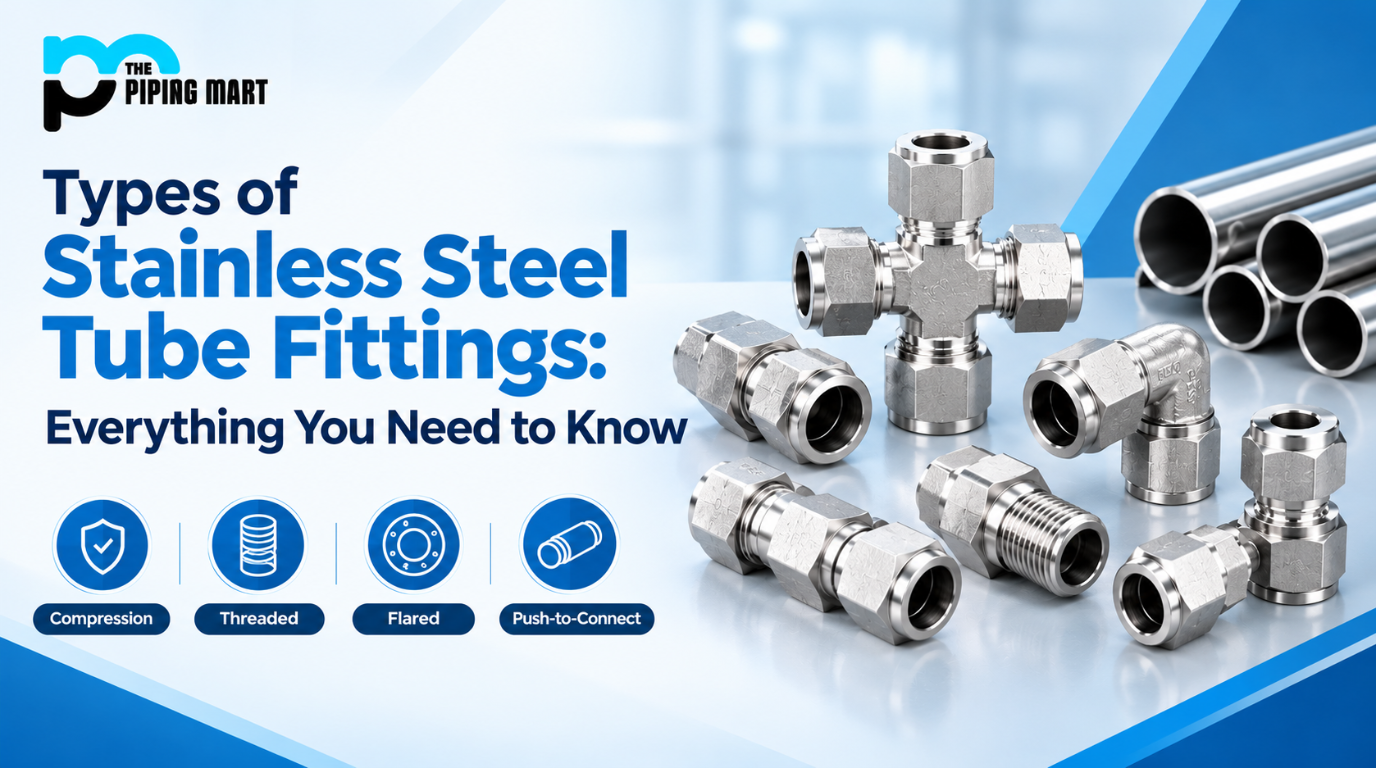
What Are Stainless Steel Tube Fittings?
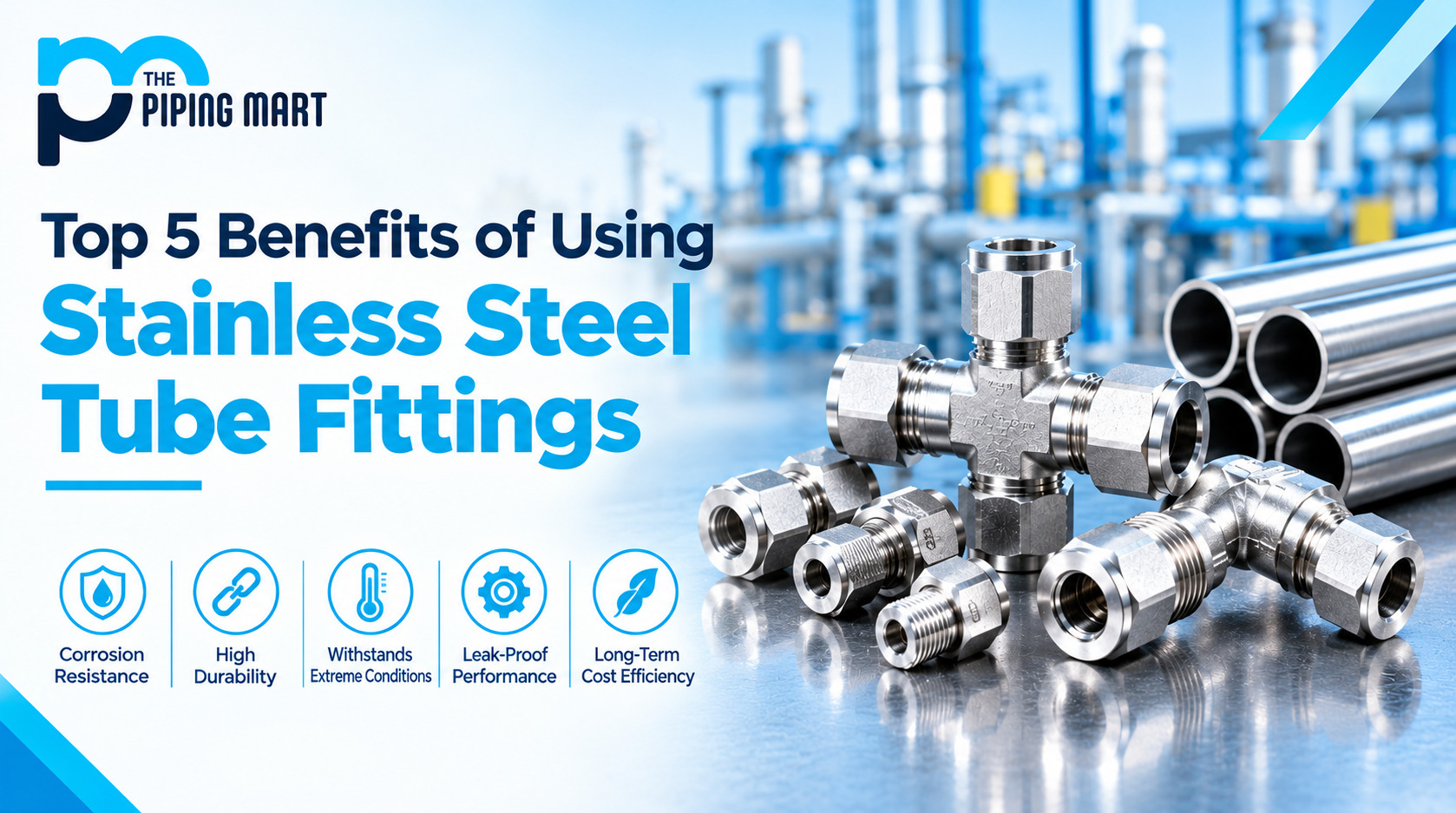
Stainless steel tube fittings join, redirect, terminate, or seal lengths of stainless steel tubing in a fluid or gas line. Stainless steel suits this job because it resists corrosion, holds its strength under pressure, tolerates aggressive chemicals, and keeps a tight seal over long service periods. Grades 304 and 316 serve as standard starting points. Engineers specify these fittings in instrumentation, chemical processing, oil and gas, pharmaceutical plants, power generation, food processing, and marine systems. One loose joint can shut down a line, so fitting choice matters as much as tube selection.
What Are the Different Types of Stainless Steel Tube Fittings?
Stainless steel tube fittings rely on five connection types. Each joins tubing differently, and each suits a mix of pressure, maintenance, and installation conditions. The sections below explain how they work.
Compression Tube Fittings
Compression fittings connect tubing with three parts: the body, the ferrule, and the nut. Tightening the nut drives the ferrule onto the tube and seals it against the body, so the joint holds without welding. Instrumentation, process control, and fluid lines rely on them, as do systems needing frequent reassembly.
Welded Tube Fittings
Welded fittings join tubing through fusion welding, which makes the connection permanent. Butt weld fittings align with the tube end and weld around the circumference, while socket weld fittings seat the tube in a recess and take a fillet weld. Fixed installations that need secure joints and strong mechanical integrity use them.
Threaded Tube Fittings
Threaded fittings connect tubing or components through matching male and female threads. Crews choose them where welding is undesirable or where sections need assembly and disassembly. Thread specifications must match, so an NPT fitting needs an NPT mate, and the joint needs sealant or tape to block leakage along the threads.
Flared Tube Fittings
Flared fittings seal by expanding the tube end into a cone, which the fitting body and nut clamp together. The metal-to-metal contact holds secure connections under pressure. Installers must cut the tube square, deburr it, and form the flare to the correct angle, because a poor flare leaks.
Push-to-Connect Tube Fittings
Push-to-connect fittings let installers insert tubing directly into the fitting, where a gripping collar and an O-ring lock and seal it. Installation needs no wrenches or threading, which suits jobs that demand fast assembly. Buyers must confirm tube compatibility, pressure, and temperature limits against the application’s requirements.
Also Read: Different Types of Stainless Steel Pipe Fittings
How Do Stainless Steel Tube Fittings Differ by Connection Type?
Five connection types differ on seven points. The table below compares them side by side for quick reference during selection.
| Type | Connection | Installation | Reusability | Leak Tightness | Pressure | Maintenance | Applications |
| Compression | Ferrule and nut | Wrench | Limited | High | Medium to high | Easy | Instrumentation |
| Welded | Fusion weld | Welding | None | Very high | High | Replace section | Critical lines |
| Threaded | Mating threads | Thread sealant | Reusable | Moderate | Low to medium | Easy | Utility lines |
| Flared | Flared tube end | Flaring tool | Reusable | High | Medium to high | Moderate | Pressurized lines |
| Push to connect | Internal grip | Push in | Reusable | Moderate | Low to medium | Very easy | Quick assembly |
What Are the Applications of Stainless Steel Tube Fittings?
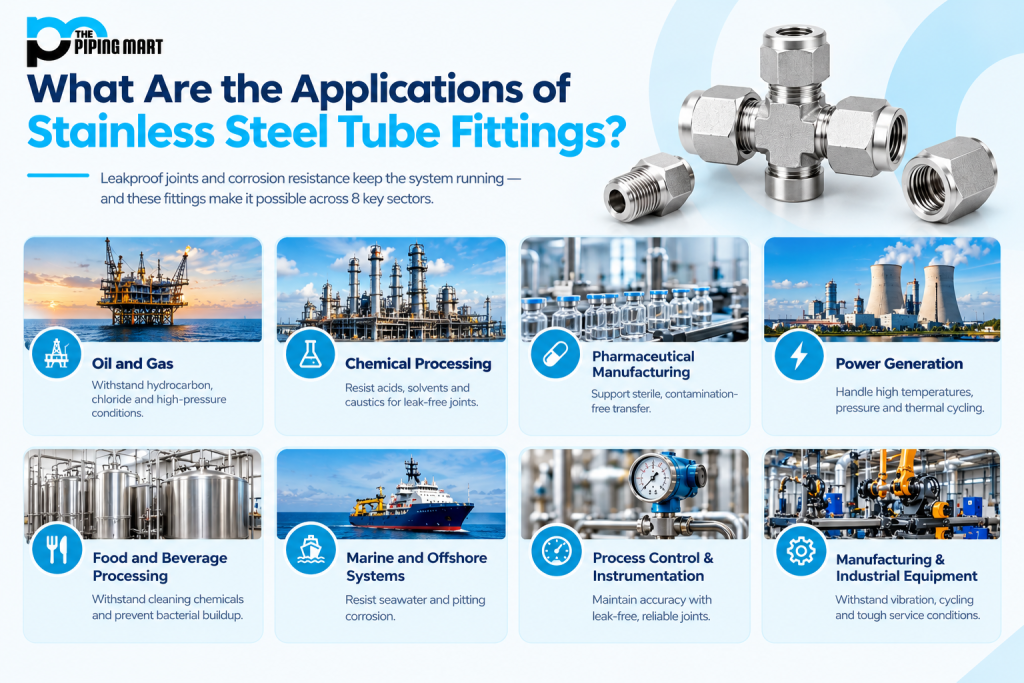
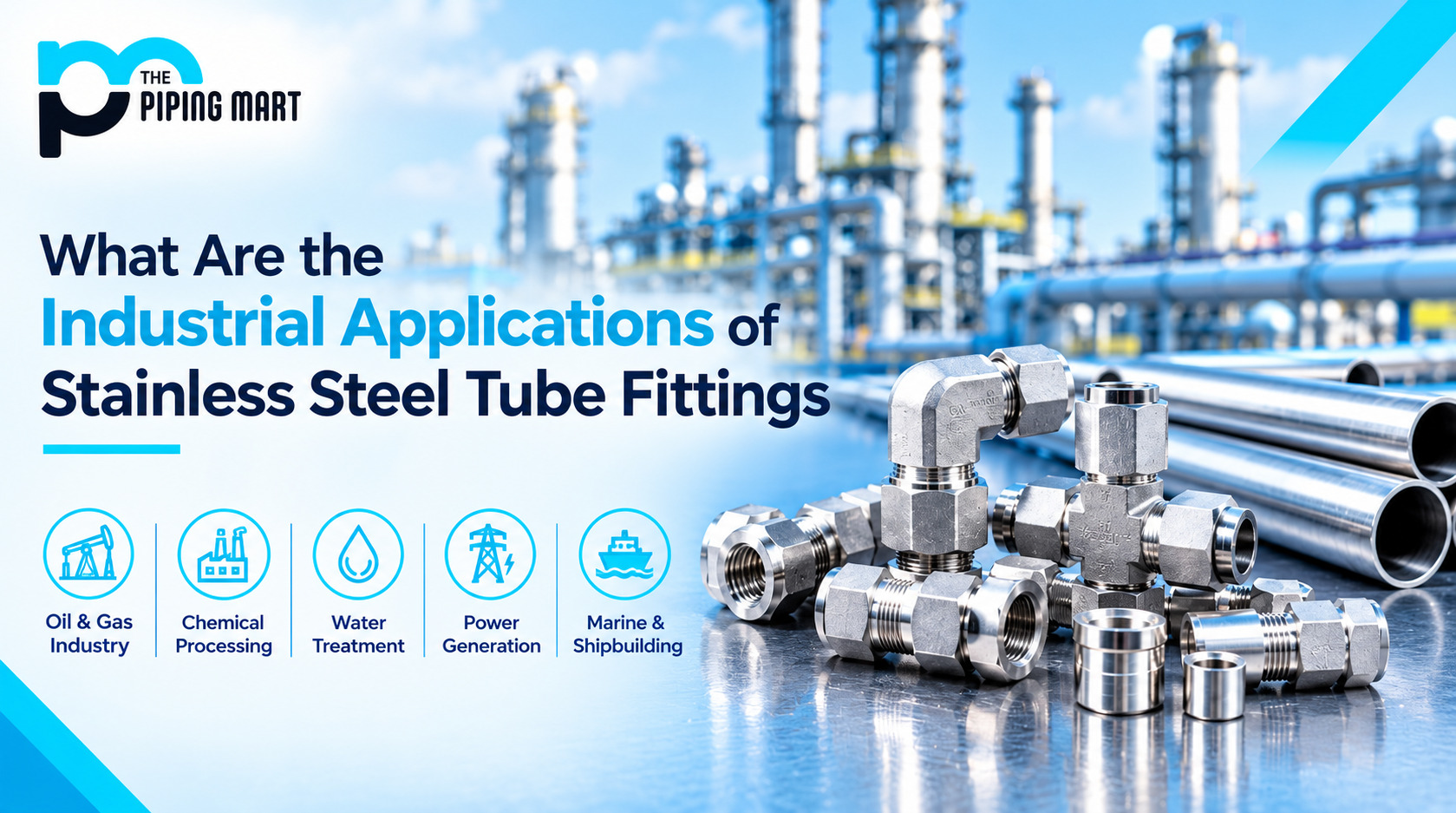
Leakproof joints and corrosion resistance decide whether a tubing system survives service conditions. Eight sectors depend on these fittings, and one failure there costs production.
Oil and Gas
Oil and gas operators install these fittings on offshore wellhead instrumentation, sampling lines, and chemical injection systems, where hydrocarbon leaks create fire risk and chloride exposure attacks lower-grade metals.
Chemical Processing
Chemical plants route acids, solvents, and caustic solutions through tubing, so fittings in 316 stainless steel resist attack from chlorides and mild acids while keeping each joint sealed against releases.
Pharmaceutical Manufacturing
Pharmaceutical lines demand smooth, wetted surfaces and tight joints because contamination ruins a batch. Stainless steel fittings with polished finishes support sterile transfer of process fluids and water for injection.
Power Generation
Power plants run tubing for steam sampling, lubricating oil, and cooling water at elevated temperatures and pressures, so fittings must hold their seal through thermal cycling without loosening or weeping.
Food and Beverage Processing
Food and beverage plants wash lines with caustic and acid cleaners, and stainless steel fittings withstand that routine while smooth surfaces limit bacterial buildup in dairy, brewing, and bottling lines.
Marine and Offshore Systems
Seawater exposure attacks ordinary steel, so marine and offshore systems specify 316 stainless steel fittings for hydraulic lines, fuel lines, and instrumentation, where chloride resistance protects the joint from pitting.
Process Control and Instrumentation
Instrument tubing carries small volumes of gas or liquid to gauges, transmitters, and analyzers, so compression fittings preserve measurement accuracy by preventing leaks and allowing quick replacement of failed components.
Manufacturing and Industrial Equipment
Machine builders use these fittings on hydraulic circuits, pneumatic lines, and coolant systems, where vibration and cycling loosen weaker joints, and stainless steel construction holds up through scheduled service intervals.
How to Choose the Right Stainless Steel Tube Fitting?
Start with the tube’s outside diameter and wall thickness, because a fitting must match both. Next, select the connection type, then check operating pressure and temperature against the fitting’s rating. Confirm the fluid or gas and choose a stainless steel grade that resists it, such as 316 for chlorides. Weigh installation and maintenance needs, including how often crews will open the joint. Finally, verify dimensional and material specifications and confirm the fitting works with the tubing and the complete system.
Conclusion
Compression, welded, threaded, flared, and push-to-connect fittings each join tubing by a different method and suit separate installation and service demands. Buyers should weigh material grade, tube dimensions, pressure, temperature, fluid compatibility, and connection type before ordering stainless steel tube fittings. That check prevents leaks, rework, and early replacement.
FAQs
What Are the Main Types of Stainless Steel Tube Fittings?
The five main types are compression, welded, threaded, flared, and push-to-connect fittings. They differ in connection method, reusability, pressure capability, and maintenance needs.
What Is the Difference Between Compression and Threaded Tube Fittings?
Compression fittings seal when the nut drives a ferrule onto the tube, while threaded fittings seal along matching threads with tape or sealant. Thread mismatch causes leaks.
Which Stainless Steel Grade Is Commonly Used for Tube Fittings?
Grades 316 and 316L carry most instrumentation tube fittings thanks to molybdenum, which resists chlorides. Grade 304 serves general service where chloride exposure stays low.
Where Are Stainless Steel Tube Fittings Used?
Stainless steel tube fittings serve instrumentation, chemical processing, oil and gas, pharmaceutical, power generation, food processing, and marine systems. Leak control and corrosion resistance drive selection in each.
How Do I Choose the Right Stainless Steel Tube Fitting?
Match tube outside diameter and wall thickness first, then pick connection type, grade, and ratings. Piping Mart lists suppliers and manufacturers where buyers compare specifications.