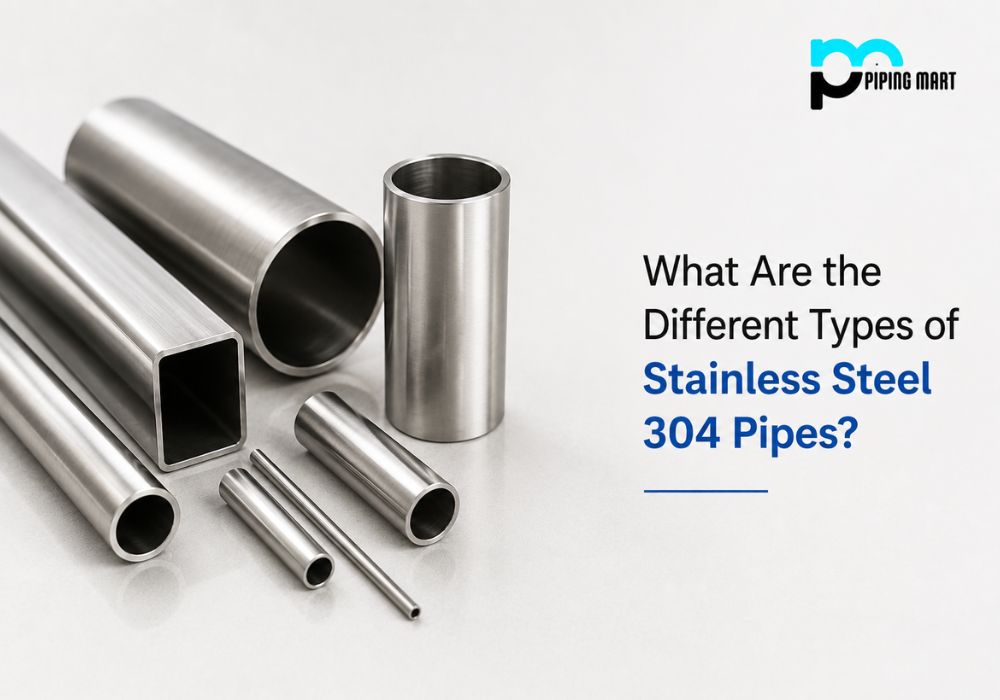
Stainless steel 304 pipes are widely used in several industries due to their corrosion resistance, durability, and minimal maintenance. However, not all SS 304 pipes are identical. They differ in their manufacturing process, shape, surface quality, and wall thickness. Selecting the wrong type can result in performance concerns or extra costs. This guide covers all of the different types of stainless steel 304 pipes, allowing you to better understand your options and make informed decisions when sourcing or specifying pipes for your project.
Understanding Stainless Steel 304 Pipes
SS 304 is an austenitic stainless steel grade, which consists of 18% chromium and 8% nickel. These pipes are available in various sizes, wall thicknesses, and shapes. Whether it is used for a food processing system or architectural railings, one can find the ideal SS 304 pipe based on the specific requirements. To select the appropriate one, you must first learn how these pipes are classified.
Types of Stainless Steel 304 Pipes Based on Manufacturing Method
The manufacturing process significantly impacts the pipe’s structural integrity and appropriateness for various uses.
SS 304 Seamless Pipes
Seamless pipes are made without any weld joints. A solid billet of steel is pierced and stretched into a hollow tube. As there is no weld seam, these pipes can withstand higher pressure and stress than welded pipes. They are often used in hydraulic systems, high-pressure lines, and situations where consistent strength is important. The seamless pipes are more expensive; however, in crucial applications, the additional expense is beneficial.
SS 304 Welded Pipes
Welded pipes are made by bending a flat stainless steel strip into a tube and joining the edges with a weld. They usually cost less than seamless pipes and are available in larger diameters. These pipes are used for low- to medium-pressure work, plumbing, and basic structural applications where the weld is not an issue. Most standard plumbing and fluid transport systems use welded pipes.
SS 304 ERW Pipes
ERW stands for Electric Resistance Welded. In this process, the steel strip edges are heated using electrical resistance and then pressed together to form the weld. No filler material is used. ERW pipes have a clean, consistent weld that is suitable for structural applications, water pipelines, and general engineering uses. These pipes provide better dimensional accuracy and surface quality.
Stainless Steel 304 EFW Pipes
The EFW pipes (electric fusion-welded pipes) are used for larger diameters where a strong weld is needed. This process requires an electric arc with filler material, which provides a stronger joint than ERW. It is used in petrochemical plants and heavy engineering work, where both size and weld quality are considered.
Types of Stainless Steel 304 Pipes Based on Surface Finish
Alloy 304 pipes are available in different surface finishes based on use and appearance needs. The finish affects how the pipe looks, how clean it stays, and how well it resists corrosion.
SS 304 Polished Pipes
Polished pipes have a smooth, shiny surface made by special finishing methods. They are used in food processing, medicine, and other areas where cleanliness is essential. The smooth surface reduces the chances of contaminants, such as dirt and germs, sticking and makes the pipes easier to clean.
SS 304 Railing Pipes
Railing pipes are specifically finished for use in handrails, balustrades, and similar architectural applications. They usually come with a mirror or satin finish and are manufactured to consistent outer diameters. The surface quality is essential, as these pipes are visible in public or commercial spaces.
SS 304 Furniture Pipes
Furniture pipes are used to make chairs, tables, racks, and similar items. They are available in finishes like matte and bright polish. These pipes are easy to cut, bend, and weld, as the focus is on appearance and ease of fabrication.
Types of Stainless Steel 304 Pipes Based on Shape
The shape affects how a pipe fits into a structure and how much load it can withstand. SS 304 pipes are available in different cross-sectional shapes for different uses.
SS 304 Round Pipes
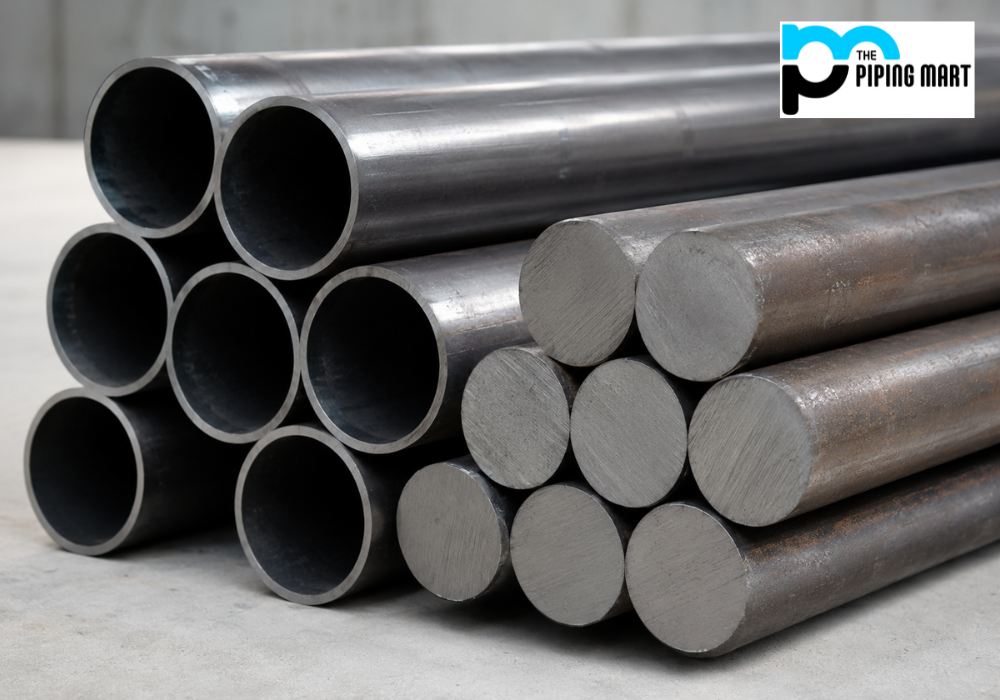
Round pipes are the most commonly used shape, as they distribute pressure evenly across the cross-section, which is why they are preferred in fluid transport systems. Round pipes also work well for structural columns and railings. Most seamless pipes are round by default.
SS 304 Square Pipes
Square pipes are used in structures where straight alignment is needed. They are common in frames, support columns, and basic fabrication work. The flat sides make it easier to weld or bolt parts together, especially at 90-degree joints. You will see them in construction, furniture, and simple support systems. They are also easy to measure and position during installation.
SS 304 Rectangle Pipes
The rectangular pipes are selected when space is tight on one side, but strength is still required, as their longer shape helps to distribute the load over a larger surface. They are commonly used in frames, enclosures, and equipment supports. In many cases, they are used in industrial and material handling applications, where dimensions are critical. They also fit more easily into narrow spaces than square or round pipes.
SS 304 Oval Pipes
Oval pipes are mostly used where appearance matters. They are not commonly used for heavy-duty piping or structural loads, but it is used in railings, furniture, and interior fittings. The shape gives a different look, so they are used in places where design is a priority. Strength is still there, but usage is more on the decorative side.
SS 304 Hexagon Pipes
Hexagon pipes are not used in regular applications. They are made for specific engineering needs. The shape helps in gripping or holding parts in place without slipping. In some cases, they are used in tools or components where alignment is important. They also fit into spaces where round pipes may rotate or not sit properly.
Types of Stainless Steel 304 Pipes Based on Structure / Size
Wall thickness and internal structure affect the pipe’s pressure capacity and weight. Two main categories stand out here.
SS 304 Hollow Pipes
Standard hollow pipes are open within and have uniform wall thickness. These pipes are often used in general engineering, structural frameworks, and fluid transport. The ratio of wall thickness to outer diameter determines how much pressure or load the pipe can handle.
SS 304 Thick Wall Pipes
Thick-wall pipes have more wall thickness compared to their diameter. They are used where high pressure, heavy loads, or harsh conditions are involved. These pipes are common in oil and gas, chemical plants, and heavy machinery. They cost more, but they handle tough conditions better and last longer.
Key Applications of Different SS 304 Pipe Types
Different pipe types serve different industries. Knowing where each is commonly used helps in making the right selection.
Chemical and Petrochemical Industry
Seamless pipes and thick-wall pipes are the preferred option. These industries deal with corrosive chemicals and high pressures, and any joint or weld weakness can be a serious risk. EFW pipes are also used where larger diameters are needed.
Oil and Gas Industry
Round seamless pipes with thick walls are standard in this sector. The pipes need to handle extreme pressure, temperature variation, and sometimes corrosive substances. Both upstream and downstream operations rely heavily on SS 304 pipes of this type.
Architecture and Construction
Square pipes and round railing pipes are widely used in construction. Square pipes go into structural frameworks, while polished round and oval pipes are used in railings, cladding, and exterior design work. Surface finish is often as important as strength in these applications.
Industrial Equipment and Machinery
Rectangular and square pipes are common in machine frames and support structures. Welded pipes are often used here because the pressure demands are lower, and cost control is important. The thick-wall pipe is used where it forms part of a load-bearing structure.
Food and Beverage Processing
Polished seamless pipes are the standard in this industry. Hygiene requirements are strict, and the pipe’s interior surface must be smooth to prevent contamination buildup. Round pipes with high-polish finishes are used in product lines, cleaning systems, and storage tanks.
Common Mistakes to Avoid When Selecting Pipe Types
Ignoring the Pipe’s Intended Application
Choosing a pipe without clearly defining what it will be used for is a basic mistake. The manufacturing method, wall thickness, and shape all need to align with the application’s pressure, temperature, and environmental requirements.
Overlooking Material Grades
SS 304 and SS 316 are often mistaken. While both are austenitic grades, SS 316 has added molybdenum for better resistance to chlorides and harsh chemicals. Using SS 304 in environments that require SS 316 will lead to premature failure.
Choosing the Wrong Type of Pipe
Using a welded pipe where a seamless pipe is required, or vice versa, may result in issues with pressure ratings and long-term reliability. Choosing the wrong design might complicate installation or impair structural performance.
Failing to Check for Compliance with Standards
Pipes used in regulated industries must meet standards, such as ASTM, ASME, or EN. If the correct certification is not checked, it can lead to compliance issues and safety risks. Always confirm the required standard before purchasing.
Choosing an Unreliable Pipe Supplier
Supplier quality varies a lot. Some provide proper mill test certificates, some do not. Inconsistent supply is also common with less reliable vendors. This can affect project timelines and overall quality. Basic checks help test certificates, past supply records, and client feedback. Skipping this step can cause bigger issues later.
Skipping Inspections or Quality Testing
Visual verification is insufficient on its own. Dimensional checks, hydrostatic testing, and chemical composition tests are also required, depending on how the pipe will be utilised. Skipping these steps may save time in the beginning, but it might lead to failures and increased expenditures later.
Conclusion
Alloy 304 pipes come in different types, and each has its own use. Seamless pipes are used for high pressure. Square pipes are common in construction. Polished round pipes are used in food-related work. The selection should be based on the requirement, not preference. It helps to understand how the pipes are made, their shape, surface finish, and wall thickness. These factors affect performance. If there is any confusion, it is better to check with a supplier who can review the requirement and suggest the right option.
FAQs
What’s the difference between seamless and welded pipes?
The seamless pipes are made from a solid billet with no weld joints. Welded pipes, on the other hand, are manufactured by connecting the edges of a steel strip using welding. Welded pipes are less expensive and available in larger diameters than seamless pipes, which have better pressure resistance.
Which is stronger: seamless or welded SS 304 pipes?
Seamless pipes are often stronger as they lack a weld line, which can be a weak point when under pressure. For high-pressure and essential applications, a seamless pipe is usually preferred.
Where are round pipes commonly used?
Round pipes are the most versatile shape and are used in fluid transport systems, structural columns, railings, and industrial piping. They are preferred wherever even pressure distribution is needed across the pipe’s cross-section.
Are square pipes stronger than round pipes?
Not always. Round pipes handle internal pressure better, while square pipes are useful in structures that need flat surfaces and right-angle joints. Each shape is suited to different types of loading and use.
Which type of SS 304 pipe is best for construction?
For structural construction work, square and rectangular pipes are commonly used in frameworks and supports. For railings and decorative elements, polished circular pipes are preferable. The selection of the pipe depends on whether the pipe needs to support weight or is mainly for appearance.